Key takeaways
- Chewing is normal and necessary for dogs — especially during teething (about 3–7 months).
- Manage by putting things away and using gates, pens and crates.
- Provide plenty of safe chews and rotate them.
- Destructive behavior when alone may indicate boredom or separation anxiety.
Chewing relieves teething pain, cleans teeth, reduces stress and is simply enjoyable for dogs. The goal is to redirect it to the right things.
Why dogs chew
- Teething: puppies lose baby teeth and grow adult teeth from about 3 to 7 months. Chewing soothes sore gums.
- Exploring: puppies learn about the world with their mouths.
- Boredom: under-exercised, under-stimulated dogs find their own fun.
- Stress or anxiety: chewing is self-soothing. Destruction near doors and windows when alone may be separation anxiety.
- Hunger: dogs on a diet may seek out food-scented items.
Step 1: Manage the environment
- Put things away: shoes, socks, remotes, children's toys, cables. See dog-proofing your home.
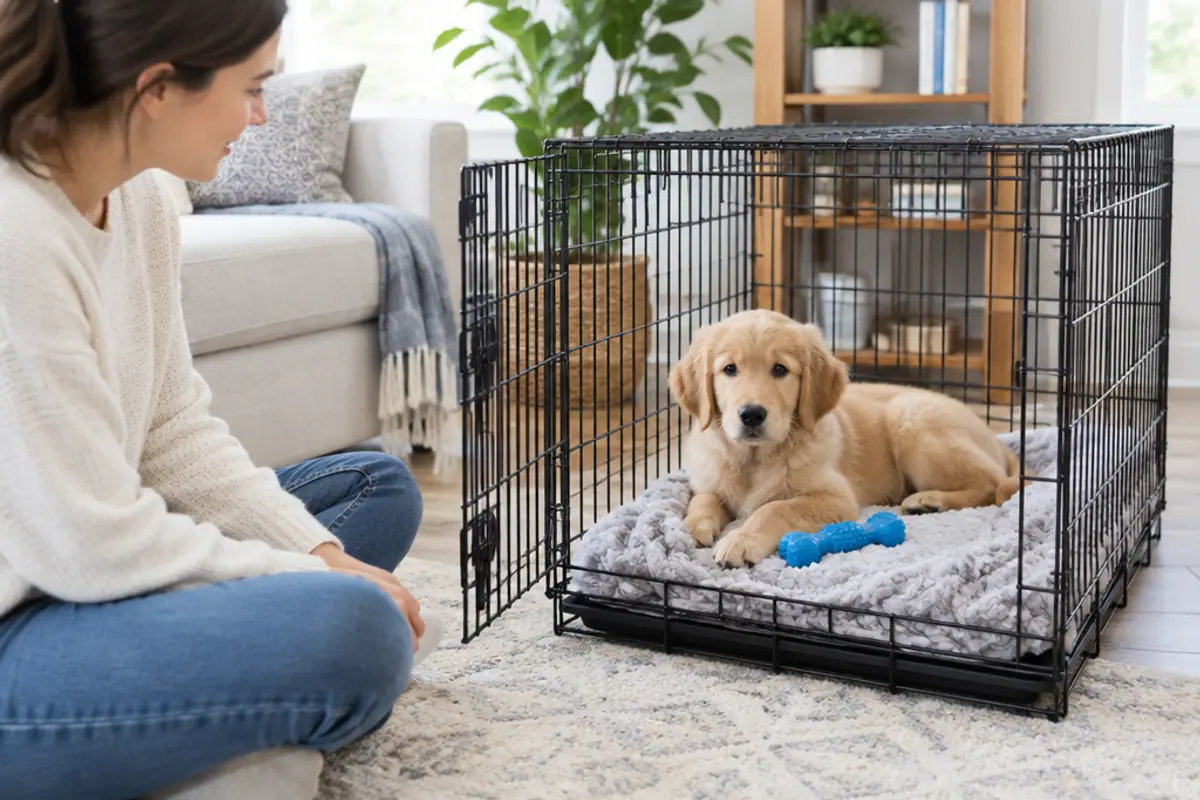
- Limit access with baby gates, a playpen or a crate when you can't supervise.
- Use bitter-tasting sprays on furniture legs as a backup (test first on a hidden spot).
Step 2: Provide great chew options
Have several types and rotate them to keep them interesting:
- Rubber toys that can be stuffed with food and frozen
- Nylon or rubber chew toys sized for your dog
- Edible chews appropriate to your dog's size and chewing style (supervise)
- Frozen washcloth or frozen carrot for teething puppies (supervise)
- Snuffle mats and puzzle toys
Avoid very hard items (antlers, hooves, real bones) that can break teeth, and anything small enough to swallow whole. See dog toys guide.
Step 3: Redirect and reward
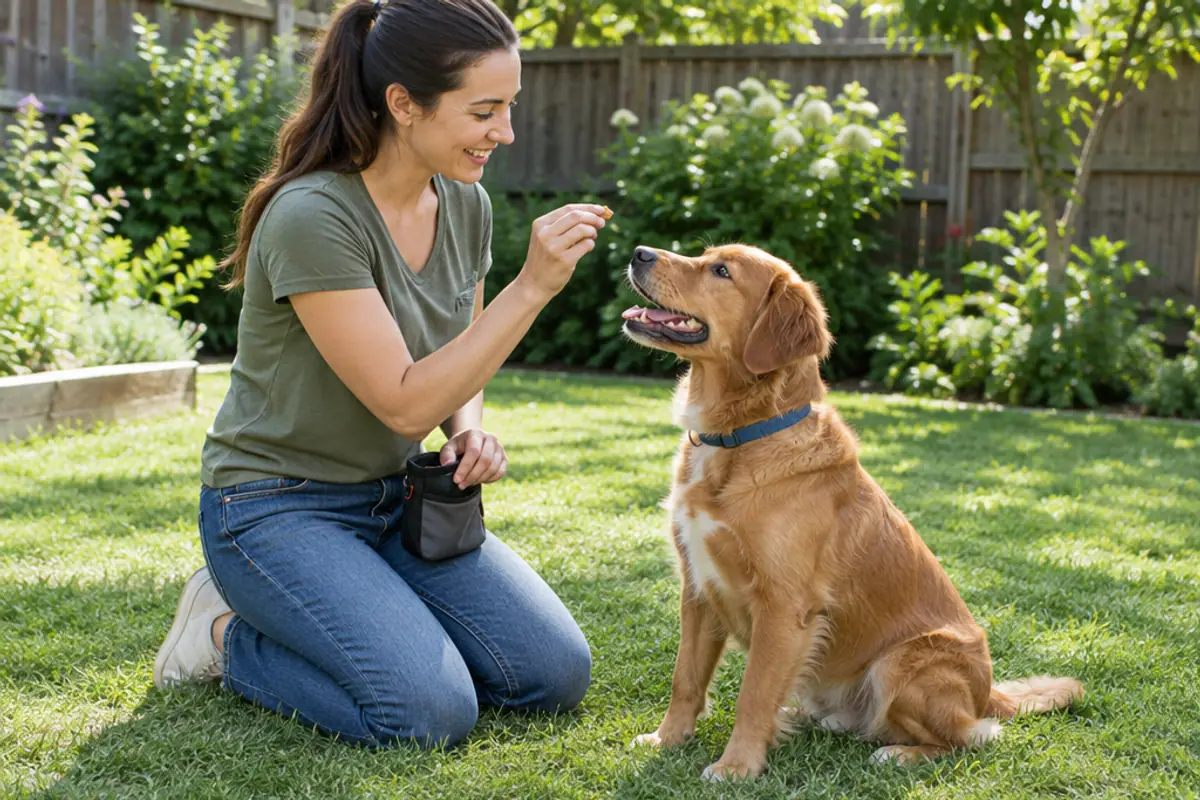
- If your dog picks up something it shouldn't, calmly trade it for a chew toy or treat. Don't chase — that turns it into a game.
- Praise and reward when your dog chooses its own toys.
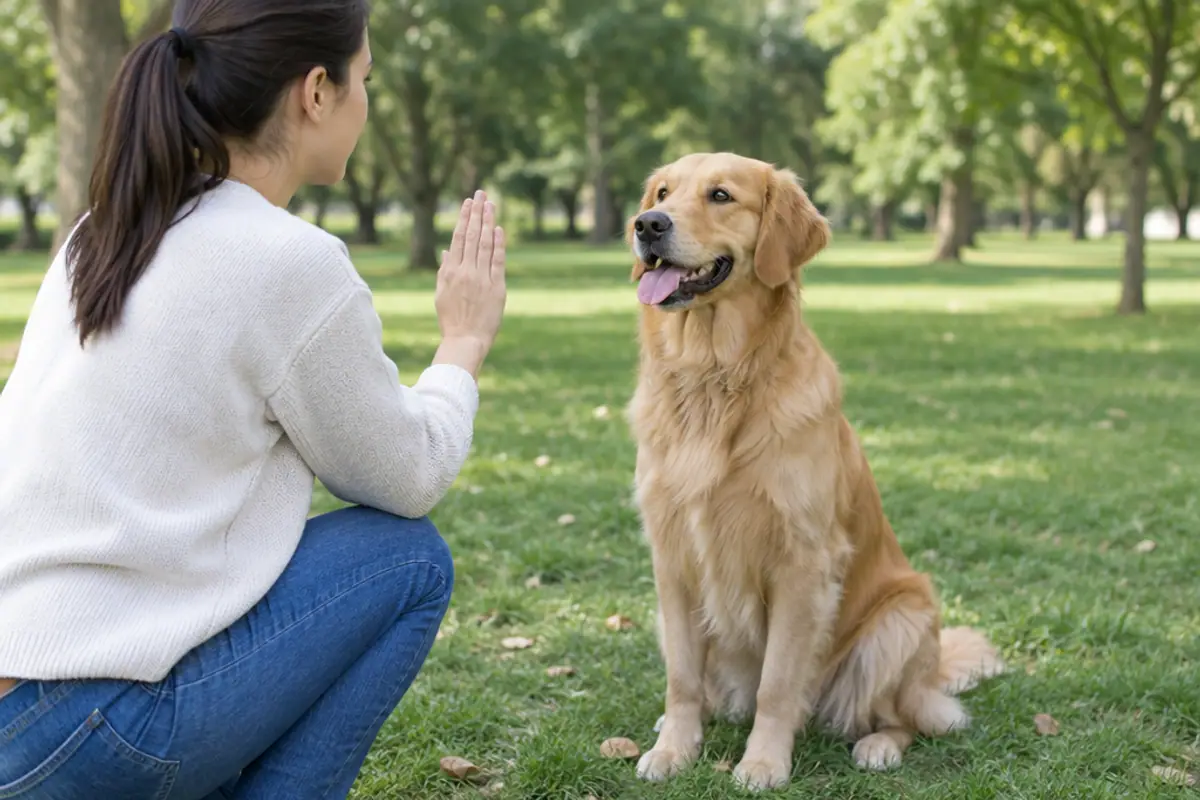
- Teach "leave it" and "drop it" — see basic commands.
Step 4: Meet physical and mental needs
Daily exercise, sniffing walks, training sessions and puzzle feeders reduce destructive behavior dramatically. See how much exercise a dog needs.
Digging
Some dogs (terriers, huskies) love to dig. Give them a legal spot — a sandbox or a designated corner — and bury toys and treats there to encourage it. Supervise in the yard and don't leave bored dogs outside alone.
Don't punish after the fact
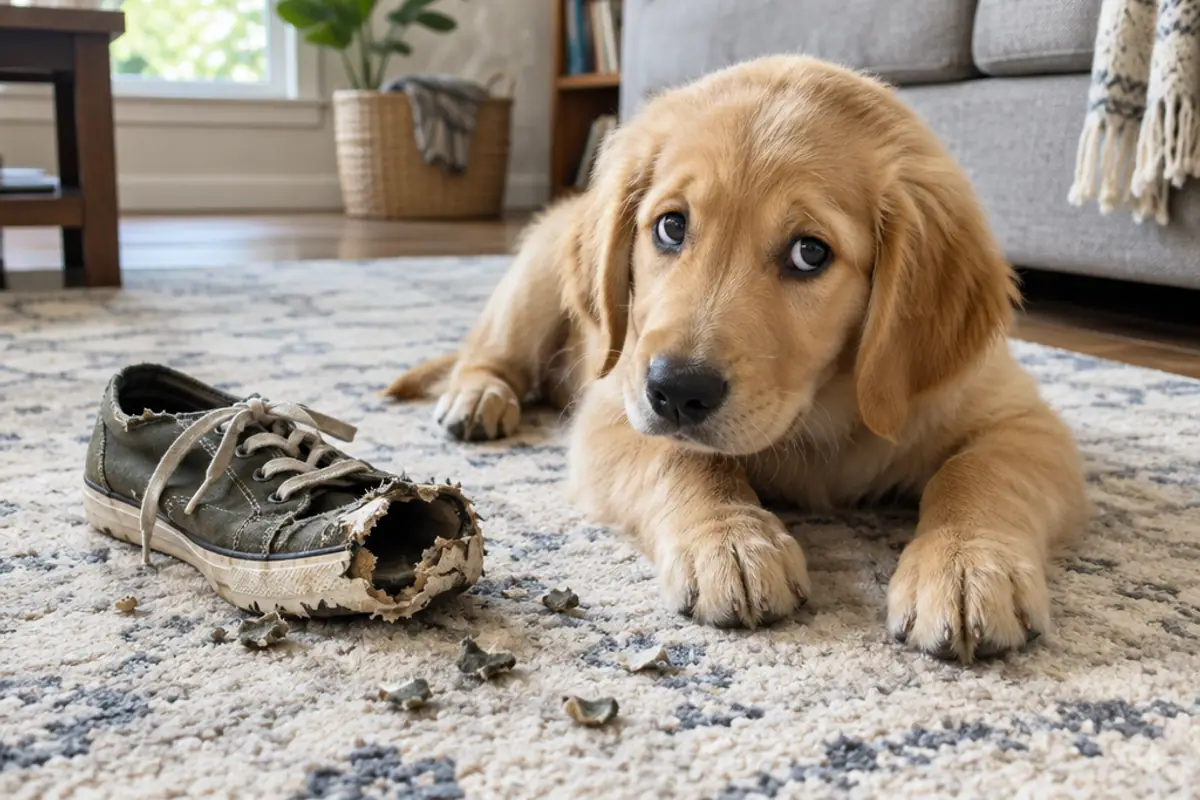
Dogs don't connect punishment with something they chewed earlier. The "guilty look" is a reaction to your body language, not guilt. Punishment just increases stress — which can increase chewing.
If your dog swallows part of a toy, sock or other object, call your vet. Signs of a blockage include vomiting, not eating, lethargy and a painful belly.