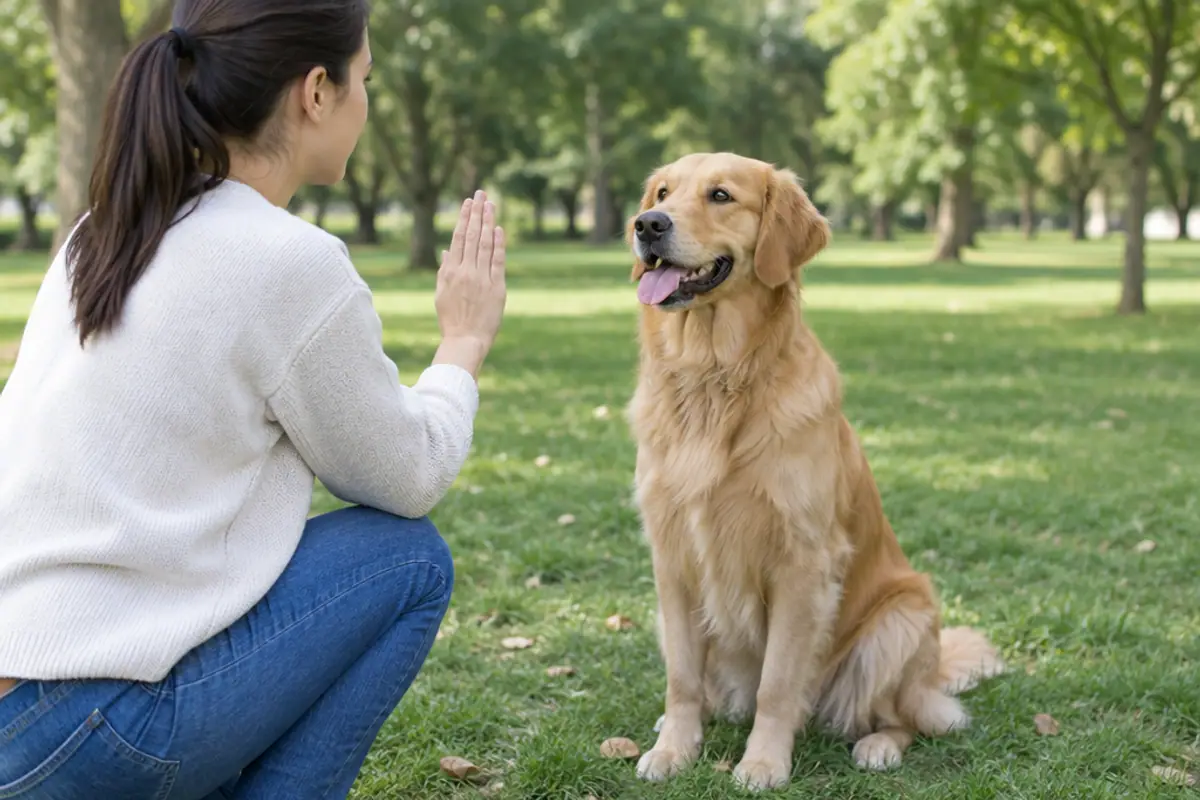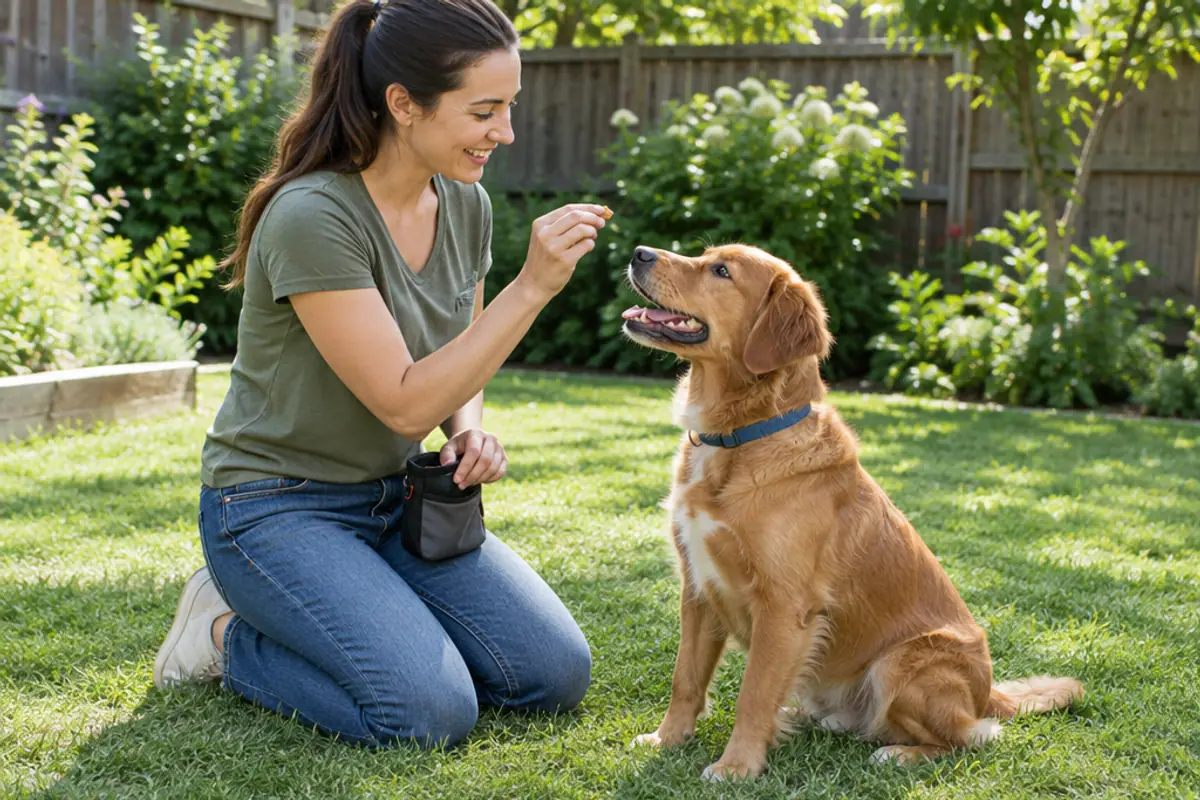
Key takeaways
- Dogs repeat behaviors that pay off. Reward what you want to see more of.
- Use a marker ("yes!" or a clicker) to pinpoint the exact moment your dog gets it right.
- Prevent unwanted behavior with management and teach an alternative behavior instead.
- Research links punishment-based methods to more stress, fear and aggression.
Modern dog training is based on how animals actually learn. The approach recommended by veterinary behaviorists and professional trainer organizations is positive reinforcement: rewarding behaviors you want so your dog does them more often.
How dogs learn
Dogs learn by consequences. A behavior followed by something good (food, play, attention, access to something they want) becomes more likely. A behavior that earns nothing tends to fade.
That means your dog is always learning — not just during "training sessions." If jumping on you gets attention, your dog learns to jump. If sitting politely gets attention, your dog learns to sit.
The four building blocks
1. Rewards your dog values
Food is the easiest, but play, toys, praise, sniffing and access to things your dog wants all count. See treats and training.
2. A marker
A marker is a signal that says "that's it!" at the exact moment your dog does the right thing. Use a short word like "yes!" or a clicker, then follow with a reward within a second or two.
Charging the marker: say "yes" → give a treat. Repeat 10–15 times. Your dog quickly learns that "yes" means a reward is coming.
3. Good timing
Reward during or immediately after the behavior. Late rewards teach the wrong thing (e.g., you reward just as your dog stands up from a sit).
4. Management
Prevent your dog from practicing unwanted behaviors while you teach new ones. Use leashes, gates, crates and putting things away. Every repetition of an unwanted behavior makes it stronger.
Getting a behavior to happen
- Luring: guide your dog into position with a treat (e.g., move a treat over the head for a sit). Fade the lure quickly.
- Capturing: wait for your dog to do something naturally (like lying down), then mark and reward.
- Shaping: reward small steps toward a final behavior.
Why punishment doesn't work well
Punishment — yelling, leash jerks, hitting, "alpha rolls," shock or prong collars — may seem to stop behavior in the moment, but research and professional organizations point to major downsides:
- Fear and stress: studies have found dogs trained with aversive methods show more stress-related behaviors and body language.
- Aggression: confrontational methods are associated with more aggressive responses.
- Damaged trust: your dog may become wary of you, your hands or the leash.
- It doesn't teach what to do instead.
- Suppressed warnings: punishing a growl can teach a dog to bite without warning.
The old "dominance" and "pack leader" ideas are based on outdated science. Most unwanted behavior is simply a dog doing what works for it, or reacting to fear. See dog ownership myths.
What about "no"?
You can interrupt your dog — a cheerful "oops!" or calling its name — and then redirect it to something you'd rather it did. The key is to show your dog what to do instead, and reward that.
Tips for success
- Short sessions: 3–5 minutes, several times a day.
- One behavior at a time.
- Start easy, then gradually add distance, duration and distractions — the "three Ds."
- Train everywhere: dogs don't generalize well. A sit in the kitchen isn't a sit at the park until you practice there.
- End on a win.
- Be consistent: everyone in the household should use the same cues and rules.
Ready to start? Go to basic dog commands.