Key takeaways
- Separation anxiety is panic, not spite or disobedience.
- Signs appear only when alone: howling, destruction at exits, house-soiling, drooling, pacing.
- Treatment is gradual desensitization: tiny absences your dog can cope with, built up slowly.
- Many dogs benefit from veterinary help, including anti-anxiety medication.
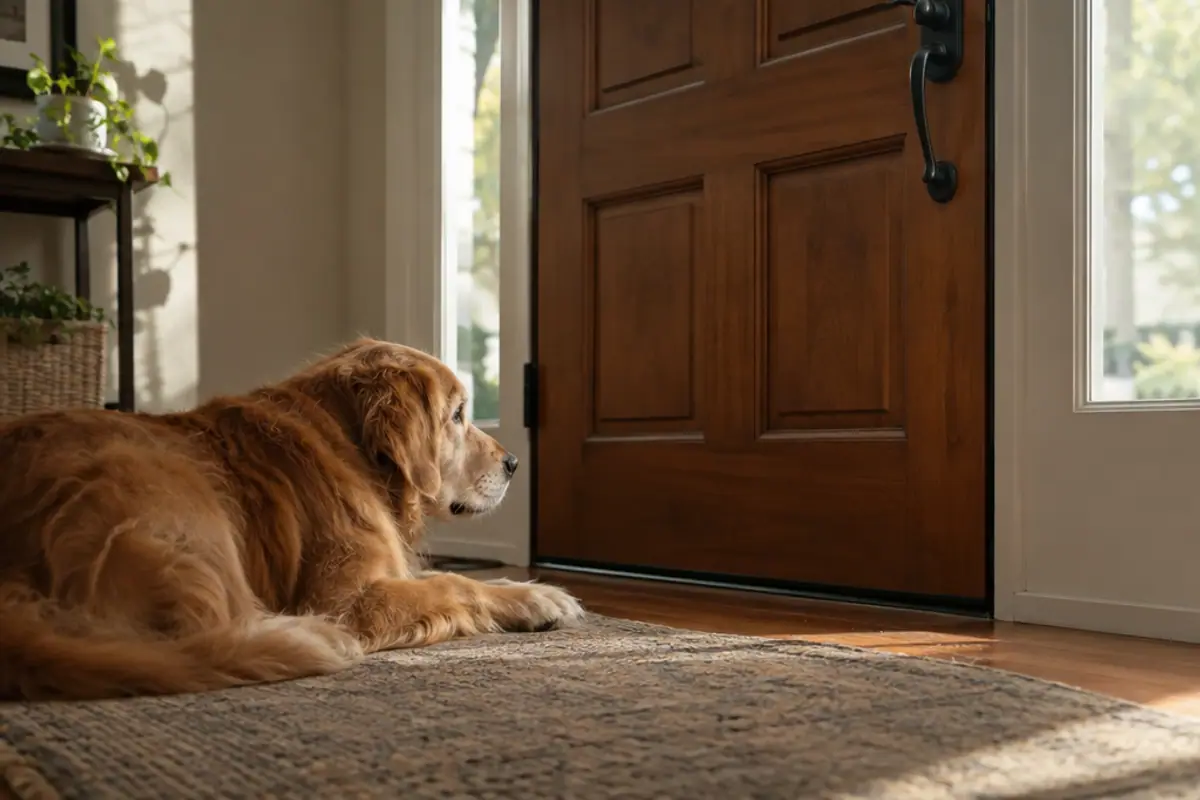
Dogs are social animals, and many find being alone difficult. For some, it's so stressful that they panic. This is separation anxiety — and it's treatable with patience.
Signs of separation anxiety
These happen when your dog is alone or separated from you:
- Howling, whining or barking that doesn't stop
- Destruction focused on doors, windows and exits
- Trying to escape (sometimes injuring themselves)
- Urinating or defecating indoors (in a house-trained dog)
- Drooling, panting, pacing
- Not eating food or treats left for them
- Extreme greeting on your return
A camera (a simple phone video works) is the best way to see what really happens when you leave.
Is it separation anxiety or boredom?
Bored dogs usually destroy random items, play, then settle. Dogs with separation anxiety show signs of distress and focus on escape. Some dogs are fine alone in general but panic in a crate (confinement distress).
Common contributing factors
- Never learning to be alone as a puppy
- A change in routine (e.g., returning to the office after working from home)
- Moving house or rehoming
- Loss of a family member or pet
- Genetics and temperament
- Pain or illness, or aging (in seniors)
Training plan: gradual departures
Start with a vet visit to rule out medical causes. Your vet can also discuss anti-anxiety medication, which is often very helpful alongside training. For moderate to severe cases, work with a separation anxiety specialist or veterinary behaviorist.
1. Find your dog's threshold
Film your dog while you step out. How long before it starts to show stress? It may be 5 minutes — or 5 seconds.
2. Practice absences shorter than the threshold
If your dog stays relaxed for 30 seconds, practice 15–20 second departures. Build up gradually, mixing in shorter ones. Several short sessions a day are ideal.
3. Desensitize departure cues
Pick up keys, put on shoes or a coat — then sit down again. This teaches your dog those cues don't always mean you're leaving.
4. Avoid real absences beyond the threshold
This is the hard part. While training, arrange for your dog not to be alone longer than it can cope: dog-sitters, daycare, friends, family or taking your dog with you.
5. Keep comings and goings calm
No dramatic goodbyes. Greet calmly when you return.
Helpful extras
- Exercise and enrichment before you leave
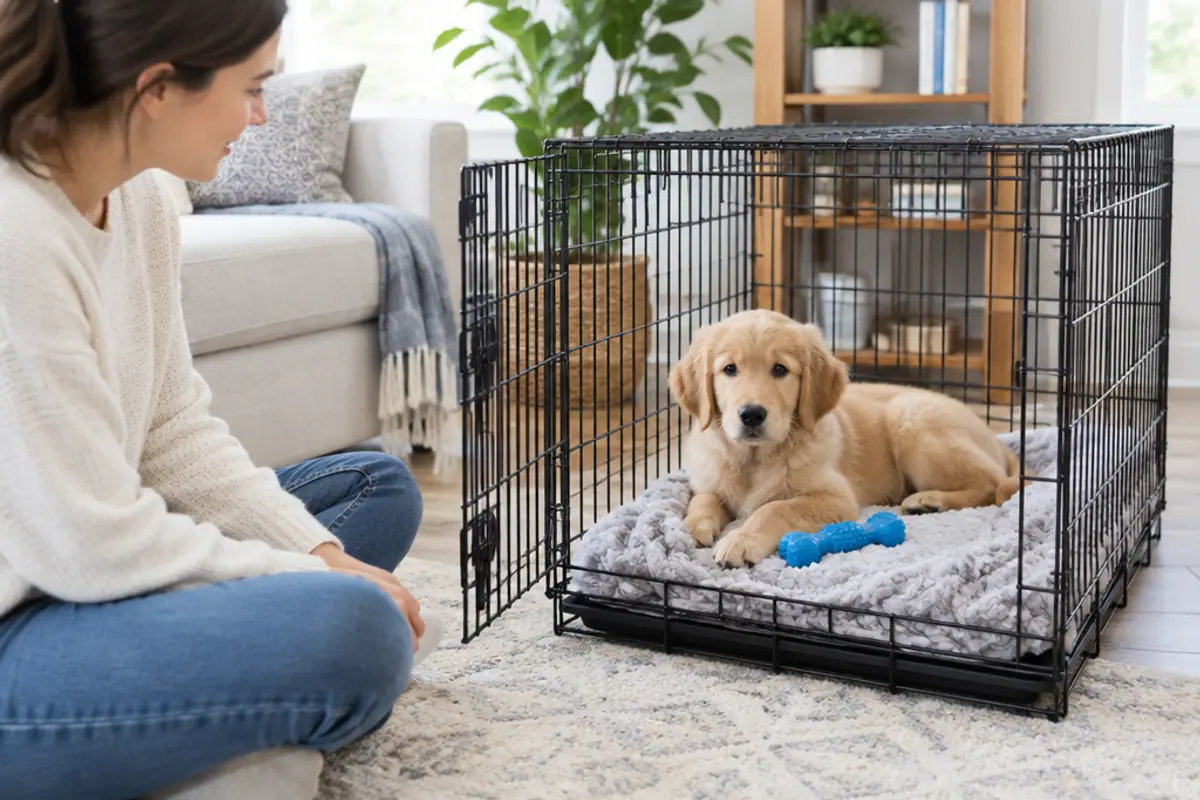
- A safe space — some dogs prefer a room to a crate
- Background noise like radio or white noise
- Food toys can help mildly anxious dogs, though severely anxious dogs won't eat when alone
What doesn't help
- Punishment — it increases anxiety
- Getting another dog — it helps some dogs but often doesn't, because the anxiety is about you leaving
- Letting it "cry it out" — panic doesn't resolve by itself
Progress can be slow, with ups and downs. Many dogs improve significantly with the right plan.