Key takeaways
- Dogs pull because pulling works — it gets them where they want to go.
- Reward your dog for being next to you, often at first.
- When the leash gets tight, stop (or turn around). Move forward only when it's loose.
- A front-clip harness can help manage pulling while you train.
Leash pulling is one of the most common complaints of dog owners. It's not about dominance — dogs simply walk faster than we do, and the world is exciting. If pulling gets them to the next smell, they'll keep pulling.
Management first: equipment
- A front-clip harness (leash attaches on the chest) gently turns your dog toward you when it pulls. It's a management tool, not a cure.
- A standard 4–6 ft leash. Avoid retractable leashes during training.
- Avoid choke chains, prong collars and shock collars — they cause pain and can injure the neck and trachea.
See harness vs collar.
Step 1: Teach "your spot"
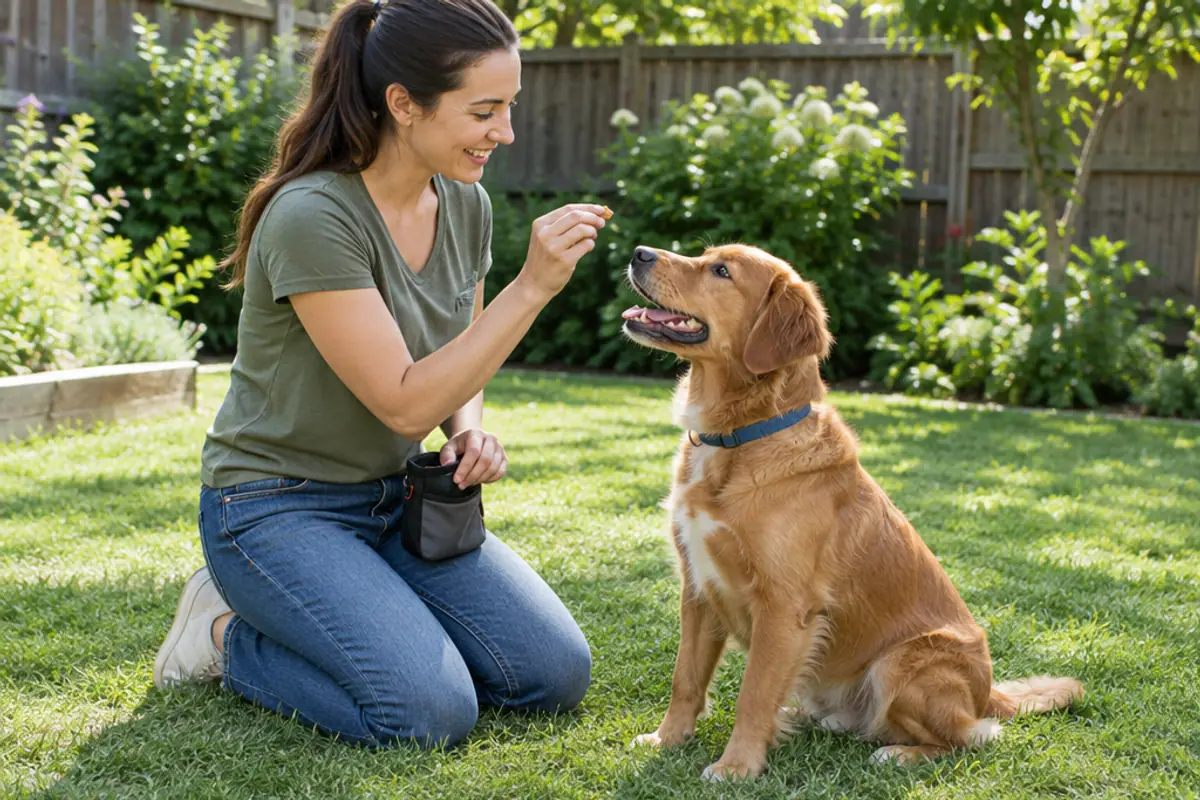
- Indoors, with no leash, stand still with treats. When your dog comes next to your leg, mark "yes!" and drop a treat by your foot.
- Take one step. If your dog follows and stays by your side, mark and reward at your leg.
- Gradually take more steps between rewards: 2, 3, 5…
Your dog learns: the area next to your leg pays very well.
Step 2: Add the leash — "be a tree"
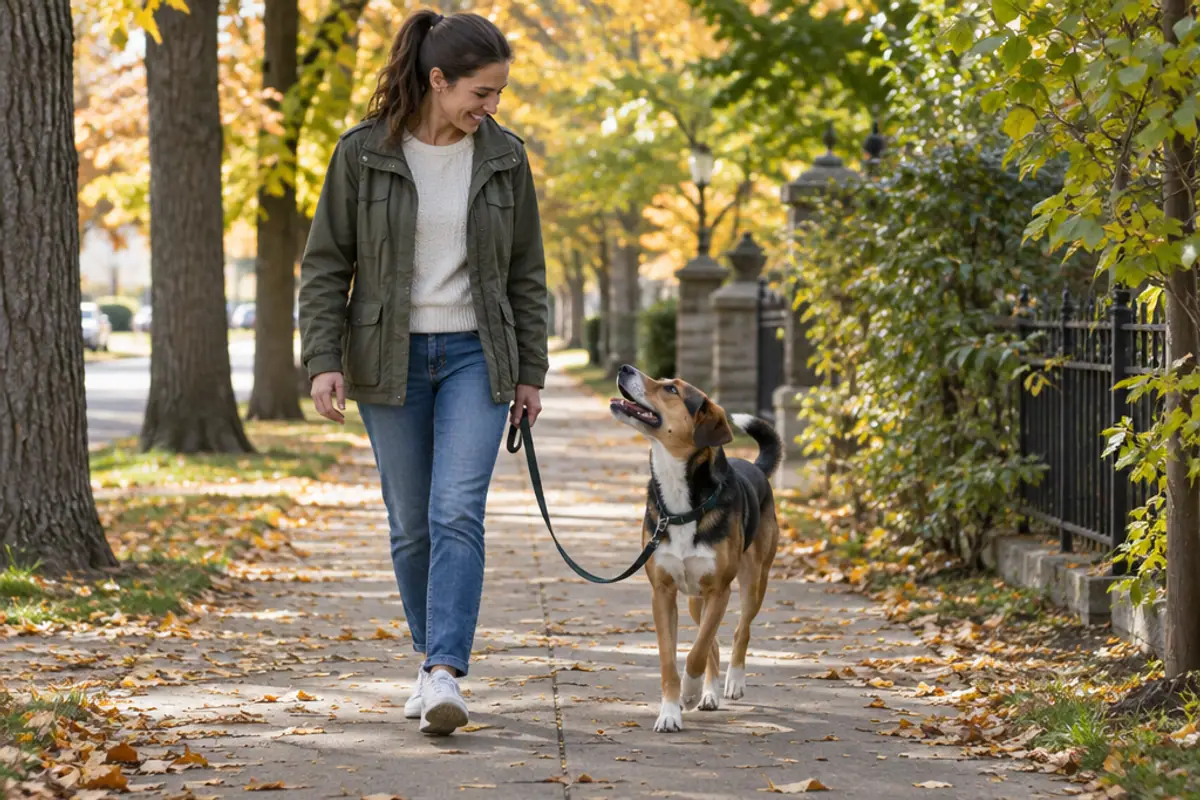
- Walk in a quiet place. Reward frequently when your dog is beside you with a loose leash.
- The instant the leash gets tight, stop and stand still.
- Wait. When your dog turns back or the leash loosens, mark "yes!" and reward at your side — then continue.
Step 3: Change direction
If stopping doesn't work, turn around cheerfully and walk the other way. When your dog catches up, reward at your side. This teaches your dog to watch where you're going.
Step 4: Use life rewards
Sniffing is a huge reward. Walk a few steps nicely, then say "go sniff!" and let your dog explore. Let loose-leash walking earn access to the things your dog wants.
Step 5: Build up distractions slowly
Train in easy places first (your hallway, driveway, a quiet street) before busy parks. Near big distractions, increase your reward rate or increase distance.
Tire your dog a little before training walks — a game of fetch or a sniffing session in the yard. An over-excited dog struggles to learn.
Common mistakes
- Inconsistency: if pulling works sometimes, your dog will keep trying. When you don't have time to train, use a front-clip harness to reduce the reward of pulling.
- Rewarding in front of you: that teaches your dog to forge ahead. Reward at your leg.
- Too few rewards: in the beginning, you may reward every step or two.
When pulling is about something else
If your dog lunges, barks or pulls toward (or away from) other dogs, people or cars, it may be reactive — often driven by fear or frustration. This needs a different plan; see dog aggression and reactivity and consider a qualified trainer.