Key takeaways
- The main socialization window is roughly 3 to 14 weeks — it closes fast.
- Socialization is about positive experiences, not the number of exposures.
- Watch your puppy's body language and let it choose to approach.
- You can socialize safely before vaccines are complete by choosing low-risk places.
Socialization means helping your puppy learn that the everyday world — people, dogs, sounds, places and handling — is safe. It's one of the most important things you'll ever do for your dog, and it has a deadline.
Why timing matters
Puppies go through a sensitive period from about 3 to 14 weeks old, when they learn about the world most easily. New experiences during this time are more likely to be accepted as normal. After it closes, unfamiliar things are more likely to seem frightening. Poor socialization is a major risk factor for fear and aggression later in life.
Your breeder or shelter covers the first weeks. Once your puppy comes home at around 8 weeks, you have a few precious weeks left. Socialization should continue through adolescence, too.
The American Veterinary Society of Animal Behavior (AVSAB) recommends that puppies start socialization — including well-run puppy classes — before their vaccine series is complete, taking sensible precautions. Behavior problems are a leading reason young dogs are given up, and the risk of infection in well-managed situations is low. Ask your vet about local disease risks.
Quality over quantity
Socialization isn't about exposing your puppy to as much as possible. It's about creating good experiences. Flooding a puppy with overwhelming situations can create fear instead.
- Let your puppy observe from a distance first.
- Pair new things with treats and play.
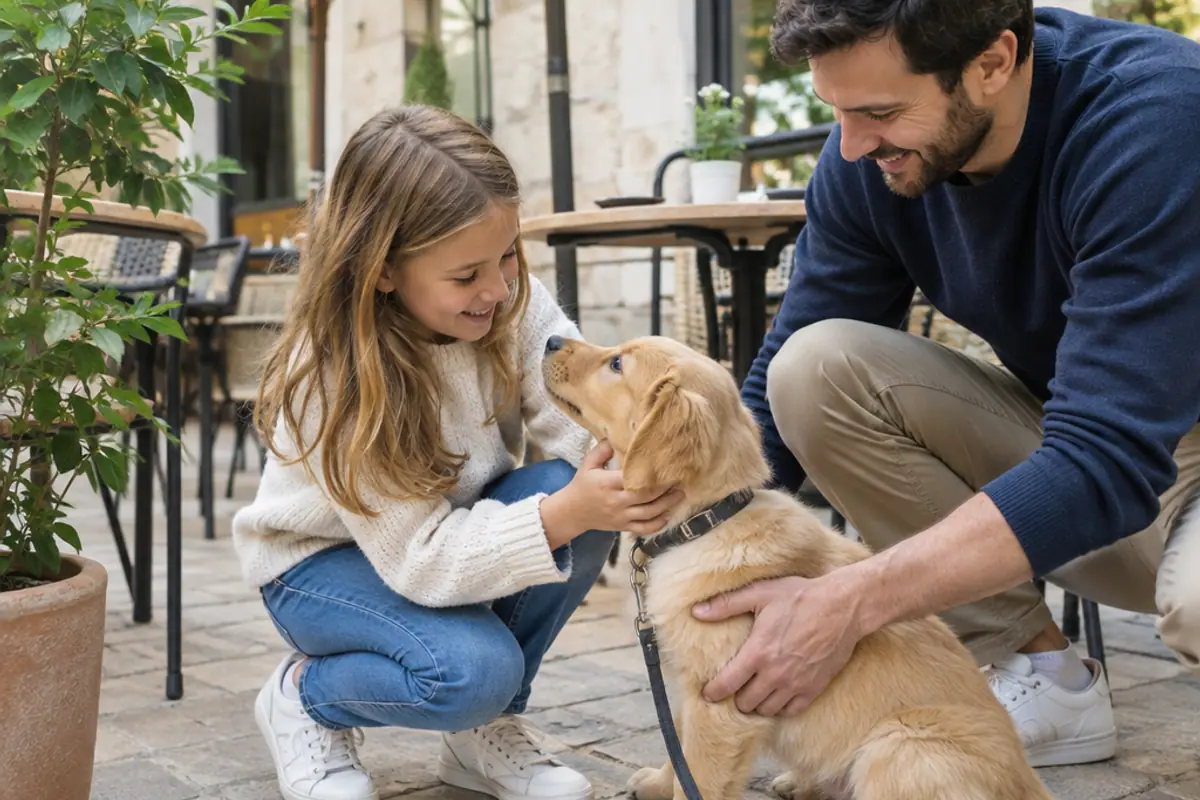
- Let your puppy choose to approach. Never force it.
- Keep sessions short, and end before your puppy gets tired or stressed.
- Watch for stress signals: tucked tail, cowering, lip licking, yawning, turning away, freezing, trying to hide. If you see them, add distance. See dog body language.
Socialization checklist
People
- Men, women and children of different ages (kids supervised)
- People with beards, hats, sunglasses, hoods, helmets, masks
- People with umbrellas, backpacks, canes, wheelchairs, strollers
- People of different appearances and ethnicities
- Delivery people, joggers, cyclists
Other animals
- Calm, healthy, vaccinated adult dogs
- Puppies in a well-run class
- Cats (dog-friendly ones), and other pets if relevant
Sounds
- Vacuum, hair dryer, blender, washing machine
- Doorbell, knocking, TV, music
- Traffic, buses, trucks, motorcycles, sirens
- Thunder and fireworks (start with recordings at low volume)
- Crying babies, children playing
Surfaces and places
- Grass, gravel, sand, tile, metal grates, wet surfaces, stairs
- Elevators, cars, public transport if allowed
- Vet clinic (for happy visits), groomer, pet-friendly stores
- Quiet cafés, parks, city streets
Handling
- Touching paws, ears, mouth, tail
- Being lifted, brushed and examined
- Wearing a collar, harness and muzzle (see equipment training)
Alone time
- Short periods of calm alone time every day (see separation anxiety)
Safe socialization before full vaccination
- Carry your puppy (or use a stroller or wagon) in busy public places.
- Invite healthy, vaccinated dogs to your home or yard.
- Avoid dog parks, pet store floors and areas where unknown dogs potty.
- Join a puppy class that requires first vaccinations and cleans its floors.
Puppy classes
A good puppy class offers controlled play with other puppies, handling practice and basic training. Look for small classes, reward-based methods and instructors who separate puppies by size and play style. See choosing a dog trainer.