Key takeaways
- Aggression is usually driven by fear, pain, guarding or frustration — not "dominance."
- Growling is a warning — never punish it, or your dog may bite without warning.
- Pain is a common hidden cause: see your vet first.
- Aggression toward people or dogs needs a qualified behavior professional.
If your dog has bitten or is showing aggression, please get professional help. Start with your veterinarian to rule out pain or illness, then work with a qualified behavior consultant (such as IAABC or CCPDT certified) or a veterinary behaviorist. This article is general information only — it's not a treatment plan.
What is aggression?
Aggression includes a range of behaviors: stiffening, staring, lip lifting, growling, snarling, snapping and biting. Most dogs use these to increase distance from something they find threatening or to protect something important to them.
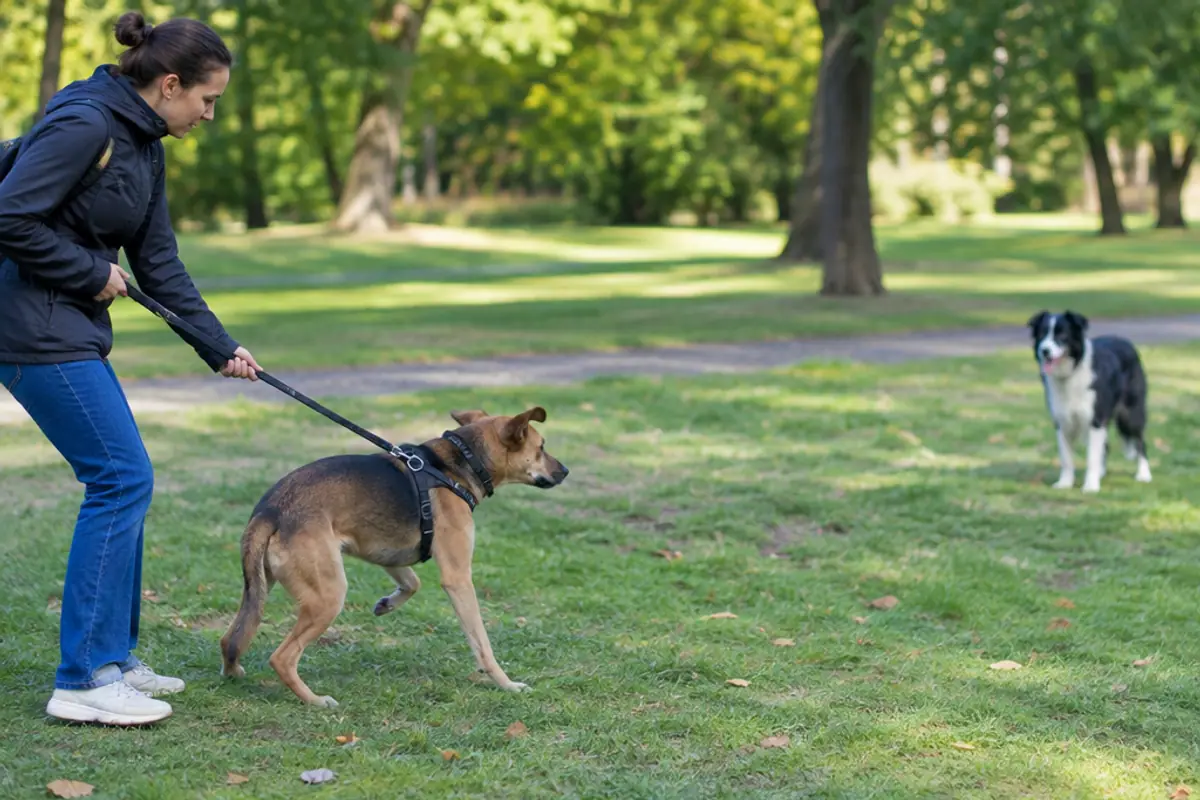
Reactivity refers to dogs that overreact — barking, lunging, growling — to specific triggers like other dogs, people, bikes or cars, usually on leash. Reactive dogs aren't necessarily aggressive, but reactivity can escalate.
Common causes
| Type | Example |
|---|---|
| Fear | Dog backs away, then snaps when cornered |
| Pain or illness | Previously gentle dog growls when touched on the back |
| Resource guarding | Growling over food, toys, bones, a resting spot |
| Territorial | Aggression at the fence or door |
| Frustration / leash reactivity | Lunging at dogs on leash but fine off leash |
| Handling sensitivity | Growling during nail trims or grooming |
| Predatory | Chasing and grabbing small animals (different motivation — often silent) |
The warning ladder
Dogs usually escalate through signals before biting. Learn to spot the early ones:
- Yawning, lip licking, turning the head away
- Turning the body away, walking away
- Freezing, stiffening, hard stare
- "Whale eye" (whites of the eyes showing)
- Ears back, tail tucked or held stiff
- Lip lift, growling
- Snapping (air snap)
- Biting
See dog body language.
Never punish a growl. A growl is valuable communication. Punishing it can suppress the warning and leave you with a dog that bites "out of nowhere."
Keeping everyone safe right now
- Avoid known triggers as much as possible while you get help.
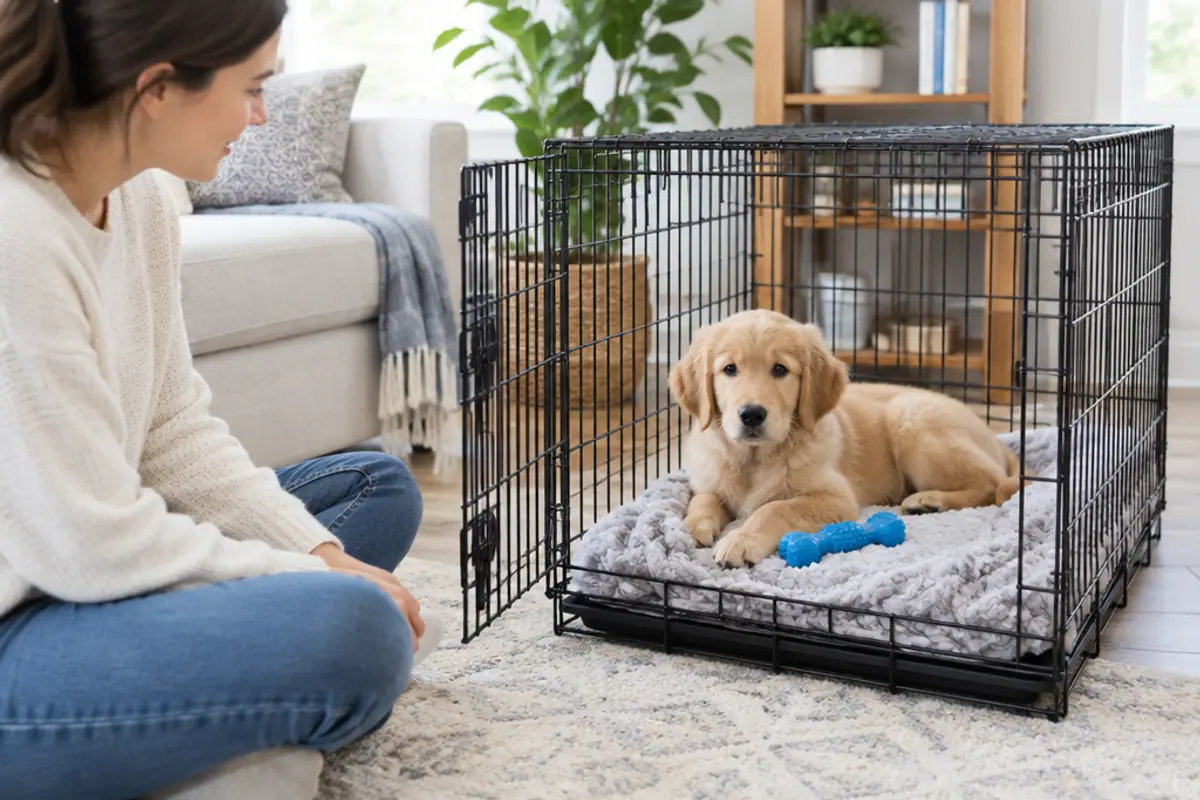
- Supervise all interactions with children and visitors, or separate completely using gates, crates and closed doors.
- Muzzle train your dog (see muzzle training) — a basket muzzle is a humane safety tool.
- Increase distance on walks: cross the street, turn around, walk at quieter times.
- Don't force interactions. Let your dog retreat.
- Don't use harsh corrections, shock, prong or choke collars. Studies link confrontational methods to increased aggression.
Treatment basics (with a professional)
Professionals typically use:
- Management to prevent rehearsal of aggressive behavior
- Desensitization and counterconditioning — gradually exposing your dog to triggers at a low intensity while pairing them with good things
- Teaching alternative behaviors like looking at you, or moving away
- Medication in some cases, prescribed by your vet
- Treating pain or medical problems
When to seek help urgently
- Any bite that breaks skin
- Aggression toward children
- Aggression that's getting worse or more frequent
- Sudden aggression in a previously friendly dog (often medical)