Key takeaways
- Scavenging is normal dog behavior — and dangerous in cities full of chicken bones and trash.
- Teach "leave it" (don't touch) and "drop it" (let go) with great rewards.
- Don't chase or pry things from your dog's mouth — it can create guarding.
- A basket muzzle is a safe short-term solution for persistent scavengers.
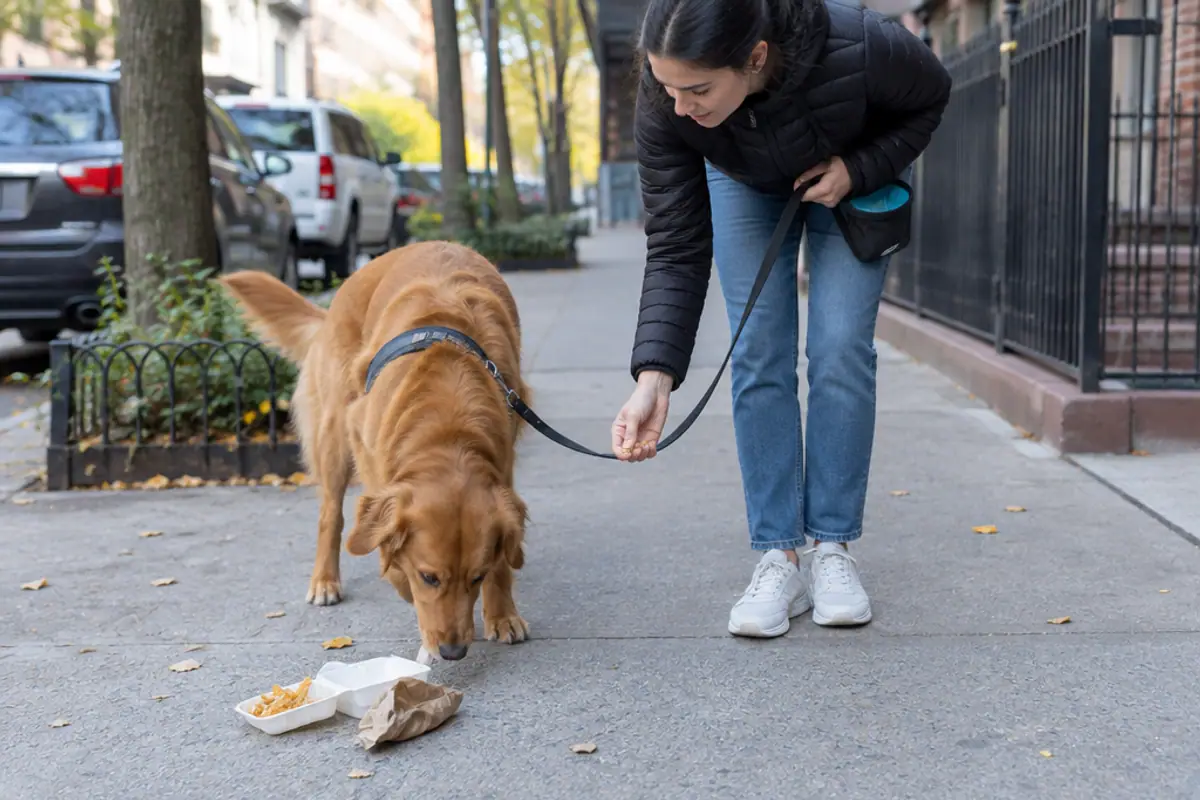
Dogs are natural scavengers. But sidewalks and parks are full of chicken bones, spoiled food, cigarette butts, mushrooms, medication and worse. Teaching your dog to leave things alone is an important safety skill.
Step 1: Management
- Scan ahead on walks and steer your dog away from obvious temptations.
- Walk on a shorter leash in high-risk areas.
- Consider a well-fitted basket muzzle for dogs that eat dangerous things. It's a kind, practical tool — see muzzle training.
Step 2: Teach "leave it"
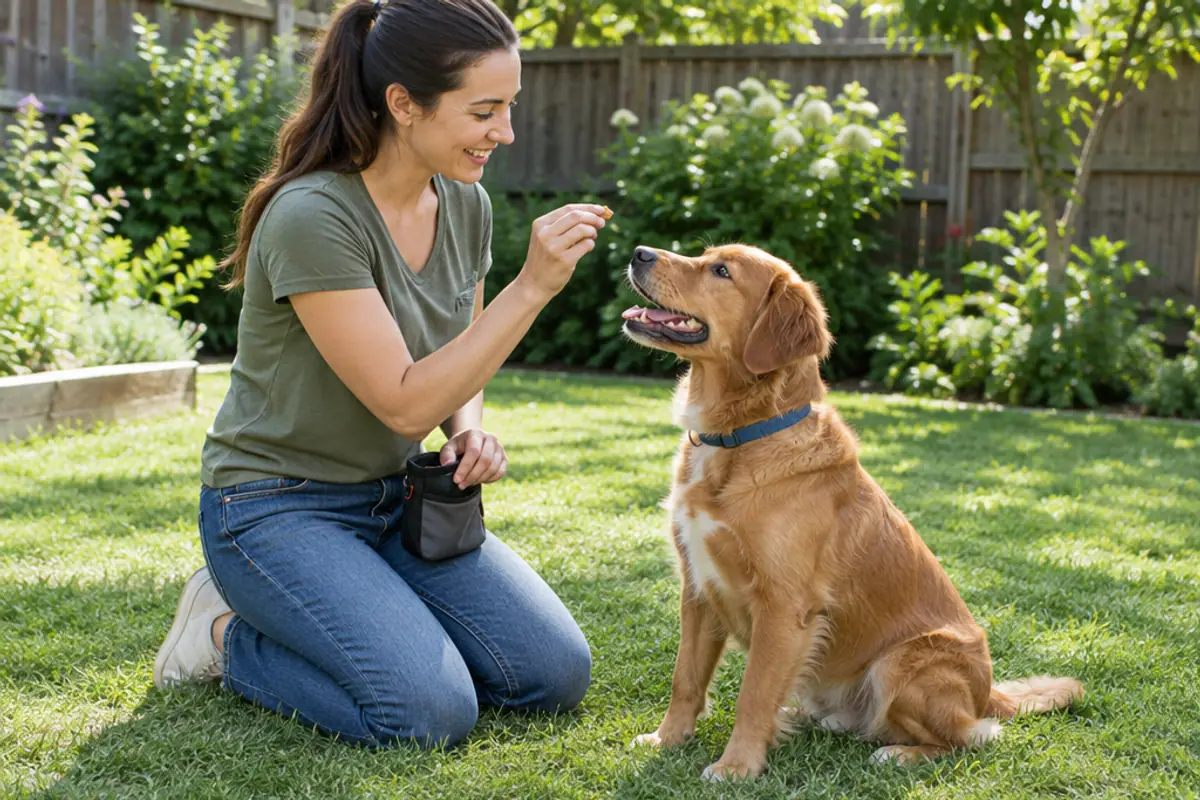
- Hold a treat in your closed fist. When your dog stops sniffing and backs off, mark "yes!" and reward from your other hand.
- Put the treat on the floor under your hand. Reward when your dog looks away.
- Uncover the treat briefly; cover it if your dog goes for it.
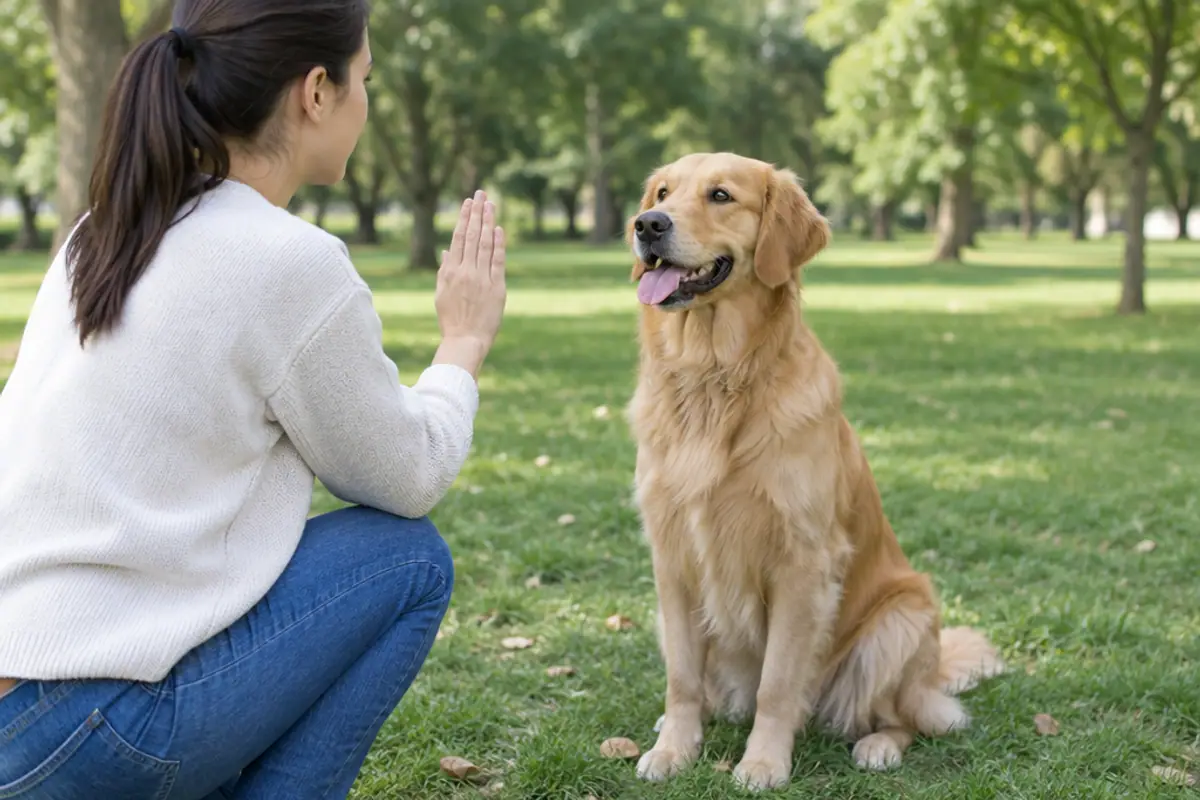
- Add the cue "leave it."
- Practice walking past treats on the floor on a leash, rewarding generously when your dog ignores them.
- Move practice outdoors with fake "trash" (e.g., a treat in a paper bag).
Step 3: Teach "drop it" (a trade game)
- Play with a toy. Offer a tasty treat right at your dog's nose and say "drop it."
- When the toy drops, mark, give the treat, then give the toy back.
- Your dog learns that dropping things doesn't mean losing them — it means getting something good.
Step 4: Teach attention on walks
Reward your dog for checking in with you. The more rewarding you are on walks, the less your dog needs to find its own treasures. Carry high-value treats.
Don't chase or corner your dog to get something out of its mouth, and don't pry it open unless it's an emergency. This teaches dogs to swallow things quickly or to guard them. Trade instead.
Resource guarding
If your dog stiffens, freezes, growls or snaps when you approach it with food or a found item, it's resource guarding. Don't punish the growl — it's a warning. Use the trade game above and consult a qualified professional.
Eating poop (coprophagia)
Common and gross, but often normal, especially in puppies. Pick up poop promptly, keep your dog on a leash and use "leave it." Talk to your vet to rule out dietary or medical causes.
Pica (eating non-food items)
Frequently eating non-food items like rocks, socks or fabric can be dangerous and may have medical or behavioral causes. See your vet.
When to call the vet
Call immediately if your dog swallows something toxic (see toxic foods) or a sharp or large object, or shows vomiting, diarrhea, lethargy or belly pain after scavenging.