Key takeaways
- Start with name, sit, down and come — then add stay, place and leave it.
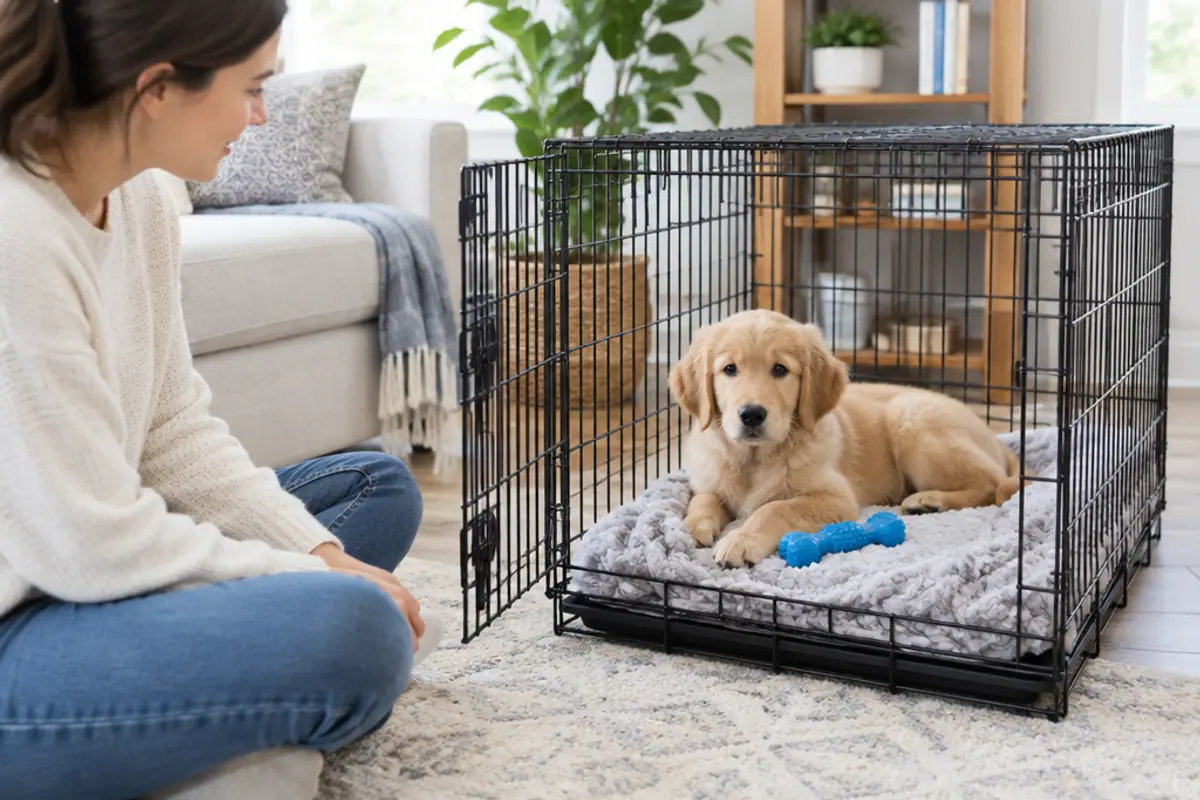
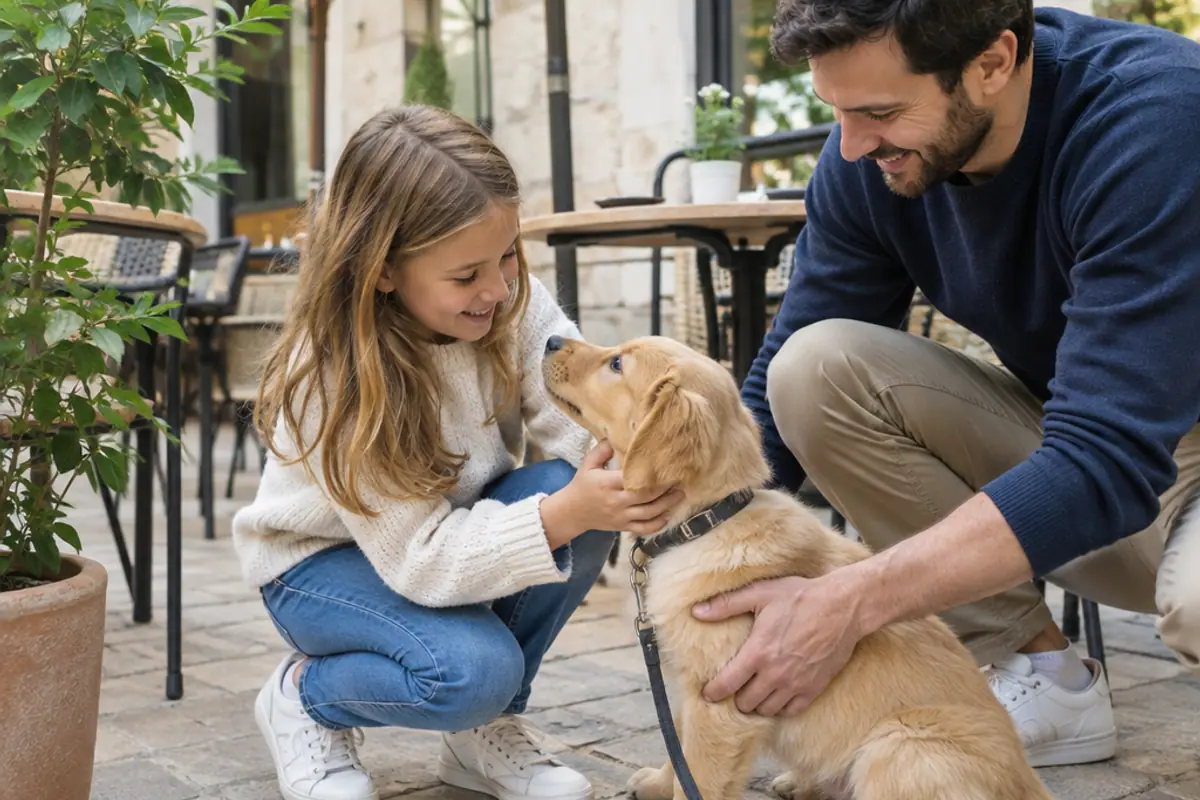
- Teach in a quiet place first, then gradually add distractions.
- Recall ("come") is the most important safety cue — never call your dog to punish it.
- Practice little and often: a few 3–5 minute sessions a day.
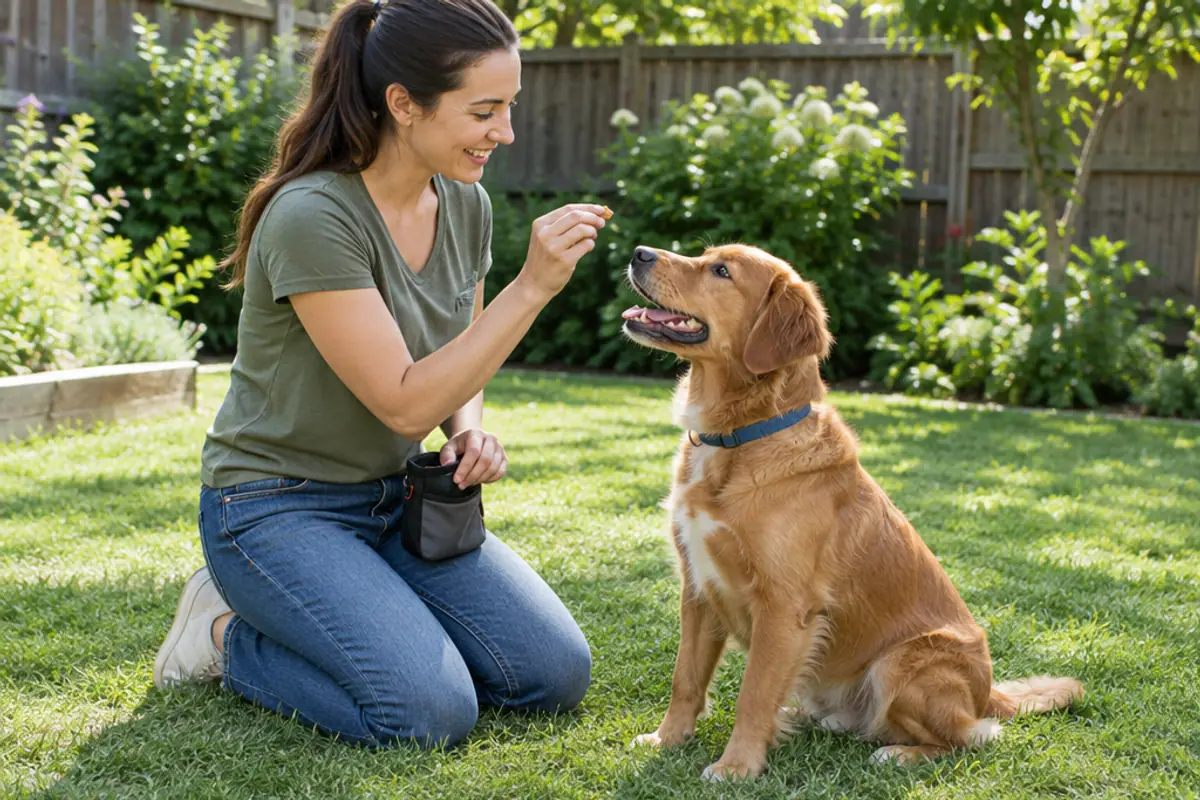
These seven cues cover most of what a family dog needs for daily life and safety. Use a marker ("yes!") and small treats, as described in positive reinforcement training.
1. Name / attention
- Say your dog's name once in a happy voice.
- The moment your dog looks at you, mark "yes!" and reward.
- Repeat 10 times a session, in different rooms.
Never use the name for scolding — you want it to mean "good things happen when I look at you."
2. Sit
- Hold a treat at your dog's nose.
- Slowly move it up and back over the head. As the head goes up, the rear goes down.
- The moment the bottom touches the floor, mark "yes!" and reward.
- After 5–10 successful repetitions, say "sit" just before the hand movement.
- Gradually make the hand movement smaller until the word alone works.
Use it for: greeting people, waiting for food, before going through doors.
3. Down
- Start with your dog sitting.
- Move a treat from the nose straight down to the floor, then slowly along the floor away from the dog.
- Mark and reward when the elbows touch the floor.
- Add the word "down" once the movement is reliable.
Some dogs find down tricky. Try luring under your bent leg or capturing it: mark and reward whenever your dog lies down on its own.
4. Come (recall)
Recall can save your dog's life. Make coming to you the best thing ever.
- Start indoors. Say your dog's name + "come!" in a happy voice, then move backward a few steps.
- When your dog reaches you, mark, give a great treat and gently hold the collar for a second (so the collar touch becomes positive).
- Practice with a partner, calling the dog back and forth.
- Move outside on a long line (15–30 ft). Don't rely on recall off-leash until it's reliable in many places.
Recall rules:
- Never call your dog to do something it dislikes (baths, leaving the park, punishment). Go and get it instead.
- Don't repeat the cue over and over. If your dog doesn't come, make it easier — less distance, fewer distractions.
- Call your dog during play, reward, and let it go back to playing.
5. Stay
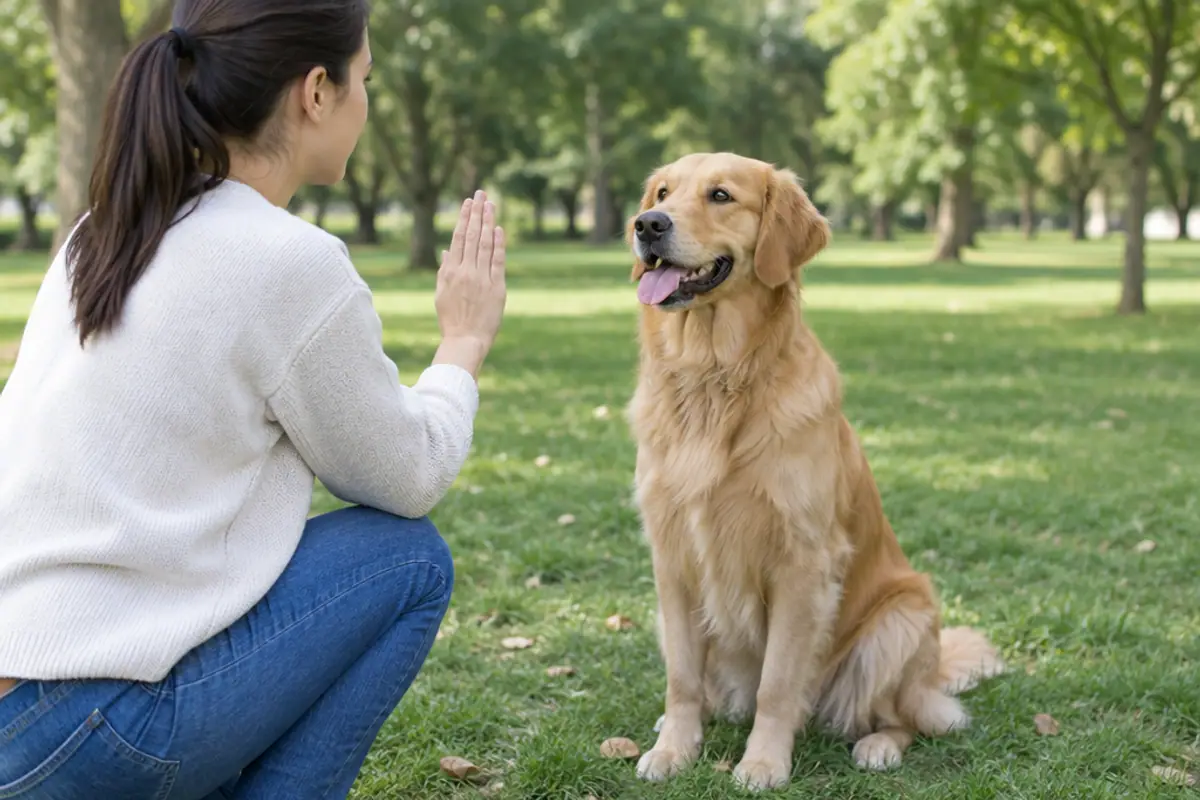
Stay has three parts: duration, distance and distractions. Build one at a time.
- Ask for a sit. Say "stay" and show a flat palm.
- Wait 1 second, mark and reward while your dog is still sitting.
- Gradually increase time: 2, 3, 5, 10 seconds.
- Then add distance: one step back, return, reward.
- Always return to your dog to reward, then give a release word like "OK!" or "free!"
If your dog breaks the stay, you've gone too fast — make it easier.
6. Place / go to bed
- Toss a treat onto a mat or bed. When your dog steps onto it, mark and reward.
- Reward for all four paws on the mat, then for lying down on it.
- Add the cue "place" as your dog heads to the mat.
- Build duration, like with stay.
Use it for: doorbells, dinner time, visitors and calm time.
7. Leave it
- Hold a treat in a closed fist. Let your dog sniff and lick.
- The moment your dog pulls away, mark and reward with a treat from your other hand.
- Add the cue "leave it" when your dog is reliably backing off.
- Progress to a treat on the floor under your hand, then uncovered, then walking past items.
See eating things off the ground for more.
Bonus: loose-leash walking
Walking nicely is a skill, not a single command. See stop leash pulling.
Troubleshooting
- Dog loses interest: use tastier treats, shorter sessions, and train before meals.
- Only works at home: practice in new places, starting with easy ones.
- Only works with food in your hand: switch to rewards from a pouch or pocket after the behavior.
Consider a group class — see choosing a dog trainer.