Key takeaways
- Choose toys based on your dog's size and chewing style.
- Every home should have chew, puzzle, and interactive toys.
- Avoid toys small enough to swallow and chews harder than teeth.
- Rotate toys weekly and throw out damaged ones.
Toys aren't just fun — they meet your dog's needs to chew, hunt, problem-solve and play with you. The right toys can prevent boredom and destructive behavior.
Know your dog's chewing style
| Style | Description | Best toys |
|---|---|---|
| Gentle | Carries and licks toys, rarely destroys them | Plush, soft rubber, puzzle toys |
| Moderate | Chews for fun, sometimes rips seams | Durable rubber, rope, tougher plush |
| Power chewer | Destroys most toys quickly | Heavy-duty rubber and nylon toys sized up; supervised use only |
Types of toys
Chew toys
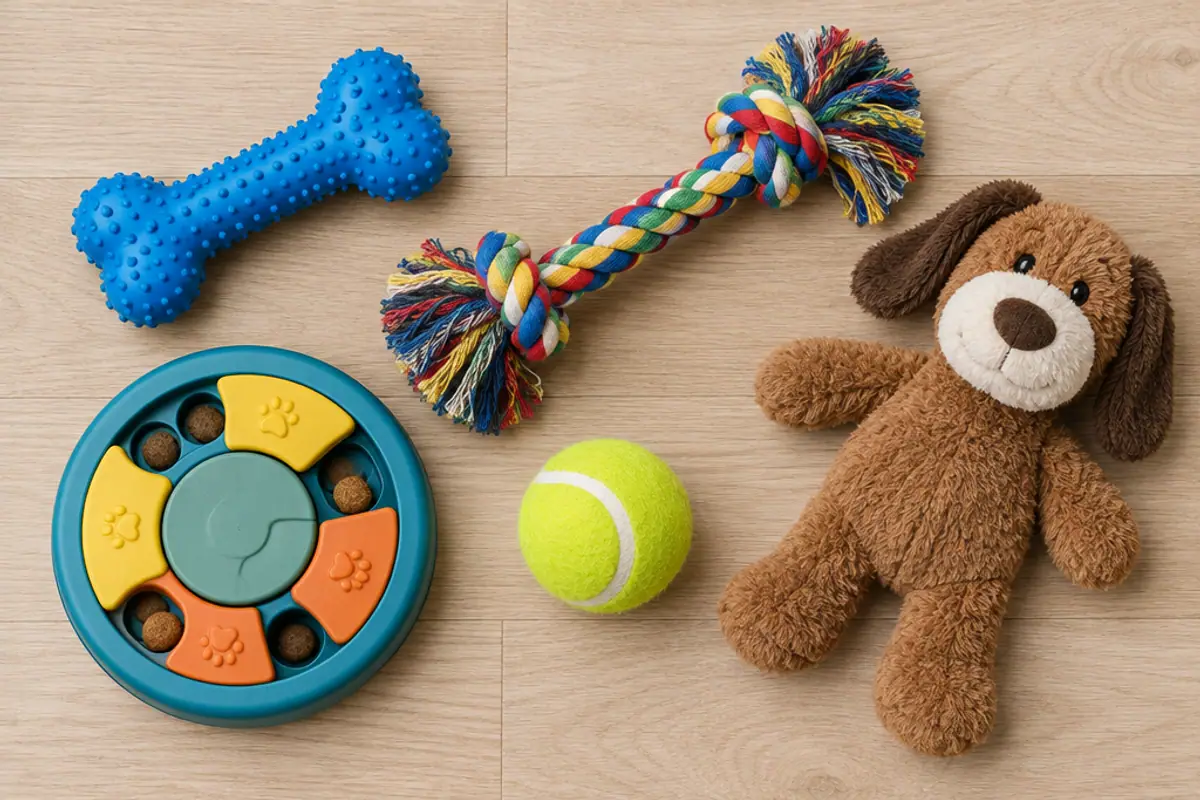
Satisfy the urge to chew and help relieve stress. Choose firm but slightly flexible rubber or nylon. A good test: you should be able to dent it with your fingernail and it should bend slightly.
Food puzzles and treat dispensers
Stuffable rubber toys, treat balls, snuffle mats, lick mats and puzzle boards. Great for mental stimulation, alone time and slowing fast eaters. See games and interactive toys.
Tug toys
Rope toys, rubber tugs and fleece tugs for interactive play. Use with rules (see our games guide).
Fetch toys
Balls, flying discs and throw toys. Make sure balls are too big to swallow — a ball that can slip to the back of the throat is a choking hazard. Choose dog-safe discs that don't damage teeth.
Plush toys
Many dogs love to carry, cuddle or "kill" plush toys. Supervise — stuffing and squeakers can be swallowed.
Safety checklist
- Size up: toys should be larger than your dog's mouth can swallow.
- No small parts that can come off (eyes, buttons, bells).
- Avoid very hard chews: antlers, hooves, cooked bones, hard plastic and some nylon bones can fracture teeth.
- Supervise with new toys and all edible chews.
- Replace toys when they crack, fray or get small from wear.
- Rope toys: swallowed strings can cause dangerous intestinal problems — take them away when they start to unravel.
- Tennis balls can wear down teeth over time with heavy chewing; dog-specific balls are a good alternative.
If your dog swallows part of a toy, call your vet — especially if you notice vomiting, loss of appetite, straining or belly pain.
Starter toy kit (budget-friendly)
- One durable stuffable rubber toy
- One snuffle mat or treat ball
- One tug toy
- One ball or fetch toy
- One comfort toy (plush or soft)
Rotate: put half away and swap weekly. Old toys feel new again.
DIY enrichment
- Cardboard boxes stuffed with paper and treats (supervise — some dogs eat cardboard)
- Frozen treat cubes in a muffin tin
- A towel with treats rolled inside
- A plastic bottle inside an old sock (remove the cap and label; supervise)