Key takeaways
- Use tiny, soft, smelly treats for training — about the size of a pea.
- Keep treats and chews to no more than about 10% of daily calories.
- Use high-value treats for hard situations (distractions, recall) and kibble for easy ones.
- As behaviors become reliable, switch from every-time rewards to variable rewards and life rewards.
Food is one of the most effective tools in dog training. It's fast, clear, and most dogs love it. Used wisely, treats help you teach faster — without leading to a chubby dog.
Why treats work
Dogs repeat behaviors that pay off. A treat delivered right after a behavior tells your dog "yes, that!" That's the core of positive reinforcement training.
Choosing training treats
The best training treats are:
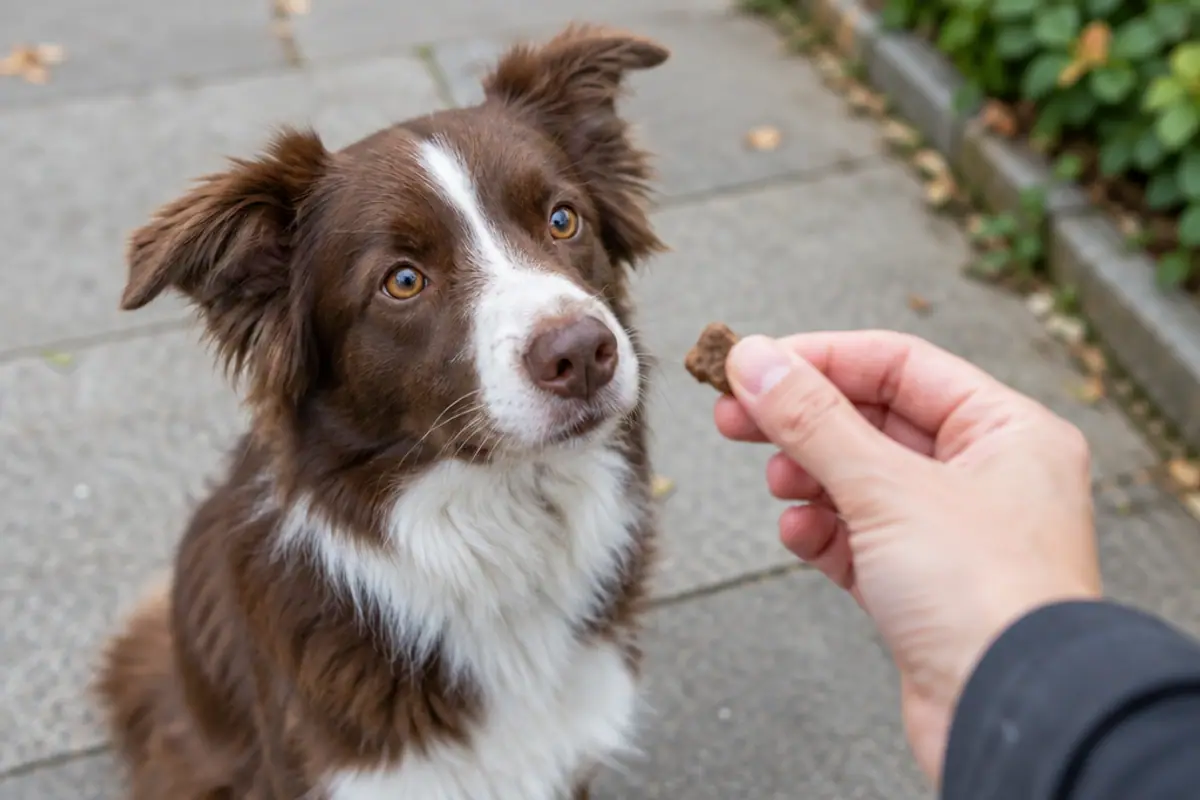
- Tiny — pea-sized for medium dogs, even smaller for small dogs. Your dog only needs a taste.
- Soft — quick to eat, so training flows.
- Smelly and tasty — the more your dog loves it, the harder it'll work.
- Low in calories per piece.
The treat value ladder
| Value | Examples | Use for |
|---|---|---|
| Low | Regular kibble, plain cereal-type treats | Easy behaviors at home |
| Medium | Commercial soft treats, carrot or apple bits | Everyday training |
| High | Tiny pieces of plain cooked chicken, cheese, hot dog (occasionally), freeze-dried liver | Distractions, recall, vet visits, scary situations |
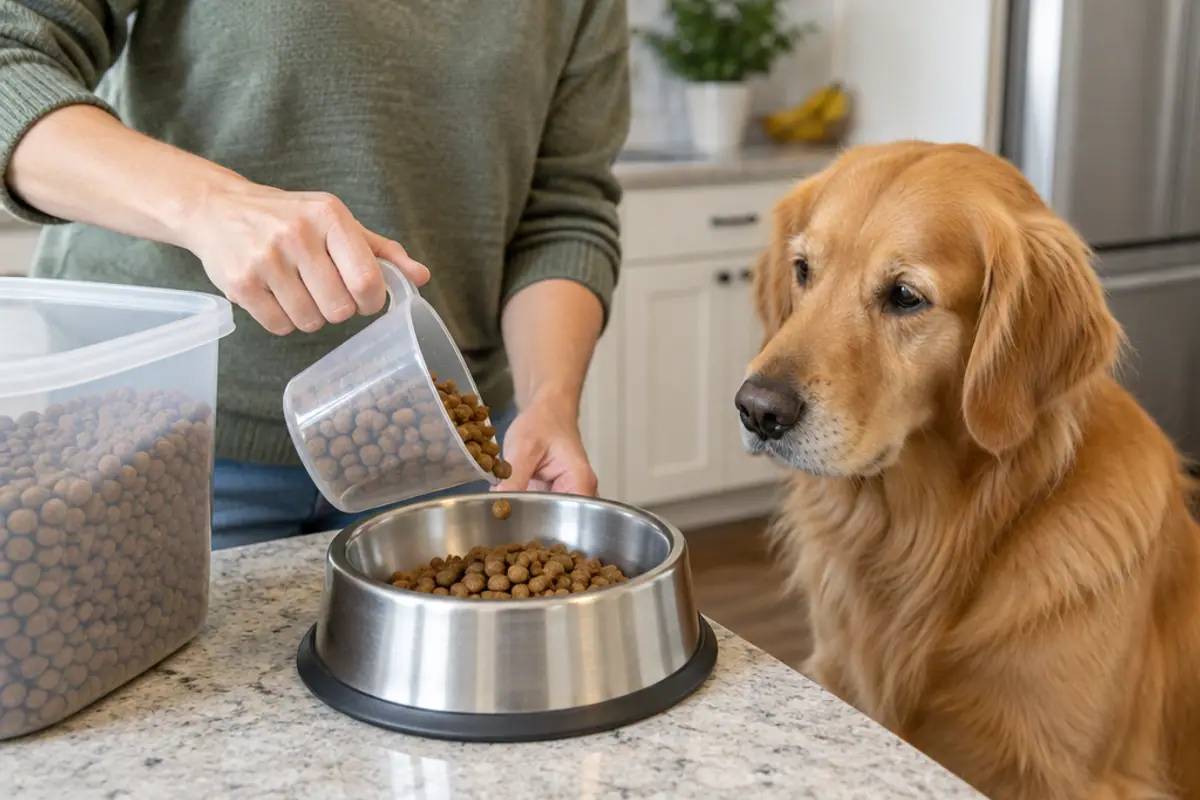
Put part of your dog's daily kibble in a pouch and use it for training throughout the day. Your dog earns its breakfast — and you don't add extra calories.
The 10% rule
Treats, chews and extras should make up no more than about 10% of your dog's daily calories. For a dog needing 1,000 kcal per day, that's about 100 kcal of treats. If you train a lot, reduce the meal portion slightly.
Watch out for calorie-dense chews. Some large rawhide-type chews, bully sticks and dental chews can contain 100+ calories each.
Healthy treat ideas
- Small pieces of plain cooked chicken or turkey
- Carrot, green bean, cucumber or apple pieces (no seeds)
- Blueberries
- Frozen plain pumpkin cubes
- Their regular kibble
Always avoid toxic foods like grapes, raisins, chocolate and anything containing xylitol.
How to deliver treats well
- Timing matters. Reward within 1–2 seconds of the behavior. A marker word like "yes!" or a clicker bridges the gap.
- Deliver where you want your dog to be — for loose-leash walking, at your side by your leg.
- Don't show the treat first (bribing). Once your dog understands a cue, keep treats out of sight and reward after.
- Keep sessions short: 3–5 minutes, a few times a day.
Phasing out treats (the right way)
You don't need treats forever — but don't stop suddenly either.
- When your dog responds reliably (about 80–90% of the time), start rewarding every second or third response.
- Mix in life rewards: going outside, a toss of a ball, sniffing, greeting a friend, praise.
- Keep using treats for hard situations like recall at the park.
Common treat mistakes
- Using big treats and overfeeding
- Rewarding too late
- Only rewarding with food when you're about to do something your dog dislikes (it learns treats predict bad things)
- Giving treats for pestering or begging
Treats are also great for building positive associations with things like the vet, nail trims and the car. See nails, ears, teeth and eyes.
Important: This article is general educational information, not veterinary advice. Every dog is different — always talk to your veterinarian about your own dog's health, diet and treatment. In an emergency, contact your vet or nearest emergency animal hospital immediately.