Key takeaways
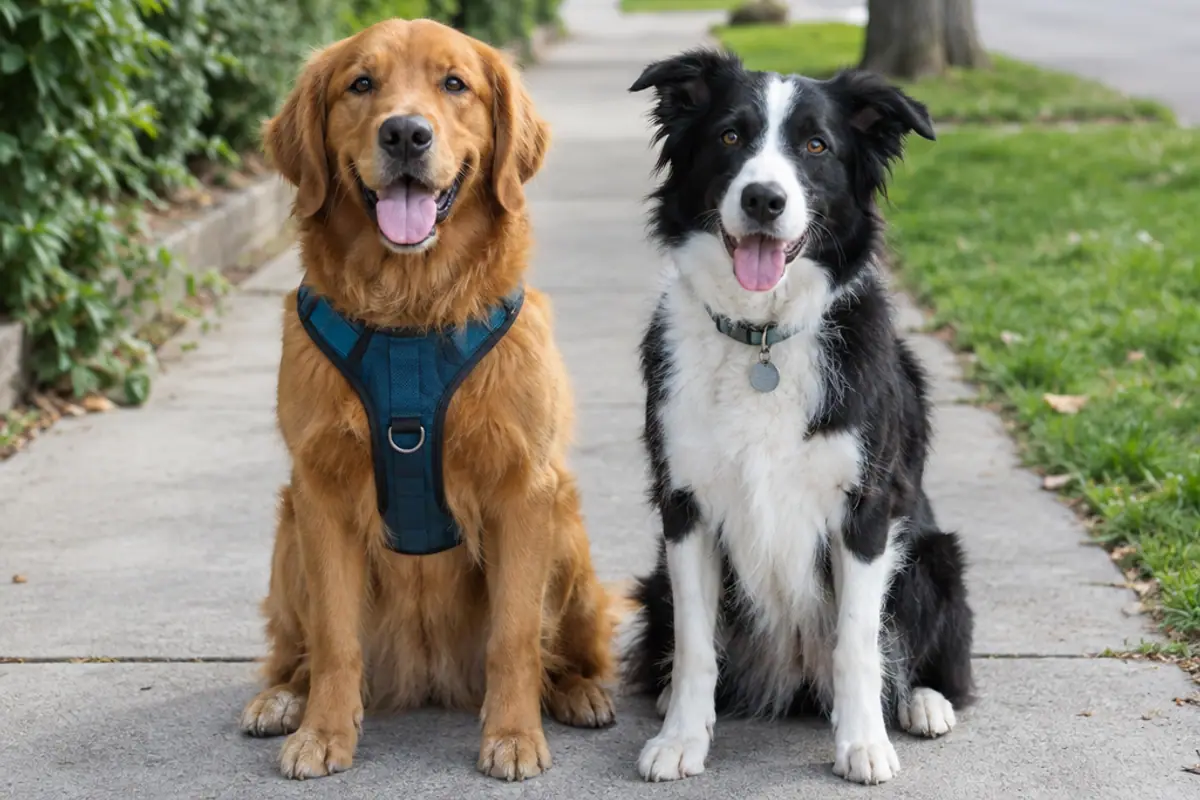
- Most dogs benefit from both: a collar for ID tags and a harness for walks.
- A front-clip harness helps manage pulling; a back-clip harness is comfortable for dogs that don't pull.
- Small, flat-faced breeds and dogs with neck or trachea problems should walk on a harness.
- Avoid choke, prong and shock collars.
The equipment you use affects your dog's comfort, safety and how easy walks are. Here's how to choose.
Collars
Flat collar
A basic buckle or snap collar. Great for ID tags and for dogs that walk nicely. Pressure from pulling on a collar concentrates on the neck, so it's not ideal for strong pullers, toy breeds or flat-faced breeds.
Fit: two fingers should fit snugly under the collar.
Martingale collar
Tightens a limited amount when the dog pulls, so it can't slip over the head. Useful for dogs with narrow heads like Greyhounds and Whippets, or dogs that back out of collars. Should never tighten enough to choke. Remove when unsupervised.
Breakaway collar
Releases under pressure — a safety option for dogs that are unsupervised, crated or playing with other dogs.
Harnesses
Back-clip harness
The leash attaches between the shoulder blades. Comfortable and easy to put on, great for small dogs and dogs that don't pull. It can encourage pulling in strong dogs (think of sled dogs).
Front-clip harness
The leash attaches at the chest. When the dog pulls, it's gently turned toward you. A useful management tool while you teach loose-leash walking.
Dual-clip harness
Has both front and back rings. Versatile, and you can use a double-ended leash for extra control.
Step-in harness
Your dog steps into it, which helps dogs that dislike things going over their heads.
Escape-proof harness
Has an extra strap around the belly. Useful for nervous dogs and newly adopted dogs, especially rescue Greyhounds.
Look for a Y-shaped harness that sits on the breastbone and doesn't cross the front of the shoulders, so it doesn't restrict natural movement.
Harness fit checklist
- Two fingers fit under every strap
- Chest strap sits on the breastbone, not the throat
- The harness doesn't rub in the armpits
- Your dog can't back out of it
- Recheck fit as puppies grow
Head halters
A strap around the nose and neck, like a horse halter. Very effective for strong pullers, but many dogs need slow, positive introduction. Never jerk the leash with a head halter, and use it with a short leash.
What to avoid
Choke chains, prong (pinch) collars and shock (e-)collars work by causing discomfort or pain. They can injure the neck, trachea and eyes and are associated with increased fear and aggression. Many veterinary and training organizations advise against them. Some countries have banned them.
Quick guide
| Your dog | Recommended |
|---|---|
| Puppy | Lightweight collar with ID + simple harness |
| Walks nicely | Flat collar or back-clip harness |
| Pulls on the leash | Front-clip or dual-clip harness while training |
| Toy breed, flat-faced breed, trachea or neck issues | Harness only for walks |
| Sighthound | Martingale collar + harness |
| Escape artist or nervous rescue | Escape-proof harness + martingale, double-clipped |
| Running / canicross | Specialized running harness |
Leashes
A standard 4–6 ft (1.2–1.8 m) leash is best for everyday walks. Long lines (15–30 ft) are great for recall practice in open spaces. Retractable leashes can cause injuries and teach pulling — best avoided, at least during training.