Key takeaways
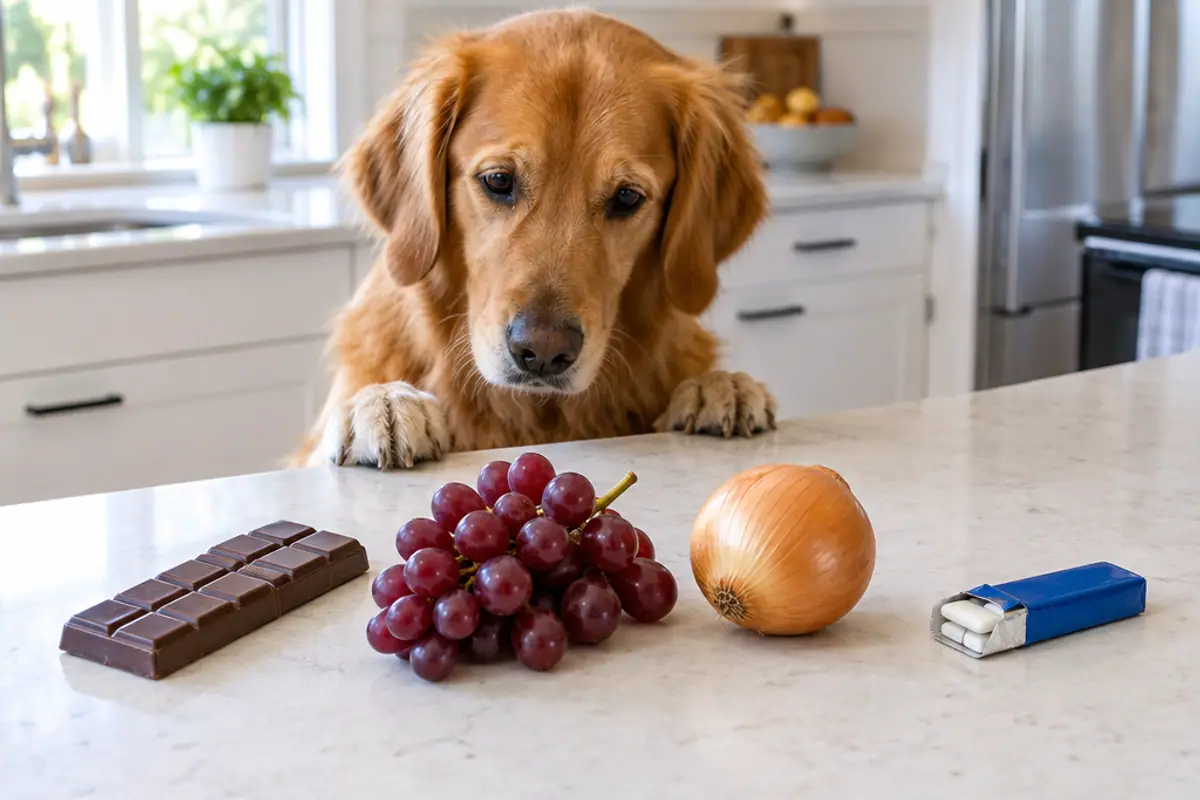
- The most dangerous common foods: xylitol, chocolate, grapes and raisins, onions and garlic, macadamia nuts, alcohol.
- Xylitol (in sugar-free gum, some peanut butters and baked goods) can cause life-threatening low blood sugar and liver failure.
- If your dog eats something toxic, call your vet or a poison hotline immediately — don't wait for symptoms.
- Don't make your dog vomit unless a veterinary professional tells you to.
Many foods that are healthy for people can make dogs seriously ill. Keep this list handy — and keep these foods out of reach.
Emergency? Call your vet or emergency animal hospital now. In the U.S., you can also call ASPCA Animal Poison Control (888-426-4435) or Pet Poison Helpline (855-764-7661) — a consultation fee may apply. Have the packaging, the amount eaten and your dog's weight ready.
Highly dangerous foods
Xylitol (birch sugar)
A sugar substitute found in sugar-free gum, mints, some peanut butters and nut butters, baked goods, toothpaste, mouthwash and chewable vitamins. In dogs, it triggers a rapid release of insulin, causing dangerously low blood sugar within 10–60 minutes, and larger doses can cause liver failure. Even a few pieces of gum can be dangerous for a small dog. Check labels on peanut butter before using it in toys.
Chocolate, cocoa and caffeine
Chocolate contains theobromine and caffeine. The darker and more bitter the chocolate, the more dangerous it is: baking chocolate and cocoa powder are the worst; milk chocolate is less toxic but can still cause problems in larger amounts; white chocolate contains very little. Signs include vomiting, diarrhea, restlessness, fast heart rate, tremors and seizures. Coffee grounds, tea bags and energy drinks are also dangerous.
Grapes, raisins, currants and sultanas
Can cause sudden kidney failure in some dogs. There's no known safe amount, and it's unpredictable which dogs will be affected. Treat any ingestion as an emergency. This includes raisin bread, trail mix and fruitcake.
Onions, garlic, leeks, chives and shallots
All forms — raw, cooked, powdered and dehydrated — can damage red blood cells and cause anemia. Signs may be delayed by several days. Watch out for onion or garlic powder in soups, gravies, baby food and seasoned meats.
Macadamia nuts
Cause weakness (especially in the hind legs), vomiting, tremors and fever. Usually not fatal, but needs veterinary advice.
Alcohol
Even small amounts can cause vomiting, disorientation, low blood sugar and breathing problems. Raw bread dough is also dangerous: yeast produces alcohol and the dough expands in the stomach.
Other foods to avoid
| Food | Why it's a problem |
|---|---|
| Cooked bones | Splinter; can cause choking, broken teeth or gut perforation |
| Fatty foods (bacon, fat trimmings, gravy) | Can trigger pancreatitis |
| Corn cobs, peach/plum pits | Common cause of intestinal blockage |
| Avocado | Pit is a choking/blockage risk; skin and leaves may cause stomach upset |
| Raw yeast dough | Expands in the stomach and produces alcohol |
| Salty snacks, salt dough | Salt toxicity in large amounts |
| Nutmeg | Toxic in larger amounts |
| Moldy food / compost | Mycotoxins can cause tremors and seizures |
| Raw or undercooked meat and eggs | Bacteria such as Salmonella |
| Cannabis edibles | Wobbliness, dribbling urine, lethargy; edibles may also contain chocolate or xylitol |
Human medications
Not food, but one of the most common poisonings. Ibuprofen, naproxen, acetaminophen (paracetamol), antidepressants, ADHD medications, sleep aids and heart medications can all be dangerous. Never give your dog human medication unless your vet tells you to.
Safe "people foods" in moderation
Many dogs enjoy these as occasional treats (plain, unseasoned, in small pieces):
- Carrots, green beans, cucumber, pumpkin (plain, not pie filling)
- Apple slices (no seeds or core), blueberries, watermelon (no seeds or rind), banana
- Plain cooked chicken, turkey or lean beef (no bones, skin or seasoning)
- Plain cooked rice, oatmeal
- Plain, xylitol-free peanut butter
Keep all extras under about 10% of daily calories. See treats and training.
What to do if your dog eats something toxic
- Stay calm and remove any remaining food.
- Call your vet, an emergency clinic or a poison hotline immediately. Many poisonings are easier to treat when caught early.
- Have information ready: what was eaten, how much, when, and your dog's weight. Keep the packaging.
- Don't induce vomiting at home unless instructed — it can be dangerous for some substances and some dogs.
- Go to the vet if advised, even if your dog seems fine.
Important: This article is general educational information, not veterinary advice. Every dog is different — always talk to your veterinarian about your own dog's health, diet and treatment. In an emergency, contact your vet or nearest emergency animal hospital immediately.