Key takeaways
- Great adventure partners: Border Collie, Australian Shepherd, Labrador, German Shepherd, Husky, Doberman, Poodle (Standard).
- High-energy dogs need mental work as well as miles — training, sports and puzzles.
- Don't run with puppies: wait until growth plates close (often 12–18+ months) and ask your vet.
- Flat-faced breeds are not suitable for running or hot-weather hiking.
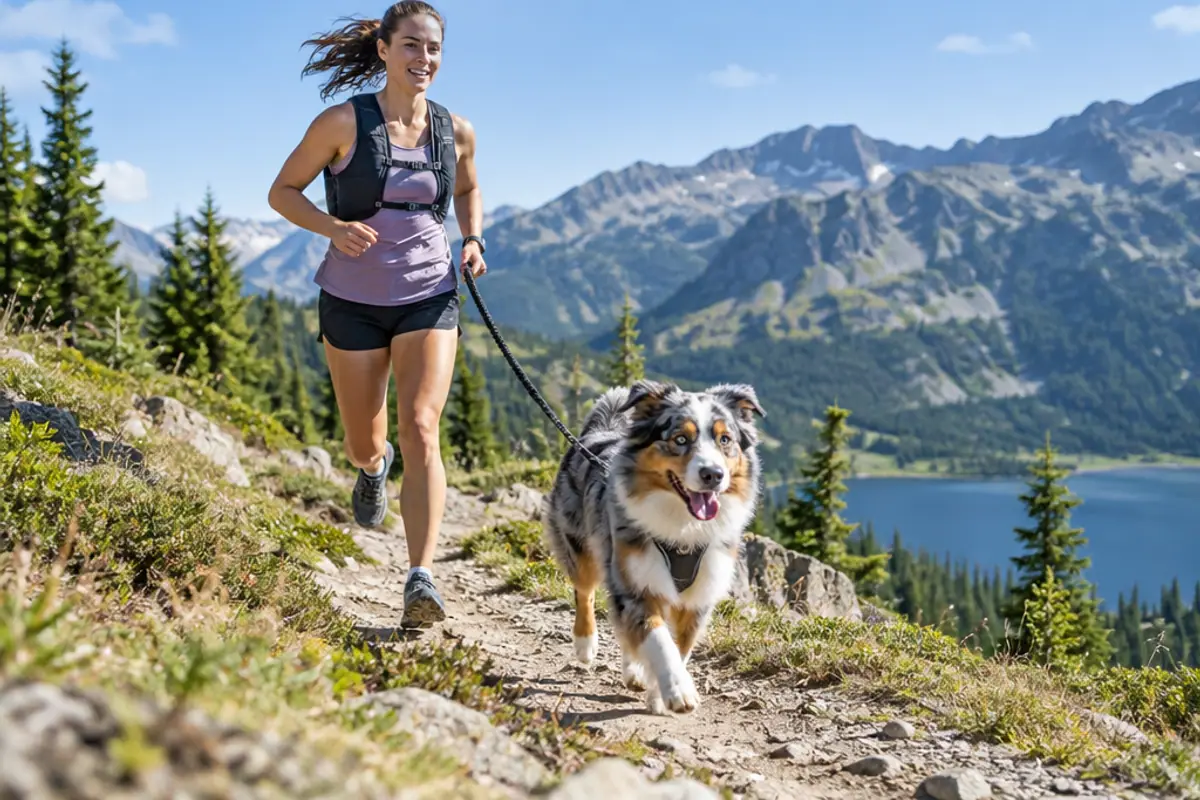
If you run, hike, cycle or spend weekends outdoors, a high-energy dog can be the best adventure buddy you'll ever have. But these dogs need that activity every day — not just on weekends.
Top breeds for active owners
| Breed | Best for | Watch out for |
|---|---|---|
| Border Collie | Hiking, agility, frisbee | Needs mental work daily, can be obsessive |
| Australian Shepherd | Hiking, trail running, dog sports | Herding instincts, sheds |
| Labrador Retriever | Hiking, swimming, jogging | Joint problems if overweight |
| German Shepherd | Hiking, tracking, obedience | Needs lots of training and socialization |
| Siberian Husky | Canicross, skijoring, cold-weather running | Heat-sensitive, can't be off-leash |
| Doberman Pinscher | Running, obedience | Cold-sensitive, needs training |
| Poodle (Standard) | Hiking, swimming, agility | Coat care |
| Boxer | Play, moderate running in cool weather | Heat-sensitive |
| Vizsla, Weimaraner, German Shorthaired Pointer | Long-distance running | Very high energy, separation anxiety |
Before you start running with your dog
- Wait for your dog to finish growing. High-impact exercise can harm developing joints. Small breeds may be ready around 12 months; large and giant breeds often not until 18–24 months. Ask your vet.
- Get a vet check before starting any new intense exercise plan.
- Build up gradually — like a couch-to-5K plan for dogs.
- Mind the heat. Dogs cool mostly by panting and overheat faster than people. Run in the early morning or evening and carry water. See seasonal dog care.
- Check paws for cuts, blisters and hot pavement burns.
- Use the right gear: a well-fitted harness and, for running, a hands-free waist leash with a bungee section. See harness vs collar.
Flat-faced (brachycephalic) breeds like Pugs, Bulldogs and French Bulldogs are not suitable running partners. They overheat quickly, and heat stroke can be fatal.
Try a dog sport together
Agility, canicross, dock diving, frisbee and bikejoring are great ways to channel energy. Read dog sports for beginners.