Temperament
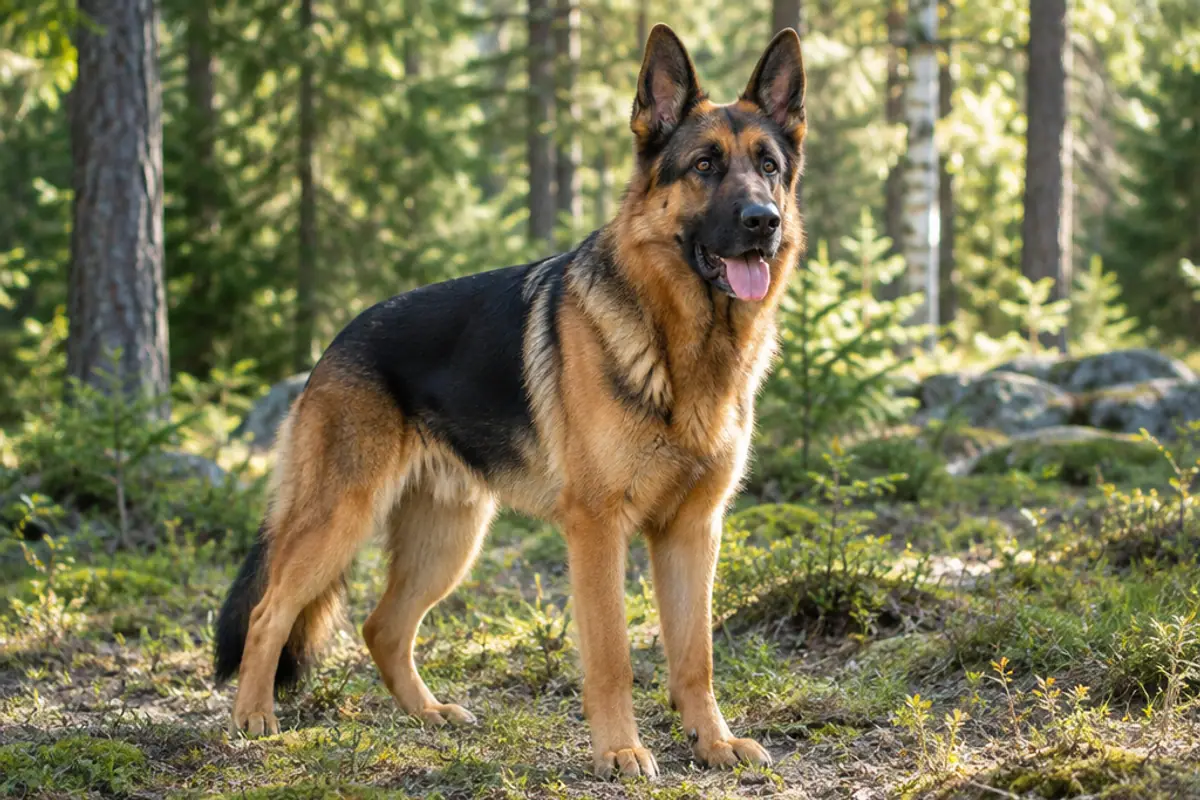
German Shepherds are intelligent, confident and deeply loyal to their families. They're naturally watchful and can be aloof with strangers. With good breeding and thorough socialization, they're steady, calm companions; without it, they can become anxious or overprotective.
Exercise and energy
GSDs need at least 1.5–2 hours of exercise daily, plus mental work: training sessions, puzzle toys, scent games or sports like obedience, tracking and agility. A bored German Shepherd may bark, chew, pace or dig.
Grooming
They're nicknamed "German Shedders" for a reason. Brush several times a week and daily during seasonal coat blows. Bathing is only needed occasionally.
Training
Among the most trainable breeds, German Shepherds love having a job. Use reward-based training and start early. Owners should be confident and consistent. Consider a professional trainer for your first German Shepherd.
Health
Watch for hip and elbow dysplasia, degenerative myelopathy (a progressive spinal disease), bloat (GDV), exocrine pancreatic insufficiency, allergies and digestive sensitivity. Look for breeders who X-ray hips and elbows and DNA-test for degenerative myelopathy. Learn the emergency signs of bloat — it's life-threatening.
Is the German Shepherd right for you?
✅ A great match if you…
- Want a loyal, protective and highly trainable dog
- Enjoy training, hiking, running or dog sports
- Have time for extensive socialization
- Can handle a strong, large dog
⛔ Think twice if you…
- Want a low-maintenance or low-shedding dog
- Are away from home most of the day
- Aren't interested in ongoing training
- Want a dog that loves every stranger
Breed traits are general tendencies, not guarantees. Health information is a summary of issues commonly reported in the breed — ask breeders for health-testing results and discuss screening with your veterinarian. Weights and heights are typical adult ranges and vary by line and sex.