Temperament
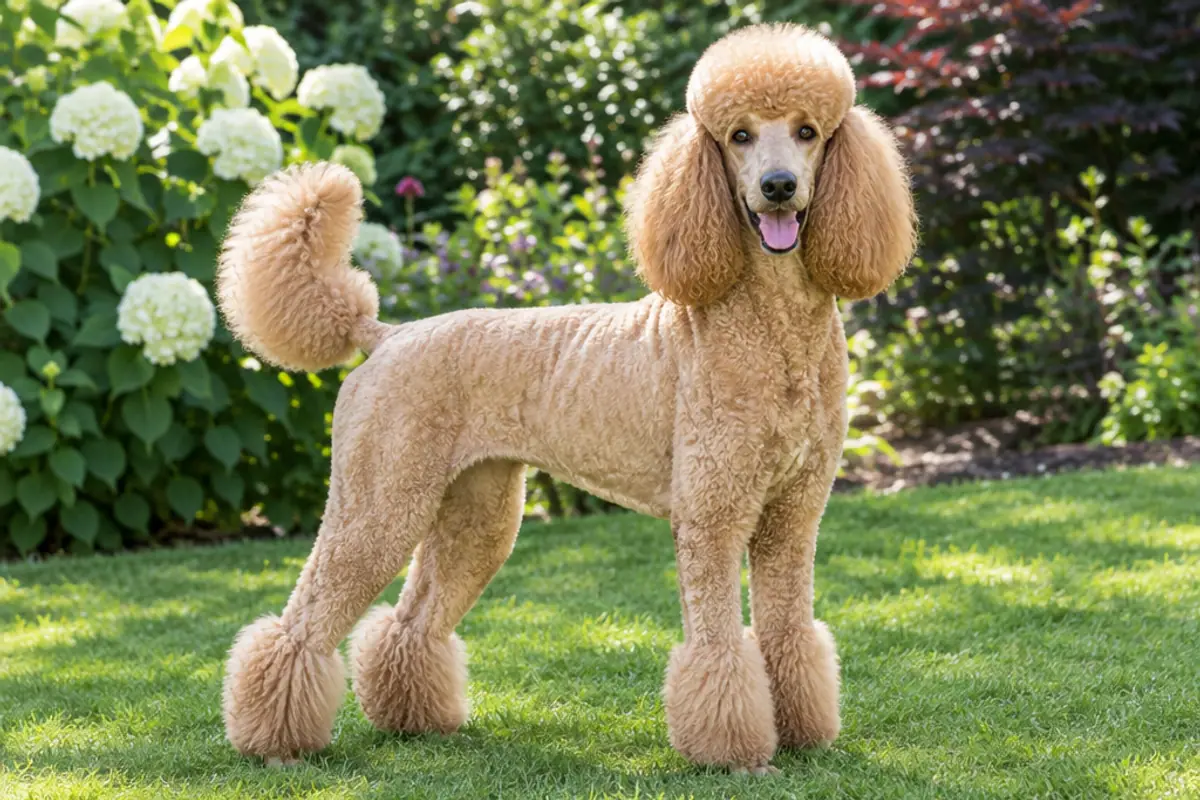
Don't be fooled by fancy show haircuts — Poodles were bred as water retrievers. They are smart, athletic, playful and very people-focused. Most are friendly and good with families. Toy and Miniature Poodles can be more sensitive and reserved with strangers.
Exercise and energy
Standard Poodles need about 1–1.5 hours of exercise a day; Minis and Toys less. All three sizes need mental stimulation — they love learning tricks and solving puzzles.
Grooming
The curly coat sheds very little but grows continuously and mats easily. Brush thoroughly several times a week and book professional grooming every 4–8 weeks. A short "sporty" or "puppy" clip is much easier to maintain. Keep ears clean and dry. Poodles are often chosen by people with allergies, but no dog is truly hypoallergenic.
Training
Poodles are among the most trainable breeds and excel at obedience and tricks. They are sensitive to tone — gentle, reward-based training works best.
Health
Standard Poodles: hip dysplasia, bloat (GDV), Addison's disease, sebaceous adenitis and certain cancers. Minis and Toys: kneecap problems (patellar luxation), progressive retinal atrophy, dental disease and Legg-Calvé-Perthes disease. Choose breeders who test hips and eyes and use relevant DNA tests.
Is the Poodle right for you?
✅ A great match if you…
- Want a low-shedding, highly intelligent dog
- Enjoy training and dog sports
- Can budget for grooming every 4–8 weeks
- Want a choice of sizes
⛔ Think twice if you…
- Don't want to brush several times a week
- Can't afford regular professional grooming
- Want a low-energy couch potato
- Will leave the dog alone for long hours
Breed traits are general tendencies, not guarantees. Health information is a summary of issues commonly reported in the breed — ask breeders for health-testing results and discuss screening with your veterinarian. Weights and heights are typical adult ranges and vary by line and sex.