Temperament
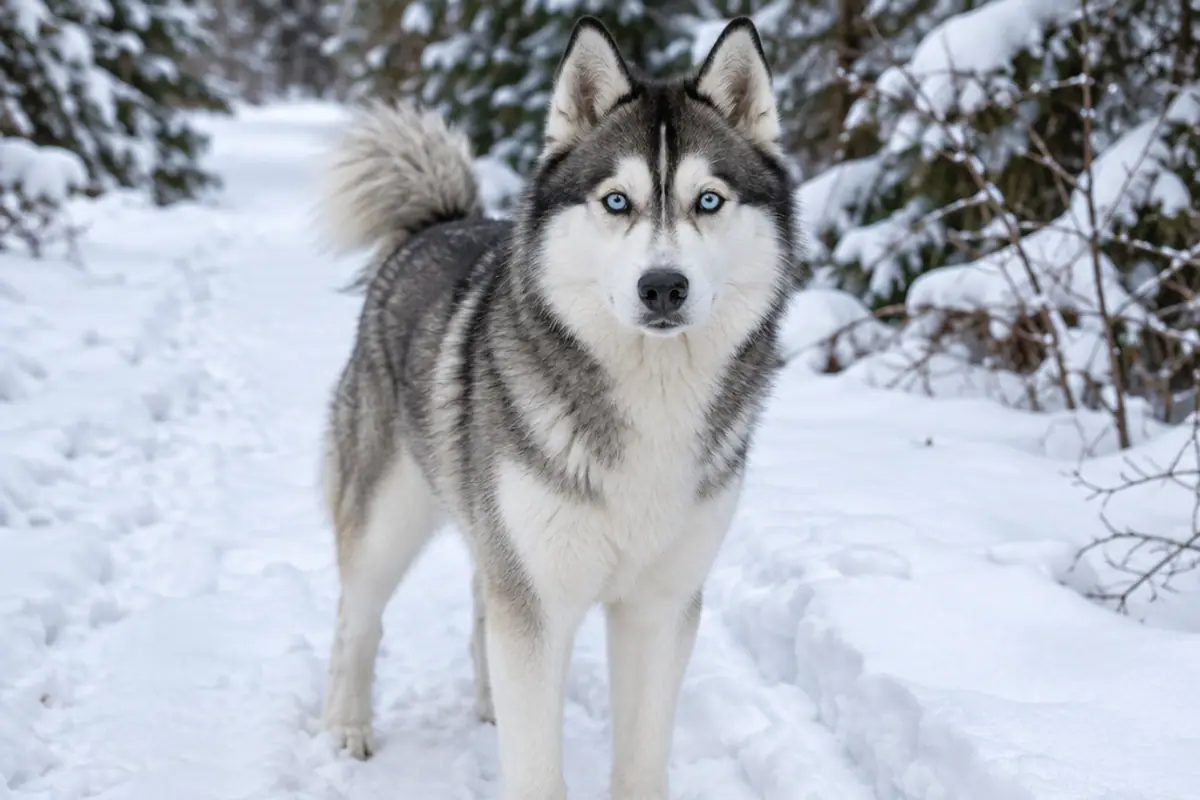
Huskies are friendly, gentle and playful — even with strangers, so they make poor guard dogs. They're pack dogs that usually enjoy other dogs. They're famously vocal: expect howls and "talking" more than barking.
Exercise and energy
Huskies were bred to run long distances. They need 2+ hours of vigorous exercise daily. Without it, they may dig, chew, howl and escape. They're great partners for canicross and other dog sports — in cool weather.
Grooming
Huskies shed heavily, with major coat blows twice a year. Brush several times a week. They're naturally clean and have little dog odor. Never shave a Husky.
Training
Intelligent but independent. They're not naturally eager to please, and most can never be trusted off-leash — they will run. Expect escape attempts: fences should be tall and dig-proof.
Health
Generally a healthy breed. Watch for eye conditions (juvenile cataracts, progressive retinal atrophy, corneal dystrophy) and hip dysplasia. They're sensitive to heat — keep them cool in summer.
Is the Siberian Husky right for you?
✅ A great match if you…
- Are very active — running, hiking, skijoring or canicross
- Live in a cooler climate
- Have a secure, tall fence
- Have another dog for company
⛔ Think twice if you…
- Are a first-time owner looking for an easy dog
- Want off-leash walks
- Have cats or small pets (strong prey drive)
- Live in a hot climate or small apartment
Breed traits are general tendencies, not guarantees. Health information is a summary of issues commonly reported in the breed — ask breeders for health-testing results and discuss screening with your veterinarian. Weights and heights are typical adult ranges and vary by line and sex.