Key takeaways
- Puppies eat 3–4 meals a day, dropping to 2 meals by about 6 months (varies by breed).
- Most adults do well on 2 meals a day.
- Use the bag's feeding guide as a starting point, then adjust based on body condition.
- Treats count: keep them under about 10% of daily calories.
Feeding the right amount is one of the most powerful things you can do for your dog's health. A major long-term study of Labrador Retrievers found that dogs kept lean lived significantly longer — about 2 years on average — than their littermates who were fed more.
How many meals a day?
| Age | Meals per day |
|---|---|
| 8–12 weeks | 4 |
| 3–6 months | 3 |
| 6–12 months | 2–3 |
| Adults | 2 (some do fine on 1, but 2 is usually better) |
| Seniors | 2 or more smaller meals |
Toy breeds may need more frequent meals as puppies to avoid low blood sugar. Large and giant breeds at risk of bloat often do better with two or more smaller meals rather than one big one.
How much food? Start with the label
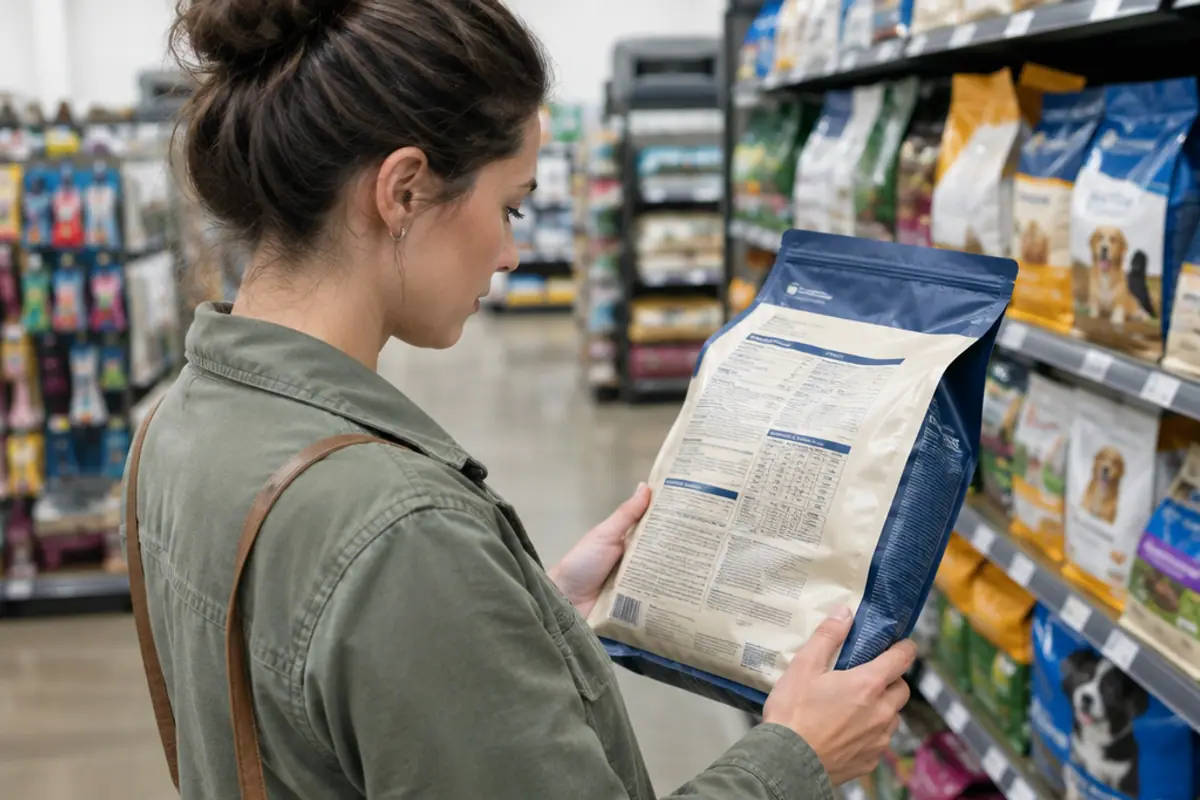
The feeding guide on the bag or can gives a daily amount based on weight. Treat it as a starting point — it's often generous. Energy needs vary a lot depending on activity, age, whether your dog is neutered, breed and even climate.
Calculating calories
Vets often estimate a dog's needs using the Resting Energy Requirement (RER):
RER (kcal/day) = 70 × (body weight in kg)^0.75
Then multiply by a factor for life stage and activity:
| Dog | Multiplier |
|---|---|
| Neutered adult | 1.6 × RER |
| Intact adult | 1.8 × RER |
| Inactive / tends to gain weight | 1.2–1.4 × RER |
| Weight loss (under vet guidance) | 1.0 × RER for ideal weight |
| Active / working | 2–5 × RER |
| Puppy under 4 months | 3 × RER |
| Puppy 4 months to adult | 2 × RER |
Example: a neutered adult dog weighing 20 kg (44 lb): RER = 70 × 20^0.75 ≈ 662 kcal. × 1.6 ≈ 1,060 kcal per day. If the food has 380 kcal per cup, that's about 2.8 cups a day, split into two meals.
Use our dog food calculator to do the math for you.
These are estimates. Individual dogs can need 20–30% more or less. Weigh your dog every few weeks and adjust.
Adjust using body condition
Your dog's body shape tells you more than any formula. At an ideal weight:
- You can easily feel the ribs with light pressure, with a slight fat covering.
- You can see a waist when looking from above.
- The belly tucks up when viewed from the side.
If you can't feel ribs, reduce food by about 10% and re-check in 2–3 weeks. If ribs, spine and hip bones are very visible, increase by about 10% and talk to your vet. See is my dog overweight?
Feeding puppies
- Feed a puppy food (large-breed puppy food for big breeds) until your vet recommends switching — typically around 9–12 months for small breeds and 12–24 months for large and giant breeds.
- Keep puppies lean. Overfeeding large-breed puppies can contribute to joint problems.
- Weigh your puppy regularly and adjust portions as it grows.
Feeding senior dogs
Older dogs often need fewer calories as they become less active, though some very old dogs lose weight and need more. Watch body condition, and ask your vet about diets for age-related conditions like kidney disease or arthritis. See senior dog care.
Good feeding habits
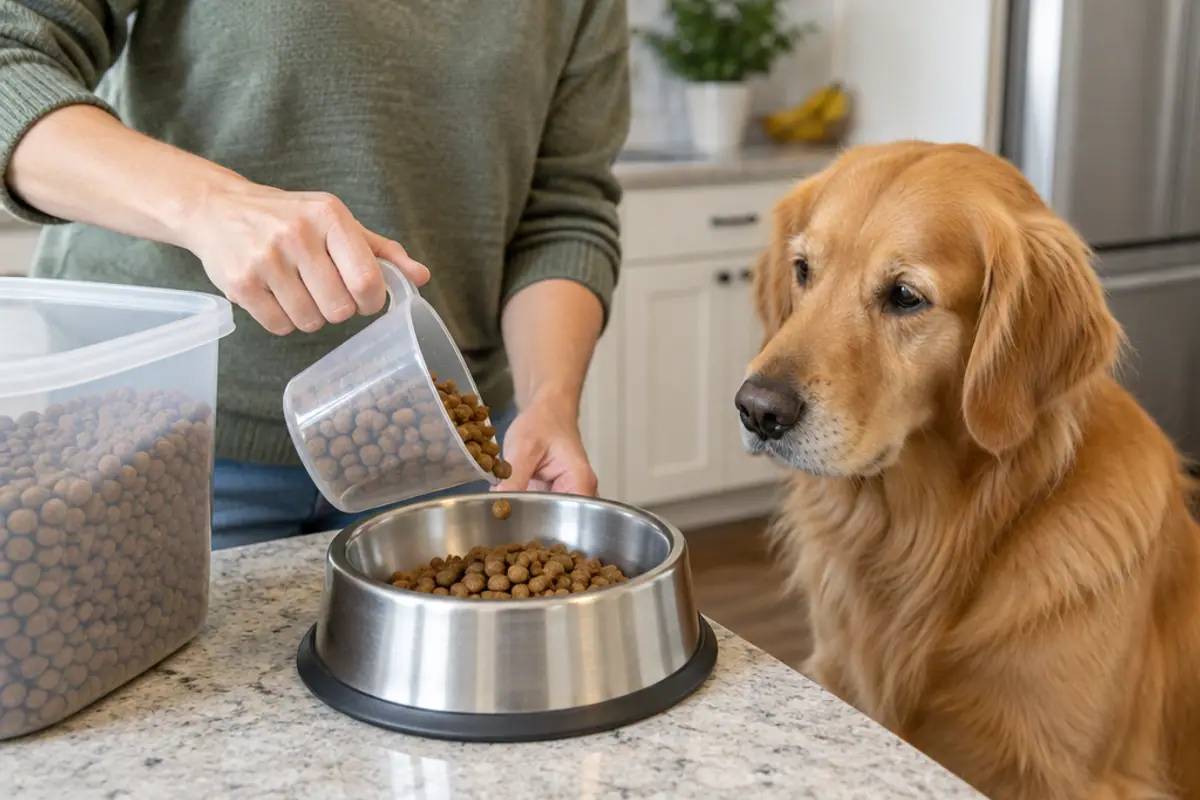
- Measure every meal with a proper measuring cup or, better, a kitchen scale.
- Scheduled meals rather than leaving food out all day (free-feeding) — it helps with house-training, appetite monitoring and weight.
- Pick up uneaten food after 15–20 minutes.
- Count treats and chews — keep them under 10% of daily calories. See treats and training.
- Use food puzzles for mental enrichment.
- Fresh water available at all times.
Sudden changes in appetite, thirst or weight are worth a vet visit — they can be early signs of illness.
Important: This article is general educational information, not veterinary advice. Every dog is different — always talk to your veterinarian about your own dog's health, diet and treatment. In an emergency, contact your vet or nearest emergency animal hospital immediately.