Key takeaways
- The most important line on the bag is the nutritional adequacy statement ("complete and balanced for…").
- Match the life stage: puppy (and large-breed puppy), adult, or all life stages.
- Ingredient lists are sorted by weight before cooking — a meat listed first isn't necessarily the main protein source.
- Terms like "premium," "holistic" and "natural" have little or no regulated meaning.
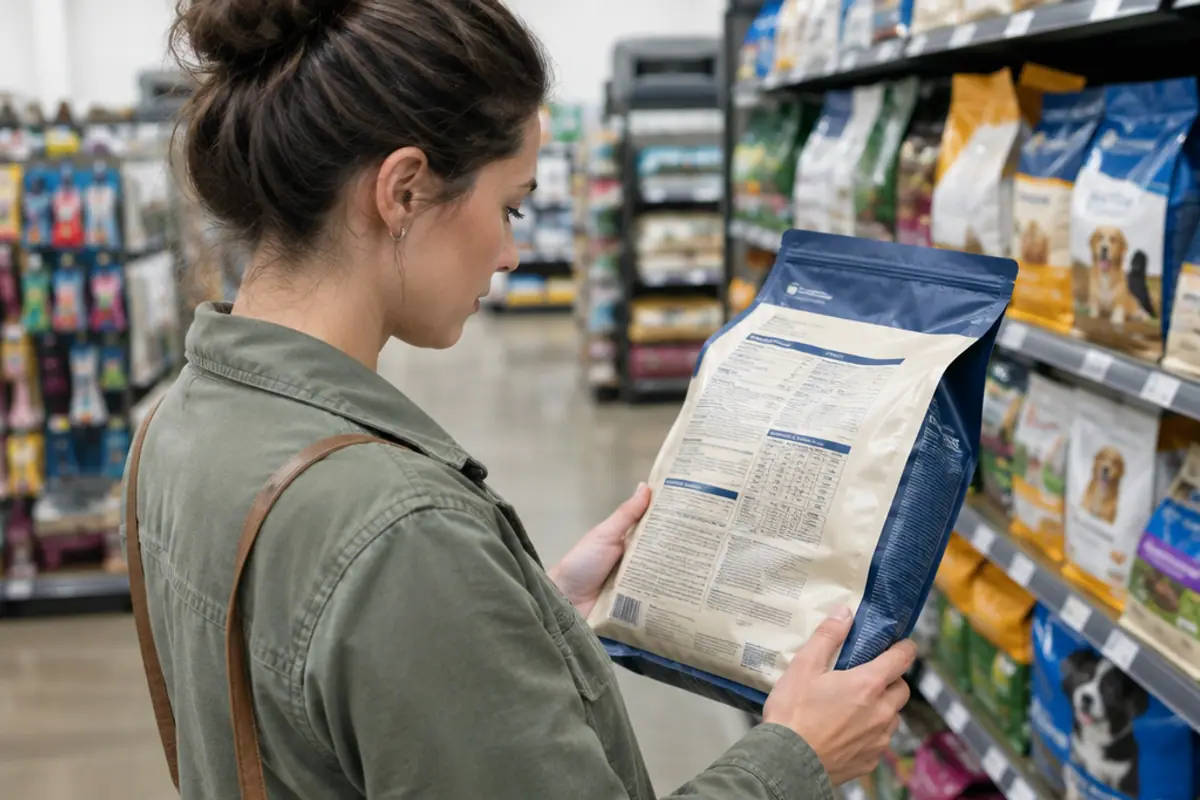
Pet food aisles are overwhelming, and packaging is designed to appeal to humans, not dogs. Here's how to look past the marketing and choose a good food.
1. Find the nutritional adequacy statement
In the U.S., look for a statement like:
"[Product] is formulated to meet the nutritional levels established by the AAFCO Dog Food Nutrient Profiles for all life stages, including growth of large size dogs (70 lb or more as an adult)."
or
"Animal feeding tests using AAFCO procedures substantiate that [Product] provides complete and balanced nutrition for maintenance of adult dogs."
This tells you the food is complete and balanced and which life stage it's for. If it says "for intermittent or supplemental feeding only," it's a treat or topper, not a full diet. In Europe, look for "complete feed" (FEDIAF guidelines).
2. Match your dog's life stage and size
- Puppies need more calories, protein, calcium and phosphorus. Large-breed puppies (expected adult weight over about 70 lb / 32 kg) need a food formulated for large-breed growth, with controlled calcium to support healthy bone development.
- Adults need a maintenance diet.
- Seniors: there's no official senior standard, but senior formulas are often lower in calories. Ask your vet what suits your dog.
3. Look at who makes the food
The World Small Animal Veterinary Association (WSAVA) suggests asking manufacturers questions such as:
- Do you employ a full-time qualified nutritionist (PhD in animal nutrition or board-certified veterinary nutritionist)?
- Who formulates your diets?
- What quality control measures do you use?
- Do you conduct research and publish it?
Companies that invest in nutrition expertise and quality control are generally a safer bet than small brands with trendy marketing.
4. Read the guaranteed analysis
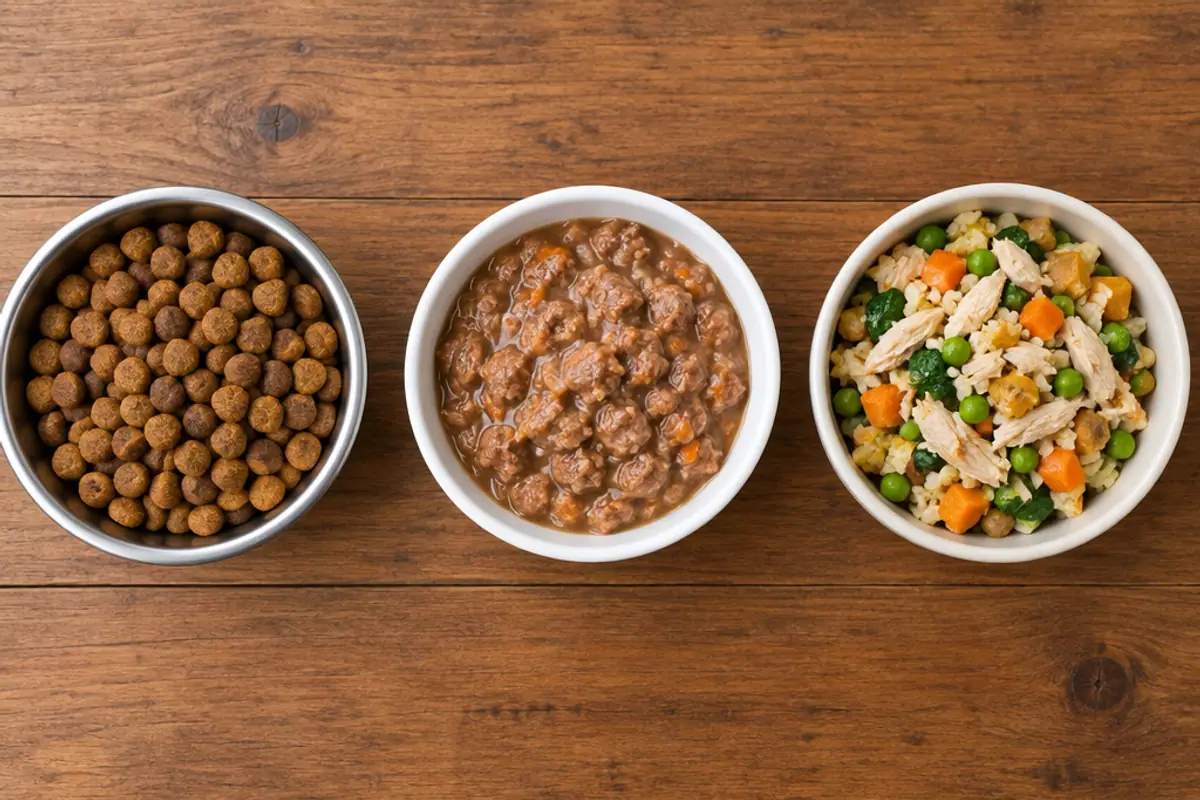
The guaranteed analysis lists minimum crude protein and fat and maximum fiber and moisture. To compare dry and wet foods, you need to convert to a "dry matter basis":
Dry matter % = nutrient % ÷ (100 − moisture %) × 100
Example: a canned food with 8% protein and 78% moisture has 8 ÷ 22 × 100 = about 36% protein on a dry matter basis — similar to many kibbles.
5. Understand the ingredient list
Ingredients are listed in order of weight before processing. Fresh meat contains a lot of water, so "chicken" as the first ingredient may contribute less protein than "chicken meal" (dried, concentrated) listed further down.
Some common ingredients explained:
- Meat meals (e.g., chicken meal) — concentrated protein, not a bad thing.
- By-products — organ meats and other parts; nutritious, though less appealing to people.
- Grains (rice, oats, corn, barley) — a source of energy, fiber and nutrients for most dogs.
- Legumes (peas, lentils) — common in grain-free foods.
About "grain-free"
Grain allergies in dogs are uncommon; when food allergies occur, the culprit is more often a protein like beef, dairy or chicken. In 2018, the U.S. FDA began investigating a possible link between certain diets — many of them grain-free and high in peas, lentils or potatoes — and dilated cardiomyopathy (DCM), a heart disease. The link is still being studied. Talk to your vet before choosing a grain-free diet.
Marketing terms to ignore (mostly)
| Term | What it means |
|---|---|
| Premium, super-premium, gourmet | No legal definition |
| Holistic | No legal definition |
| Human-grade | Ingredients and facility meet human food standards — says nothing about nutrition |
| Natural | Loosely regulated; may still include synthetic vitamins and minerals |
| "With chicken" | Can mean as little as 3% chicken |
| "Chicken dinner/formula" | At least 25% chicken |
| "Chicken dog food" | At least 95% chicken (excluding water) |
6. Judge by your dog
The best food is one your dog eats readily and does well on: healthy weight, good energy, shiny coat, healthy skin and firm, regular stools. Check your dog's body condition regularly.
Quick checklist
- "Complete and balanced" statement for the right life stage
- Large-breed puppy formula if needed
- Manufacturer with qualified nutritionists and quality control
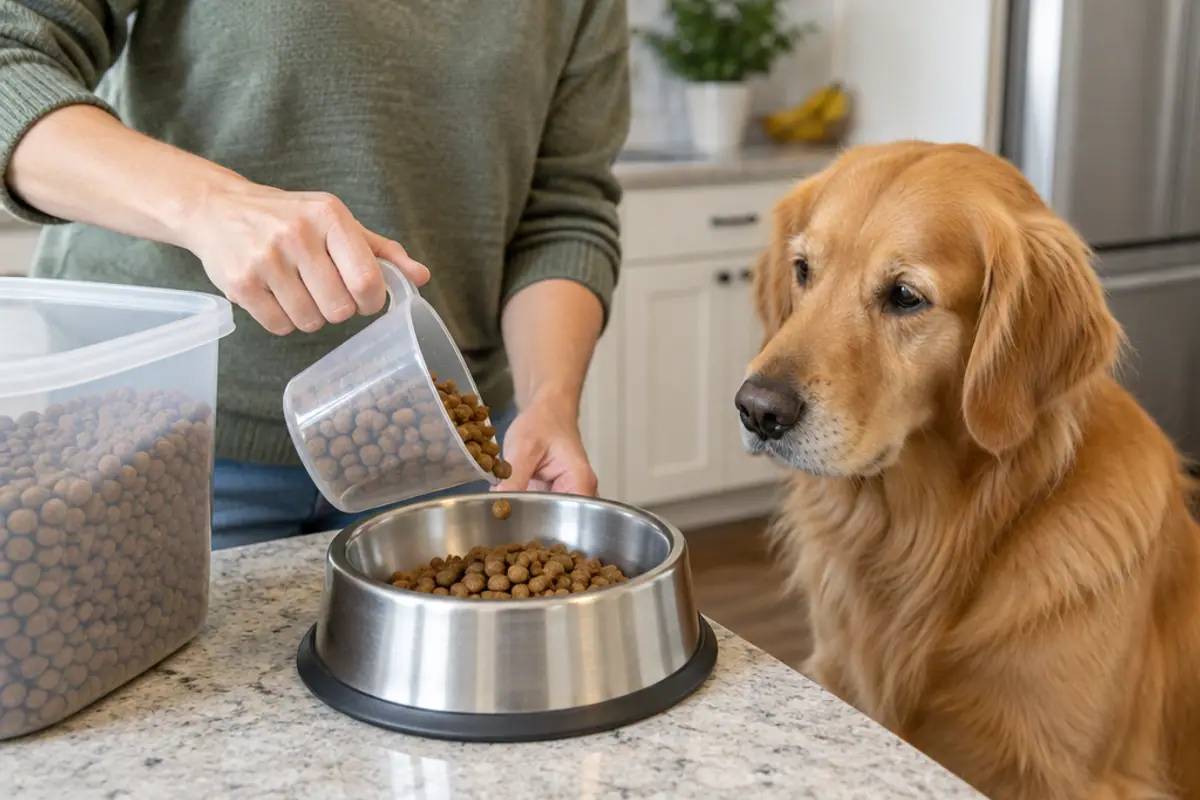
- Calories per cup or can listed (for portion control)
- Fits your budget long-term
- Your vet has no concerns for your dog's health needs
For shopping advice, see our dog food buying guide.
Important: This article is general educational information, not veterinary advice. Every dog is different — always talk to your veterinarian about your own dog's health, diet and treatment. In an emergency, contact your vet or nearest emergency animal hospital immediately.