Key takeaways
- Trim nails every 3–6 weeks — if you hear clicking on the floor, they're too long.
- Clean ears only when dirty with a vet-approved cleaner; never push anything into the ear canal.
- Daily tooth brushing with dog toothpaste is the gold standard for dental health.
- Red, cloudy, squinting or discharging eyes need a vet visit.
Regular at-home care of nails, ears, teeth and eyes prevents painful problems and costly vet visits. The secret is to make it a positive routine from a young age.
Getting your dog comfortable with handling
Before you trim or brush anything, teach your dog that handling predicts good things:
- Touch a paw for one second → give a treat. Repeat.
- Gradually hold the paw longer, touch individual toes, press gently on a nail.
- Show the clippers → treat. Touch clippers to a nail → treat.
- Clip one nail → treat. Stop there for the day if needed.
Do the same with ears and lips. Keep sessions short and stop before your dog gets stressed.
Nail trimming
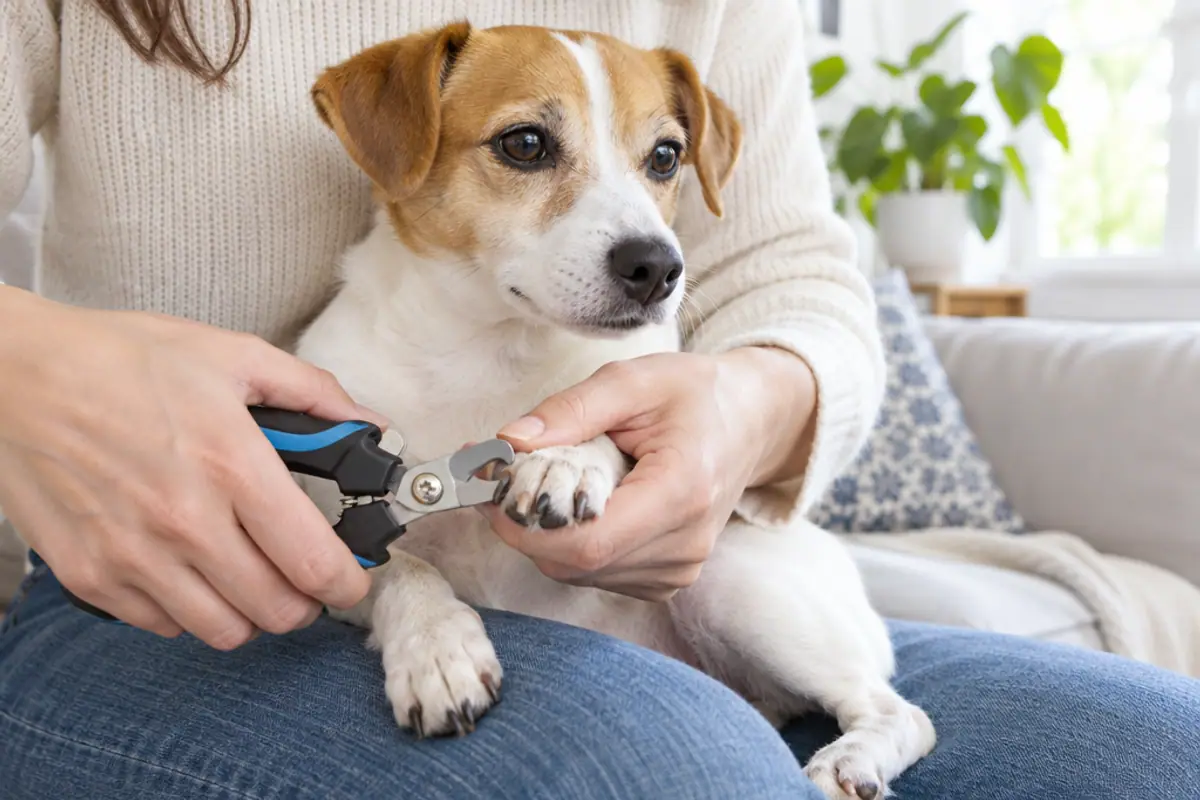
How often: usually every 3–6 weeks. If nails click on hard floors or touch the ground when standing, they're too long. Long nails change how dogs walk and can cause pain.
Tools: scissor-style or guillotine clippers sized for your dog, or a nail grinder. Keep styptic powder handy.
How to trim:
- Hold the paw firmly but gently.
- Identify the quick — the pink area with blood vessels and nerves. In white nails it's visible; in dark nails, trim small slivers at a time.
- Cut small bits from the tip at a slight angle. When you see a grey or pink oval in the center of the cut surface, stop.
- Don't forget the dewclaws on the inside of the leg.
- If you nick the quick, apply styptic powder or cornstarch with gentle pressure. Stay calm — it happens to everyone.
Trimming just a little every week or two causes the quick to recede over time, making nails easier to keep short.
Ear cleaning
How often: check weekly. Clean only if ears look dirty — over-cleaning can cause irritation. Dogs with floppy ears (Cocker Spaniels, Basset Hounds) and swimmers may need more frequent cleaning.
How to clean:
- Use a vet-recommended dog ear cleaner.
- Fill the ear canal with cleaner as directed.
- Massage the base of the ear for 20–30 seconds (you'll hear a squishing sound).
- Let your dog shake its head.
- Wipe the visible part of the ear with cotton balls or gauze.
Never use cotton swabs deep in the ear, and don't use alcohol or hydrogen peroxide unless your vet says so.
See your vet if you notice odor, redness, swelling, dark or yellow discharge, head shaking, head tilt, scratching or pain. Ear infections need proper diagnosis and treatment — and if the eardrum is damaged, some cleaners can cause harm.
Teeth brushing
Most dogs have some dental disease by age three. Brushing is the single most effective thing you can do at home.
Tools: a dog toothbrush or finger brush and dog toothpaste. Never use human toothpaste — it may contain xylitol, which is toxic to dogs, and isn't meant to be swallowed.
How to brush:
- Let your dog lick toothpaste from your finger.
- Lift the lip and rub your finger along the outer surfaces of the teeth.
- Introduce the brush. Use small circular motions along the gumline, focusing on the outer surfaces of the back teeth and canines.
- Aim for daily brushing — even a 30-second brush every day beats a thorough one once a week.
Helpful extras: dental chews and diets with the VOHC seal (Veterinary Oral Health Council). Avoid very hard chews like antlers, hooves and bones — they can break teeth. A good rule: if you can't dent it with your fingernail, it's too hard.
Signs of dental problems: bad breath, red or bleeding gums, brown tartar, loose or broken teeth, chewing on one side, dropping food. Your vet may recommend a professional cleaning under anesthesia.
Eye care
- Wipe away normal "sleep" from the corners of the eyes with a damp soft cloth.
- For breeds with tear staining (Maltese, Bichon), wipe daily and keep facial hair trimmed.
- Keep hair from poking into the eyes.
Go to the vet promptly if your dog has a red, painful, cloudy, bulging or squinting eye, yellow or green discharge, or has had an eye injury. Eye problems can worsen quickly.