Key takeaways
- More than half of pet dogs in the U.S. are estimated to be overweight or obese.
- Use the rib, waist and tummy check — you should easily feel ribs and see a waist.
- Extra weight raises the risk of arthritis, diabetes, breathing problems and a shorter life.
- Safe weight loss is 1–2% of body weight per week, with a plan from your vet.
Many owners don't realize their dog is overweight — surveys by the Association for Pet Obesity Prevention consistently find that a majority of dogs are carrying extra weight. Because we get used to our dog's shape, a few extra pounds slip on unnoticed.
How to check your dog's body condition
Vets use a body condition score (BCS), usually on a 9-point scale where 4–5 is ideal. You can do a quick version at home:
1. The rib check
Run your hands along your dog's sides. You should easily feel each rib with light pressure, like feeling the back of your hand. If you have to press to find them, your dog is probably overweight.
2. The waist check
Look down from above. You should see a clear waist behind the ribs. A straight or bulging outline suggests extra weight.
3. The tummy tuck
Look from the side. The belly should tuck up from the chest toward the hind legs.
| BCS (1–9) | What it looks like |
|---|---|
| 1–3 (underweight) | Ribs, spine and hip bones easily visible; no fat felt |
| 4–5 (ideal) | Ribs easily felt, visible waist and tummy tuck |
| 6–7 (overweight) | Ribs hard to feel, waist barely visible, fat on back and tail base |
| 8–9 (obese) | Ribs not felt under heavy fat, no waist, belly may sag |
Why extra weight matters
Being overweight is linked to:
- Arthritis and joint pain, and cruciate ligament injuries
- Diabetes
- Breathing difficulties, heat intolerance and anesthetic risks
- Some cancers and skin problems
- Shorter lifespan — lean dogs live longer on average
A safe weight-loss plan
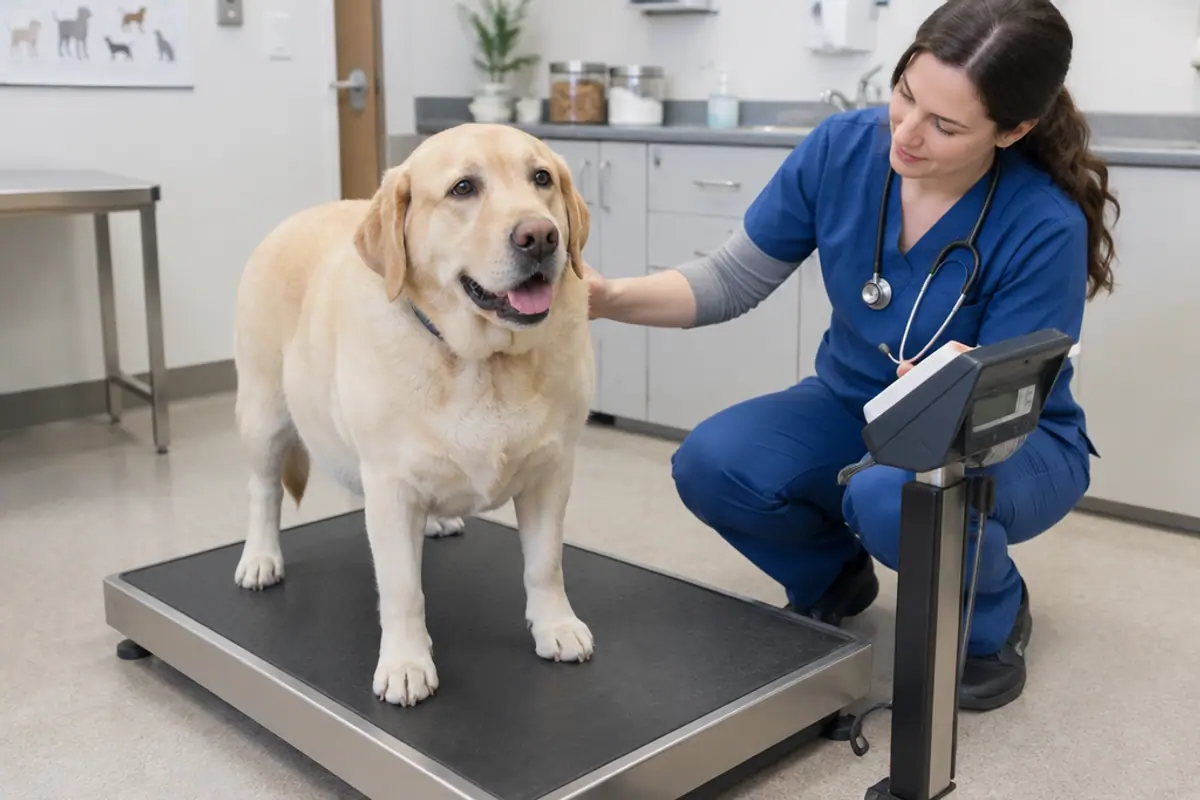
See your vet before starting a weight-loss plan. They can rule out medical causes like hypothyroidism, set a target weight and calorie goal, and may recommend a therapeutic weight-loss diet.
- Weigh your dog and record it.
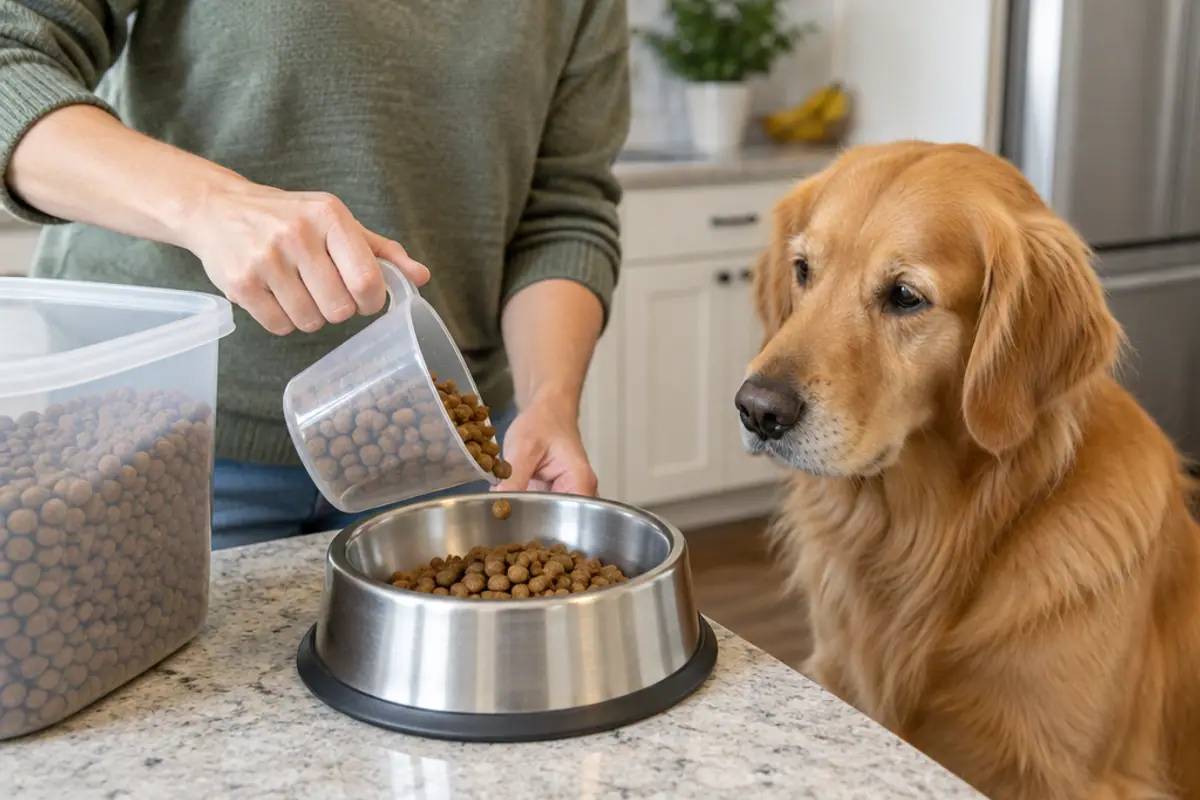
- Measure every meal — ideally with a kitchen scale. "One scoop" is often far more than a cup.
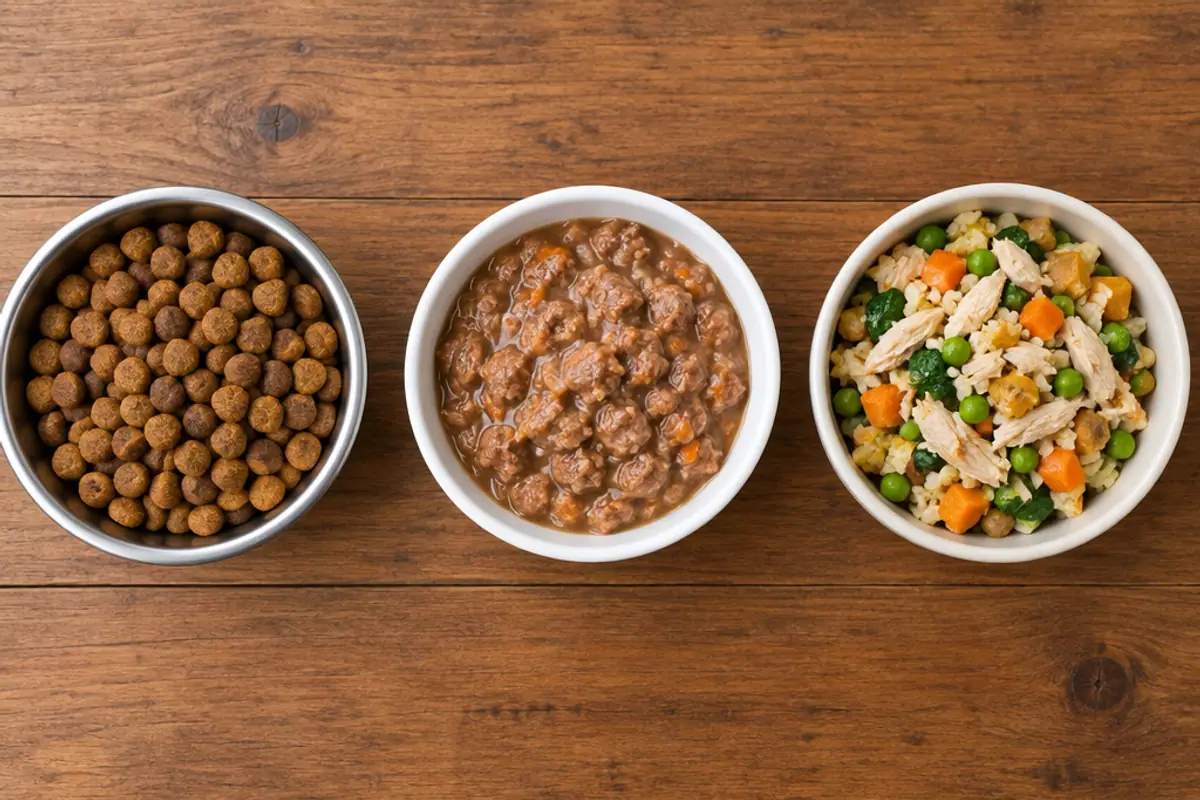
- Cut back gradually. Your vet will calculate calories for the target weight. Don't just halve the food of a regular diet — that can lead to nutrient deficiencies. A dedicated weight-management or therapeutic diet helps your dog feel full while providing all nutrients.
- Account for treats. Swap fatty treats for green beans or carrot pieces, and use part of the daily kibble as rewards.
- Stop table scraps — and get the whole household on board.
- Increase activity gradually. Add a few minutes to walks, try sniff walks, swimming (great for joints) and play. See exercise needs.
- Use food puzzles to slow eating and add mental exercise.
- Weigh every 2–4 weeks. Aim for about 1–2% of body weight loss per week. Adjust with your vet if progress stalls.
Tips for begging dogs
- Feed meals in food puzzles or scatter-feed in the yard to make eating last longer.
- Split the daily amount into more frequent, smaller meals.
- Give attention, play or a walk instead of food when your dog asks.
- Keep the dog out of the kitchen during meal prep and family meals.
Is my dog underweight?
Some dogs, particularly active young dogs and sighthounds, are naturally lean. But unexplained weight loss can be a sign of illness — dental disease, parasites, diabetes, kidney disease and more. See your vet if your dog is losing weight without trying.
Important: This article is general educational information, not veterinary advice. Every dog is different — always talk to your veterinarian about your own dog's health, diet and treatment. In an emergency, contact your vet or nearest emergency animal hospital immediately.