Key takeaways
- Core vaccines protect against distemper, parvovirus, adenovirus (hepatitis) and rabies.
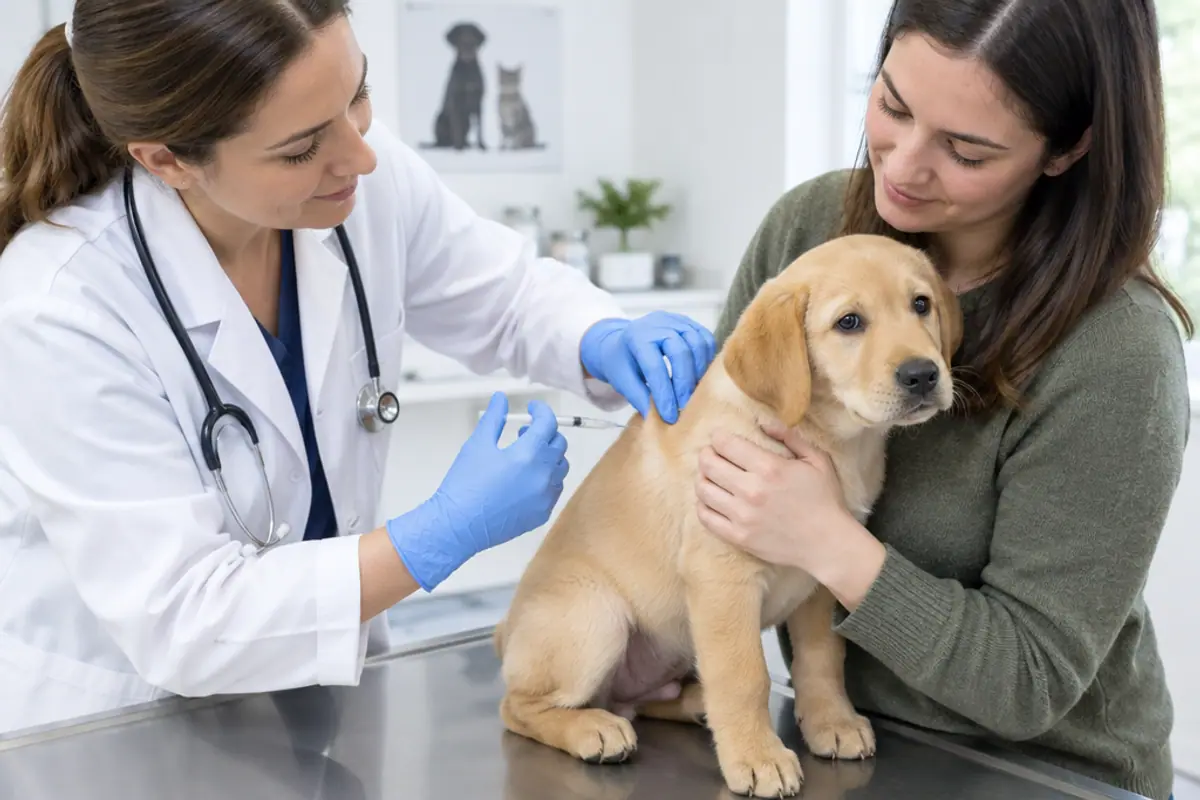
- Puppies get a series of shots every 2–4 weeks from about 6–8 weeks until at least 16 weeks old.
- A booster follows about one year later, then core vaccines typically every 1–3 years.
- Lifestyle vaccines (leptospirosis, kennel cough, Lyme, canine flu) depend on where you live and what your dog does.
Vaccines protect your dog against serious, often deadly diseases. Your vet will tailor the schedule to your dog's age, health, lifestyle and local disease risks and laws — the information below is a general guide based on widely used veterinary guidelines (such as those from AAHA and WSAVA).
Build a personal reminder calendar with our vaccination schedule tool.
Core vaccines (recommended for all dogs)
| Vaccine | Protects against |
|---|---|
| Distemper (CDV) | A severe viral disease affecting the lungs, gut and nervous system; often fatal |
| Parvovirus (CPV-2) | Severe vomiting and bloody diarrhea; very contagious and often fatal in puppies |
| Adenovirus-2 (CAV-2) | Protects against infectious canine hepatitis (CAV-1) and respiratory disease |
| Rabies | A fatal disease transmissible to people; legally required in many places |
Distemper, adenovirus and parvovirus are usually given together in one combination shot, often called DHPP or DAPP (it may also include parainfluenza).
Lifestyle (non-core) vaccines
| Vaccine | Consider if… |
|---|---|
| Leptospirosis | Your dog has contact with wildlife, standing water, rural areas or urban rats. Many vets in North America now recommend it for most dogs. It's a disease people can catch too. |
| Bordetella / parainfluenza ("kennel cough") | Your dog goes to boarding, daycare, grooming, dog parks or classes |
| Lyme disease | You live in or travel to areas with ticks that carry Lyme |
| Canine influenza (H3N2/H3N8) | Your dog is often around many other dogs, or there are outbreaks locally |
Typical puppy schedule
| Age | Vaccines (typical) |
|---|---|
| 6–8 weeks | DHPP (1st) |
| 10–12 weeks | DHPP (2nd); lifestyle vaccines may start (e.g., leptospirosis, Bordetella) |
| 14–16 weeks | DHPP (3rd); rabies (age depends on local law, usually 12–16 weeks) |
| 16–20 weeks | Final DHPP if the series started early — the last dose should be given at 16 weeks or older |
| 12–16 months | Boosters: DHPP and rabies; lifestyle vaccines as needed |
Why so many puppy shots?
Antibodies from the mother's milk protect young puppies but also block vaccines. Because we can't know exactly when those antibodies fade, puppies get repeated doses every 2–4 weeks until they are about 16 weeks old.
Adult dog schedule
- DHPP: after the one-year booster, typically every 3 years (some vaccines and vets use different intervals).
- Rabies: every 1 or 3 years, depending on the vaccine and local law.
- Leptospirosis, Bordetella, influenza, Lyme: usually yearly (Bordetella sometimes every 6–12 months).
Adult dogs with unknown vaccine history usually receive two doses of DHPP 2–4 weeks apart, plus rabies.
Keeping your puppy safe before vaccines are complete
Socialization can't wait until 16 weeks — but risk can be managed. Veterinary behavior experts recommend safe socialization during the vaccine period:
- Carry your puppy in public places, or use areas with low dog traffic.
- Avoid dog parks, pet store floors and places with unknown dogs until your vet says it's OK.
- Join a well-run puppy class that requires at least one set of vaccines and cleans floors properly.
- Arrange play with healthy, vaccinated adult dogs you know.
See puppy socialization.
Side effects
Most dogs have no reaction or only mild, short-lived effects: soreness at the injection site, tiredness or a mild fever for a day or two. A small lump at the injection site may form and usually disappears within a few weeks (tell your vet if it lasts longer than a month or grows).
Contact your vet immediately if your dog develops facial swelling, hives, vomiting, diarrhea, difficulty breathing or collapse after a vaccine. These can be signs of an allergic reaction, usually within minutes to hours.
Titer testing
A titer test measures antibodies in the blood. Some owners use it to decide whether a DHPP booster is needed. It isn't accepted in place of rabies vaccination in most places. Ask your vet whether it makes sense for your dog.
Frequently asked questions
When can my puppy go outside after vaccines?
Puppies can go into your own yard and be carried to safe places from day one. Most vets advise waiting 1–2 weeks after the final puppy vaccine (around 16–18 weeks old) before visiting dog parks or high-traffic dog areas.
Are yearly vaccines necessary for adult dogs?
Not all of them. Core vaccines like DHPP are often given every 3 years after the first adult booster. Some lifestyle vaccines, like leptospirosis, are given yearly. Rabies intervals depend on local law.
Important: This article is general educational information, not veterinary advice. Every dog is different — always talk to your veterinarian about your own dog's health, diet and treatment. In an emergency, contact your vet or nearest emergency animal hospital immediately.