Key takeaways
- A microchip is a permanent ID — but it only works if the registration is up to date.
- Your dog should also wear a collar with an ID tag showing your phone number.
- Many cities and counties require a dog license and rabies tag.
- Keep vaccination and medical records in one place, including digital copies.
Every year, many lost dogs are never reunited with their families because they have no identification or because their information is outdated. Getting your ID and paperwork in order takes an afternoon and could bring your dog home.
Microchips
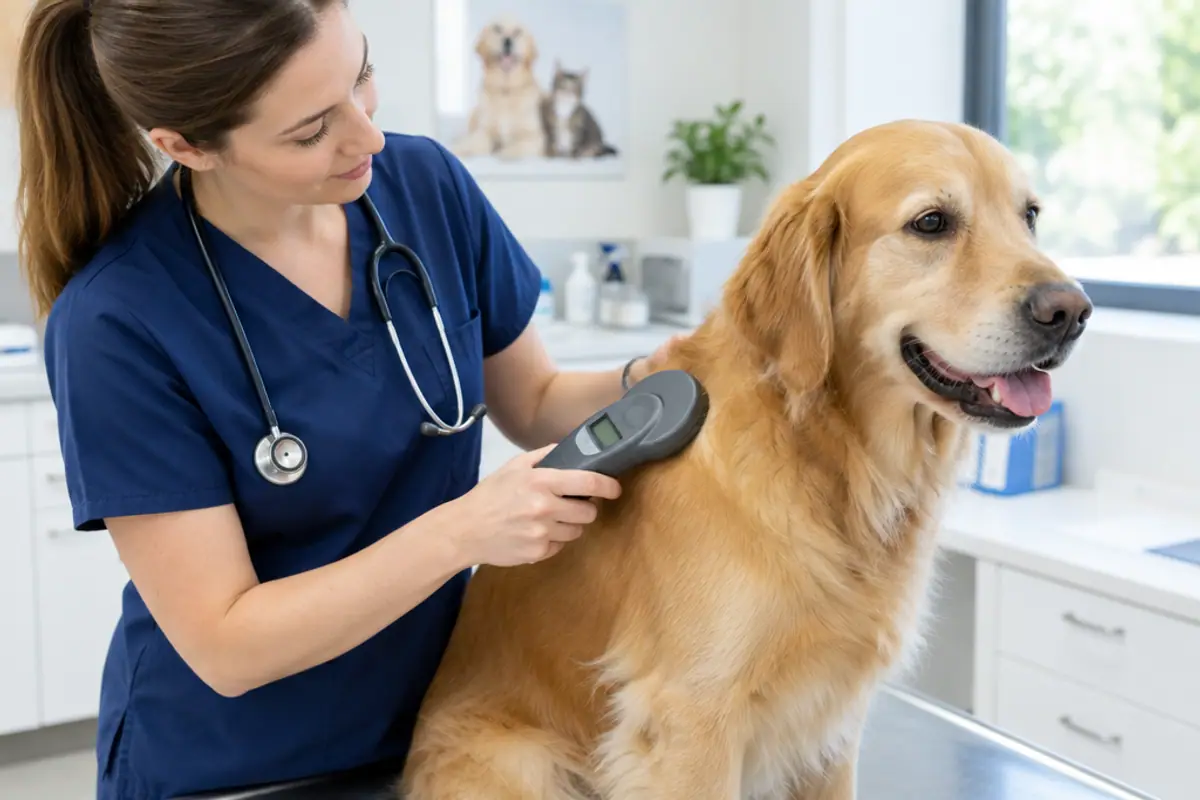
A microchip is a tiny transponder, about the size of a grain of rice, implanted under the skin between the shoulder blades. It has a unique number that shelters and vets read with a scanner. It isn't a GPS tracker.
- Cost: usually $25–$75, often included with adoption.
- Procedure: a quick injection, similar to a vaccine. No anesthesia needed.
- Lasts for life.
The most important step: registration
The chip number must be registered with your contact details in a microchip registry database. When you adopt or buy a dog, transfer the registration to your name. Update it whenever you move or change your phone number. Ask your vet to scan the chip at annual check-ups to make sure it still works.
Not sure where your dog's chip is registered? Search the chip number on a universal lookup tool such as AAHA's Universal Pet Microchip Lookup (U.S.).
Collar and ID tag
A visible tag is the fastest way for a neighbor to return your dog. Include:
- Your phone number (most important)
- Your dog's name (optional)
- "Microchipped" (encourages finders to take the dog for a scan)
Consider a breakaway collar for crates or play with other dogs to prevent strangulation, and keep a flat collar with tags for walks.
Dog license
Many U.S. cities and counties — and many other countries — require dogs to be licensed. Licenses usually require proof of rabies vaccination and are renewed yearly or every few years. Fees often are lower for spayed or neutered dogs. Check your city or county website.
Documents to keep
Create a folder (and a digital copy on your phone):
- Vaccination records, including rabies certificate
- Microchip number and registry login
- Medical history: test results, surgeries, medications, allergies
- Adoption contract or breeder contract and registration papers
- Pet insurance policy details
- Recent photos showing your dog's markings — useful if your dog is ever lost
- Emergency contacts: your vet, the nearest 24-hour emergency clinic and a poison hotline
Traveling abroad
International travel may require an ISO-compliant microchip, rabies vaccination, a health certificate, import permits and sometimes blood tests or parasite treatments. In the EU, dogs travel with an EU pet passport. See international travel with a dog.
If your dog gets lost
- Search your neighborhood immediately and ask neighbors.
- Call the microchip registry to report your dog missing.
- Contact local shelters, animal control and vets — and visit shelters in person.
- Post on local lost-pet groups and neighborhood apps with a clear photo.
- Put out flyers with a photo and your phone number.
Important: This article is general educational information, not veterinary advice. Every dog is different — always talk to your veterinarian about your own dog's health, diet and treatment. In an emergency, contact your vet or nearest emergency animal hospital immediately.