Key takeaways
- Dogs are generally considered seniors around 7–10 years, earlier for giant breeds.
- Senior dogs benefit from vet check-ups every 6 months, often with blood and urine tests.
- Keep them lean and moving with gentle daily exercise.
- Pain is often hidden — slowing down is not "just old age." Ask your vet about arthritis treatment.
Older dogs are wonderful companions: calm, loyal and deeply bonded to their people. With a few adjustments, you can keep your senior dog comfortable and happy for as long as possible.
When is a dog a senior?
It depends on size. Giant breeds age fastest:
| Size | Senior from about |
|---|---|
| Small (under 20 lb) | 8–10 years |
| Medium (20–50 lb) | 7–9 years |
| Large (50–90 lb) | 6–8 years |
| Giant (90+ lb) | 5–6 years |
Try our dog age calculator to see your dog's age in human years.
Vet care for seniors
- Check-ups every 6 months. Dogs age faster than people, so six months is like several human years.
- Senior screening: blood work, urine tests and blood pressure can catch kidney disease, diabetes, thyroid problems and more before signs appear.
- Dental care: dental disease is painful and very common in older dogs. Anesthesia for dental cleaning can be safe for healthy seniors with proper pre-anesthetic testing.
- Report changes in thirst, urination, appetite, weight, breathing, coughing, lumps, mobility or behavior.
Recognizing pain and arthritis
Many signs of arthritis get dismissed as "just getting old":
- Stiffness after resting, slow to get up
- Reluctance to jump into the car or onto furniture
- Hesitation on stairs
- Lagging behind on walks
- Licking joints
- Irritability when touched
Good treatments exist: pain medications prescribed by your vet, newer monthly injections for arthritis pain, joint-supporting diets and supplements, weight management, physical therapy and more. Never give human pain relievers — they can be toxic to dogs.
Nutrition
- Many seniors need fewer calories; some very old dogs need more to prevent weight loss.
- Ask your vet whether a senior diet or a therapeutic diet (e.g., for kidney disease) is right for your dog.
- Keep your dog lean — every extra pound stresses aching joints.
- Softer food or soaked kibble can help dogs with dental problems.
Exercise
Keep moving, gently. Shorter, more frequent walks are often better than one long walk. Swimming or hydrotherapy is great for joints. Sniffing walks and gentle brain games keep senior minds sharp.
Making your home senior-friendly
- Non-slip rugs or runners on slippery floors
- Ramps or steps for the car, bed and sofa
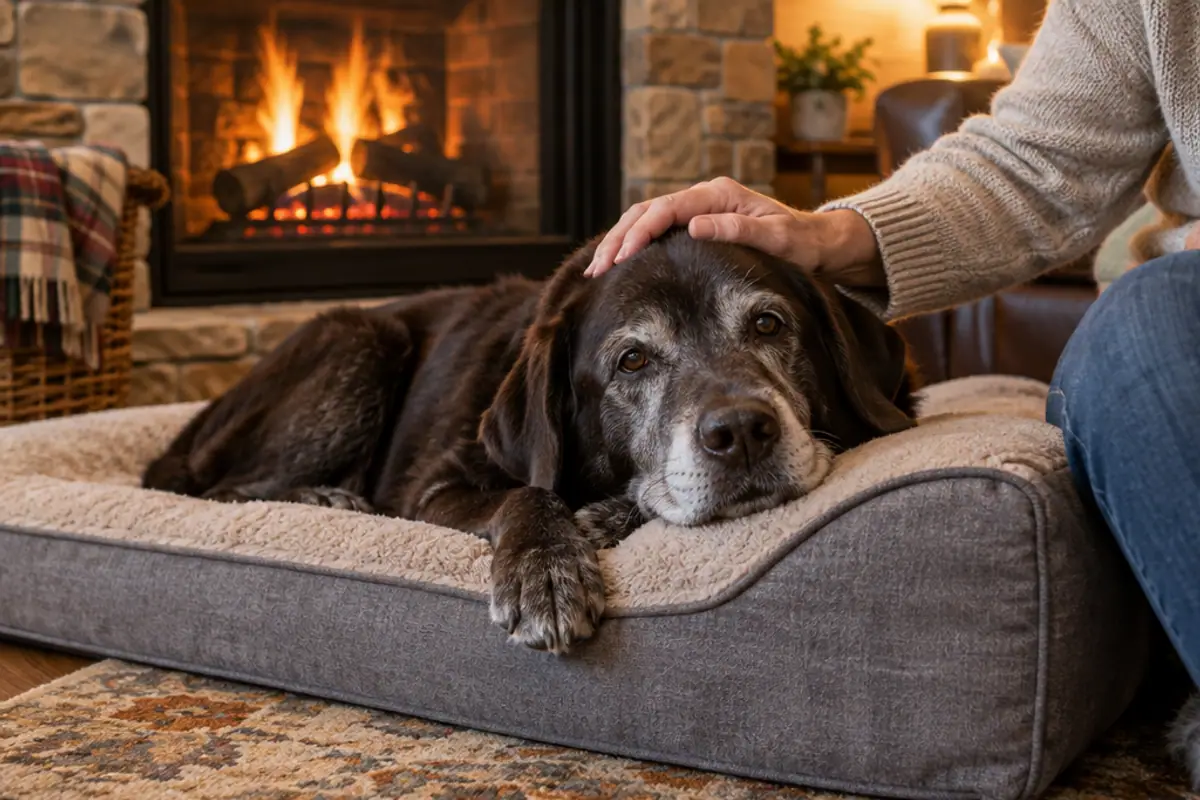
- Orthopedic bed in a warm, draft-free spot
- Raised bowls for large dogs with neck or back pain
- Night lights for dogs with poor vision
- Baby gates at the top of stairs
- More frequent potty breaks
Cognitive changes (doggy dementia)
Canine cognitive dysfunction can cause confusion, getting stuck in corners, nighttime restlessness, changes in sleep patterns, house-soiling and less interest in family. Talk to your vet: diets, supplements, medication, routine and enrichment can help.
Quality of life
Eventually, every owner faces hard decisions. Many vets use quality-of-life scales that consider pain, appetite, hydration, hygiene, happiness, mobility and whether there are more good days than bad. Keeping a simple daily diary of "good day / bad day" can help. Your vet can guide you through this with compassion.
Important: This article is general educational information, not veterinary advice. Every dog is different — always talk to your veterinarian about your own dog's health, diet and treatment. In an emergency, contact your vet or nearest emergency animal hospital immediately.