Key takeaways
- Take your puppy out often: after waking, eating, playing and every 1–2 hours.
- Reward immediately after your puppy goes in the right spot — within 1–2 seconds.
- Supervise or confine: accidents happen when puppies roam unsupervised.
- Never punish accidents. Clean with an enzymatic cleaner and supervise more closely.
Potty training is mostly about prevention and rewards: give your dog plenty of chances to go in the right place, reward it every time, and prevent accidents indoors. Most puppies are reliably house-trained somewhere between 4 and 6 months of age, though some take longer — especially small breeds.
How often does a puppy need to go?
A rough rule: a puppy can hold its bladder for about one hour per month of age during the day, up to around 6–8 hours for adults. A 2-month-old puppy may need to go every 1–2 hours while awake.
Always take your puppy out:
- Right after waking up (morning and after naps)
- Within 15–30 minutes after eating or drinking
- During and after play or excitement
- Before bedtime and before being left alone
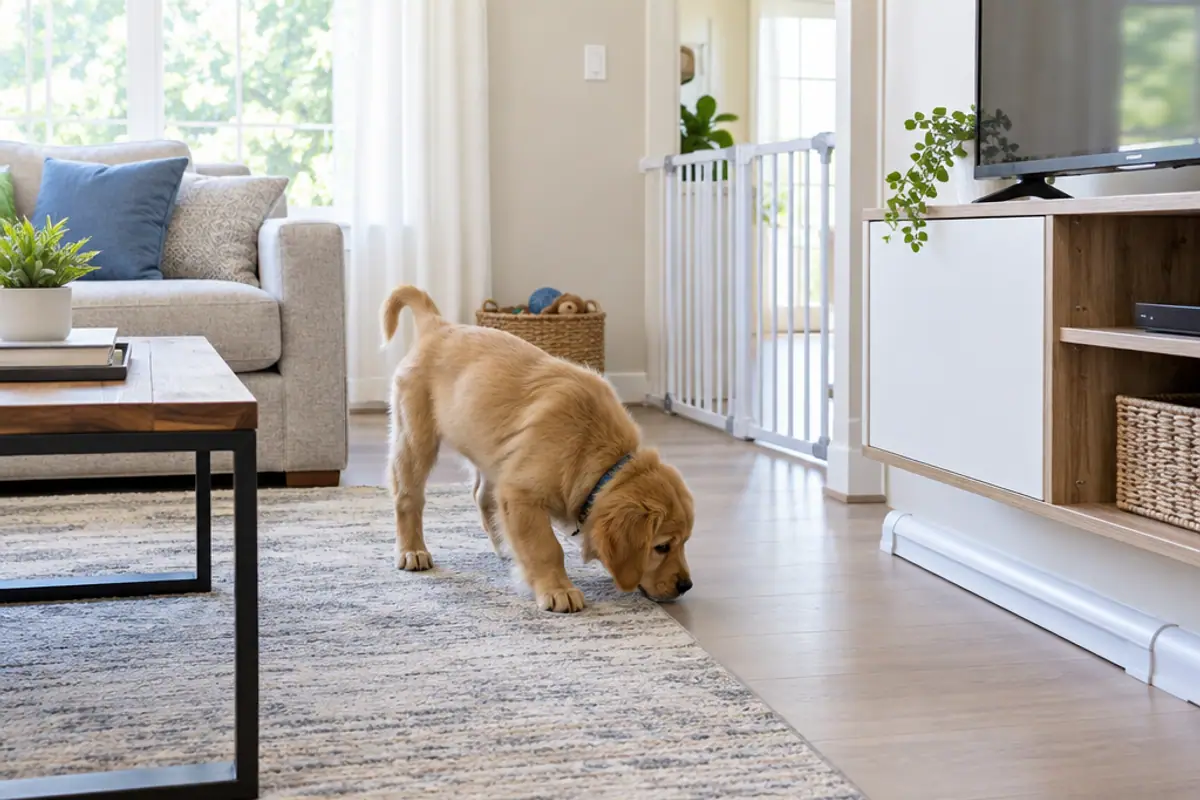
- Whenever you see sniffing, circling or heading to the door
Step-by-step plan
1. Pick a potty spot
Take your puppy on a leash to the same spot every time. The smell will remind it what to do.
2. Be boring and wait
Stand still and let your puppy sniff. Give it 3–5 minutes. You can say a cue like "go potty" just as it starts to go — eventually it will learn to go on cue.
3. Reward immediately
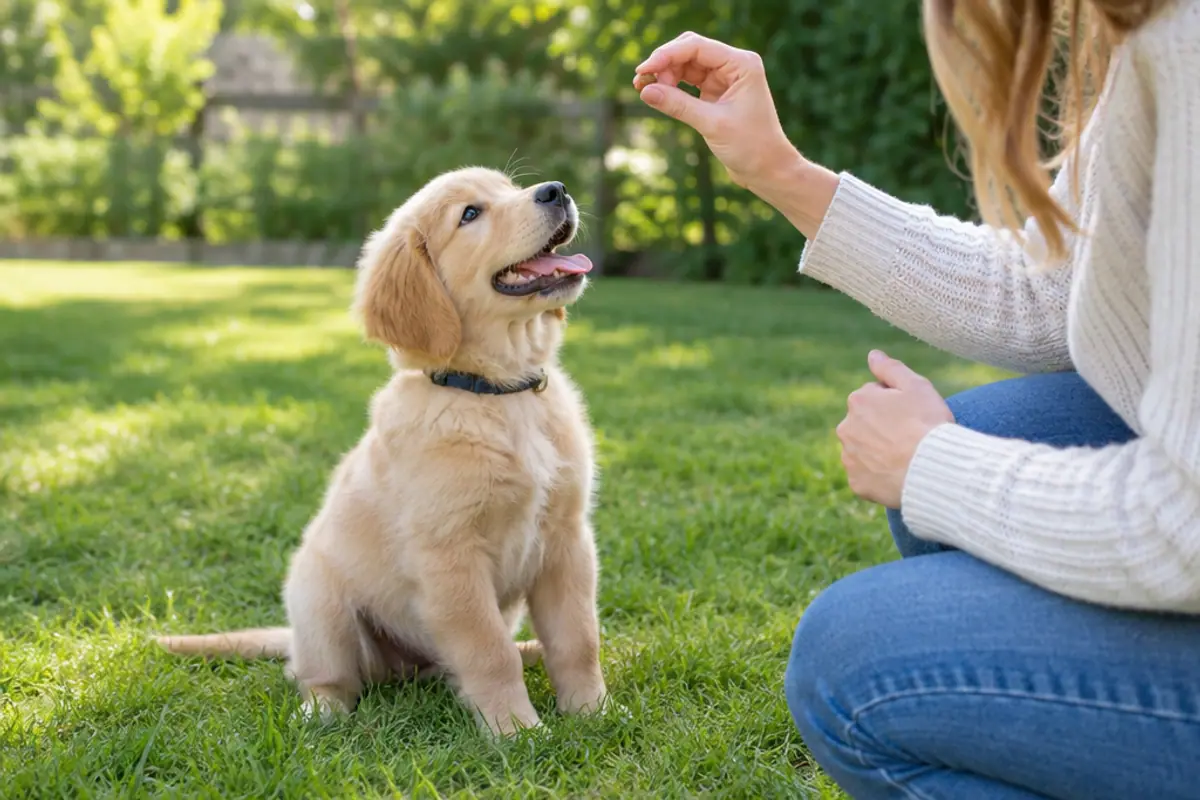
As soon as your puppy finishes, praise and give a tasty treat right there — not when you get back inside. Then allow some play or a short walk as an extra reward.
4. No success? Try again soon
If nothing happens in 5 minutes, go back inside and supervise closely or put your puppy in its crate for 10–15 minutes, then try again.
5. Supervise or confine
When inside, your puppy should be either:
- Under your direct watch (some people tether the puppy to their waist with a leash), or
- In a crate or small puppy-proofed area.
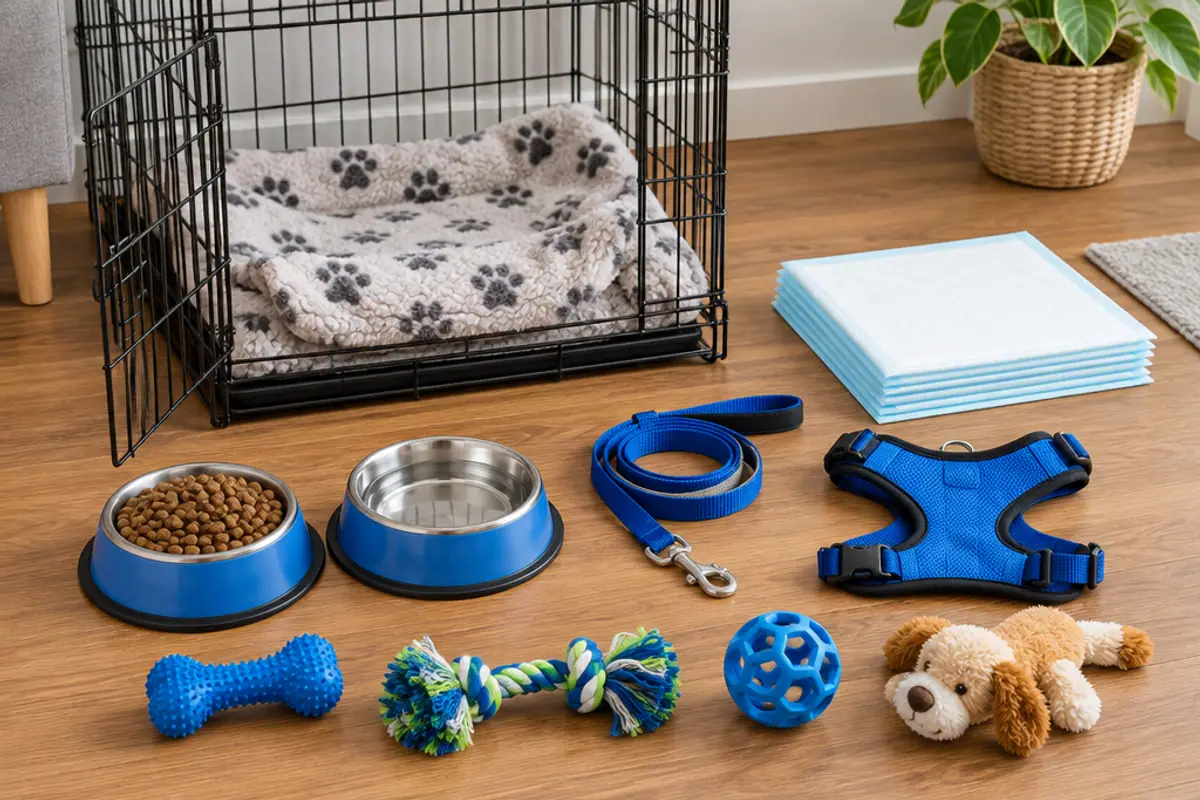
Dogs naturally avoid soiling where they sleep, so a correctly sized crate helps. Don't crate puppies for longer than they can hold it. See crate training.
6. Keep a schedule
Feed at the same times every day and pick up the bowl after 15–20 minutes. Predictable in = predictable out.
Sample schedule for a 10-week-old puppy
| Time | Activity |
|---|---|
| 6:30 | Out to potty immediately |
| 7:00 | Breakfast → potty |
| 7:30–9:00 | Play, training, potty, nap |
| Every 1–2 hrs | Potty break while awake |
| 12:00 | Lunch → potty |
| 17:00 | Dinner → potty |
| 22:30 | Last potty break |
| Night | 1–2 potty trips, quiet and boring |
What to do about accidents
- Caught in the act? Calmly interrupt (a quick "oops!"), scoop your puppy up or lead it outside, and reward if it finishes there.
- Found it later? Just clean it up. Dogs can't connect a punishment to something they did minutes ago.
- Never rub a dog's nose in it, yell or hit. It teaches your dog to hide when it needs to go.
- Clean with an enzymatic cleaner. Ammonia-based cleaners smell like urine to dogs.
Puppy pads: yes or no?
Pads can help if you live in a high-rise, work long hours with a very young puppy, or have a toy breed in a cold climate. The downside: they can teach your puppy that going indoors is OK, making the move to outdoors slower. If you use pads, keep them in one spot and gradually move them toward the door.
Potty training an adult dog
Rescue dogs may never have lived indoors, or may be confused by a new place. Treat an adult dog like a puppy for the first weeks: frequent trips outside, rewards and supervision. Most adults learn quickly.
When to call the vet
Talk to your vet if your dog has sudden accidents after being house-trained, pees very often or in small amounts, strains, has blood in the urine, drinks much more than usual, or can't seem to hold it. These can signal a urinary infection or other medical problem.
Frequent accidents when left alone, combined with distress, may be a sign of separation anxiety.
Frequently asked questions
How long does it take to potty train a puppy?
Most puppies are reliably house-trained between 4 and 6 months of age, but some take up to a year, particularly toy breeds. Consistency is the biggest factor.
Should I wake my puppy at night to pee?
Young puppies usually wake and whine when they need to go. If yours doesn't and has overnight accidents, set an alarm for a quiet potty trip, and gradually move it later as your puppy grows.
Why does my puppy pee right after coming inside?
Usually because it was too busy exploring outside. Stay outside longer in a boring spot, reward immediately when it goes, and supervise closely for 10–15 minutes after coming in if it didn't go.