Key takeaways
- Crying in the first nights is normal — your puppy just left its mother and littermates.
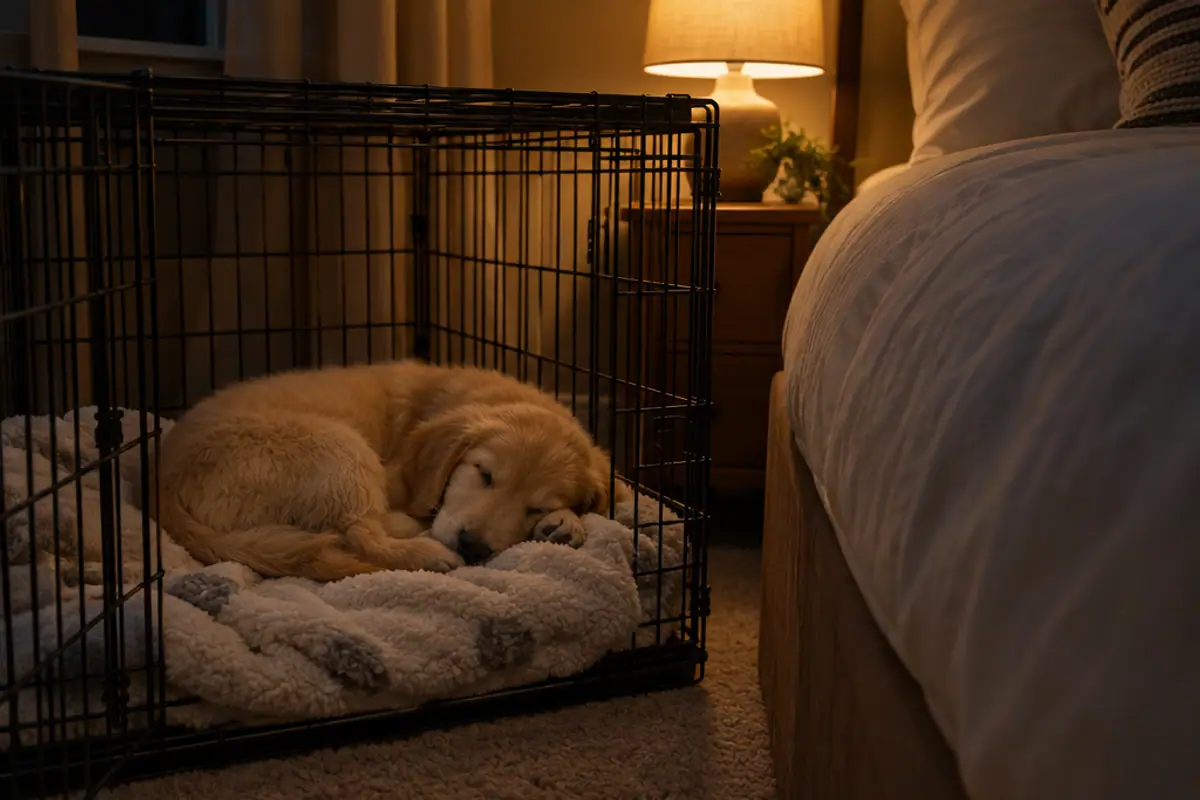
- Keep the crate near your bed at first and make it cozy.
- Rule out needs first: potty, hunger, discomfort. Then respond calmly and briefly.
- Teach alone time gradually, from day one — seconds, then minutes, then hours.
Almost every new puppy cries during the first nights. It has just left its mother, littermates and everything familiar. The good news: with a few changes, most puppies settle within a week or two.
Why puppies cry at night
- Loneliness — puppies naturally sleep in a pile with their littermates.
- Needing to potty — young puppies can't hold it all night.
- Discomfort — too hot, too cold, hungry or not tired.
- New surroundings — unfamiliar sounds and smells.
How to help your puppy sleep through the night
- Put the crate or bed next to your bed for the first weeks. Being able to smell and hear you is very reassuring. You can move it gradually later if you want.
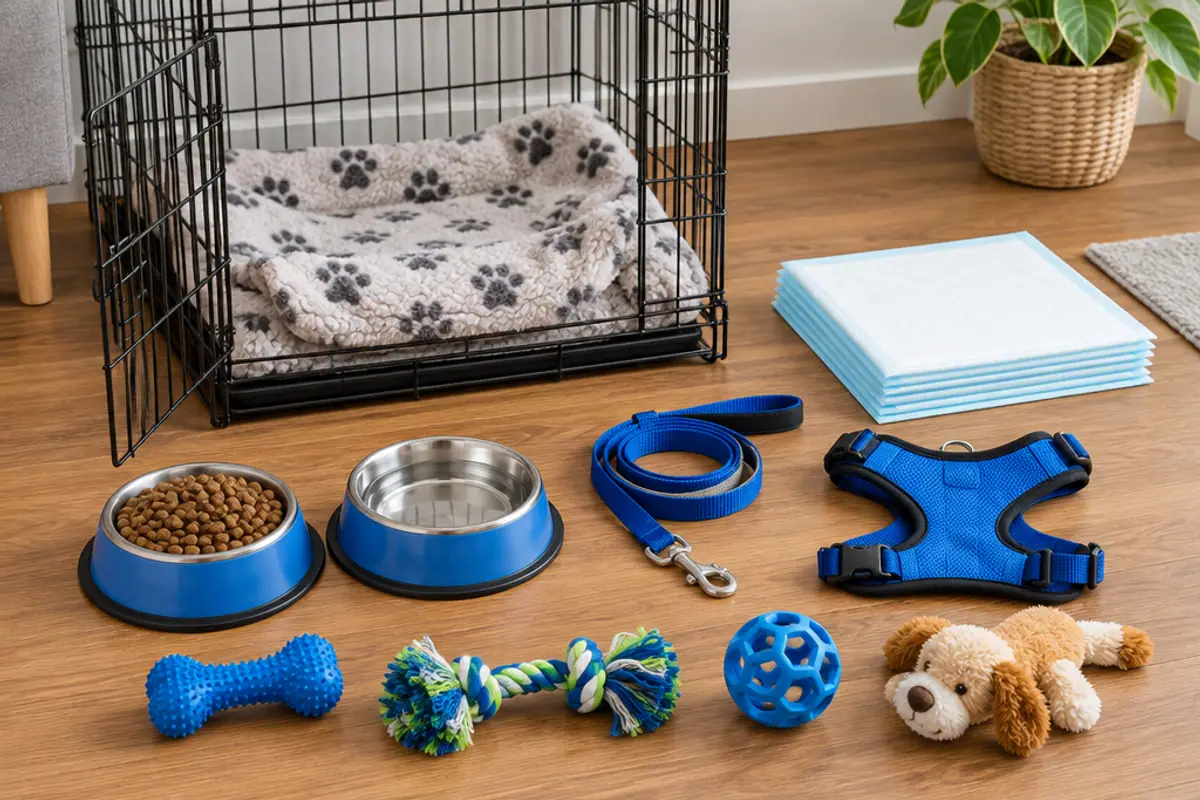
- Make it cozy. A soft blanket (one that smells of the litter if the breeder gave you one), and a cover over three sides of the crate to make it den-like.
- Tire your puppy out with play and a short training session in the evening — but end with calm time, not wild play right before bed.
- Last potty break just before bed.
- Stop water about 1–2 hours before bed (unless it's hot or your vet advises otherwise).
- Try a safe heat source or white noise. A snuggle toy with a heat pack designed for pets, or a ticking/white-noise sound, can help.
- Respond calmly. If your puppy cries in the night, take it out to potty on leash, with no play or chatter, then straight back to bed. If it doesn't need to potty, a calm hand next to the crate for a moment can help it settle.
You're not "spoiling" a young puppy by comforting it. A puppy that feels safe learns to settle faster than one left to cry itself out. As your puppy grows more confident, you'll respond less.
Crying when left alone during the day
Dogs aren't born knowing how to be alone. Teach it gradually:
- Start tiny. Give your puppy a chew or a stuffed food toy in its pen or crate, step out of sight for a few seconds and come back before it cries.
- Build up slowly — 30 seconds, 1 minute, 5 minutes, 15 minutes — over days and weeks.
- Keep comings and goings boring. No big goodbyes or excited greetings.
- Practice when you're home, not just when you have to leave.
- Exercise first. A tired puppy is more likely to nap.
When crying is a sign of something more
If your dog panics when left — howling non-stop, drooling, trying to escape, destroying doors or windows, or soiling the house only when alone — it may have separation anxiety. This needs a careful training plan and sometimes help from your vet. See separation anxiety in dogs.
Contact your vet if your puppy seems to be in pain, cries when touched, has diarrhea or vomiting, or suddenly starts crying at night after sleeping well.