Key takeaways
- Keep the first days quiet, calm and predictable — skip the welcome party.
- Start a consistent routine for meals, potty breaks, walks and sleep from day one.
- Take your dog outside to the same potty spot immediately on arrival and very often after that.
- Expect some nervousness, low appetite or accidents — it's normal.
The first days in a new home are exciting for you — and often overwhelming for your dog. A calm, structured start helps your dog feel safe and learn the rules quickly.
Before you pick up your dog
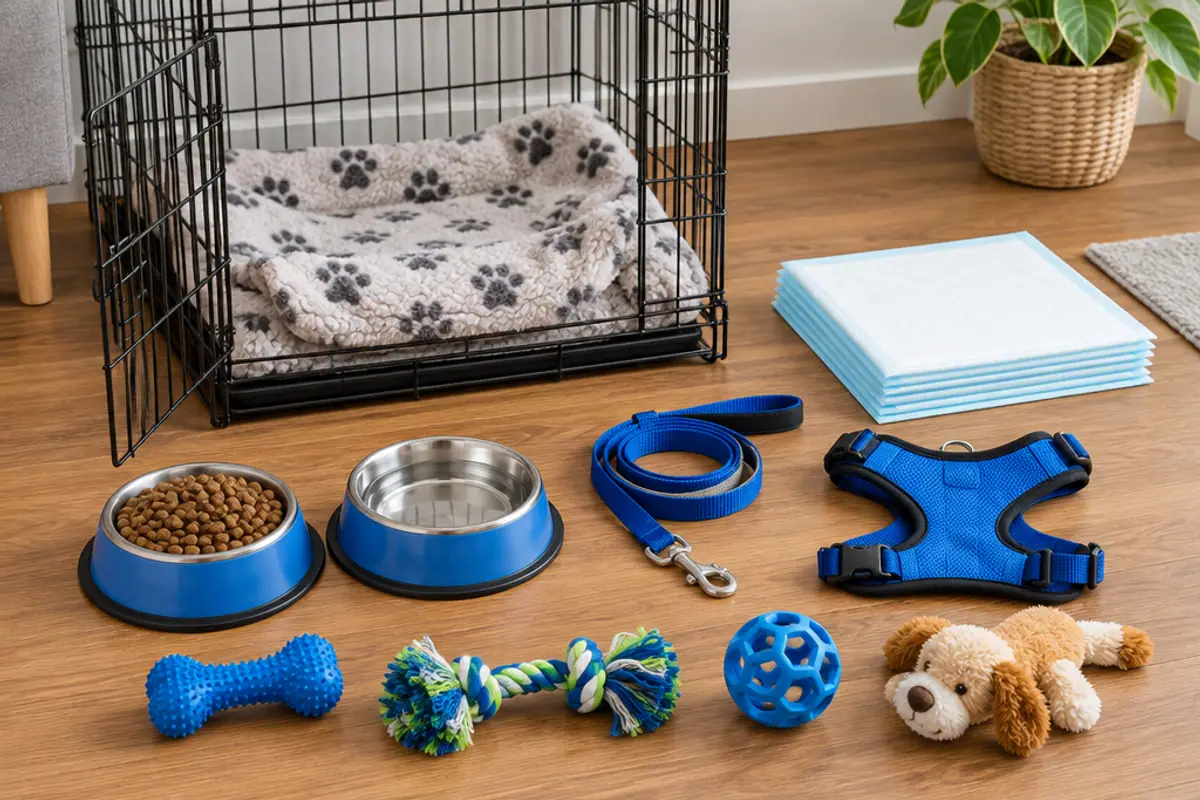
- Set up a quiet "home base": a crate or bed, water, and a few toys in a calm room or corner.
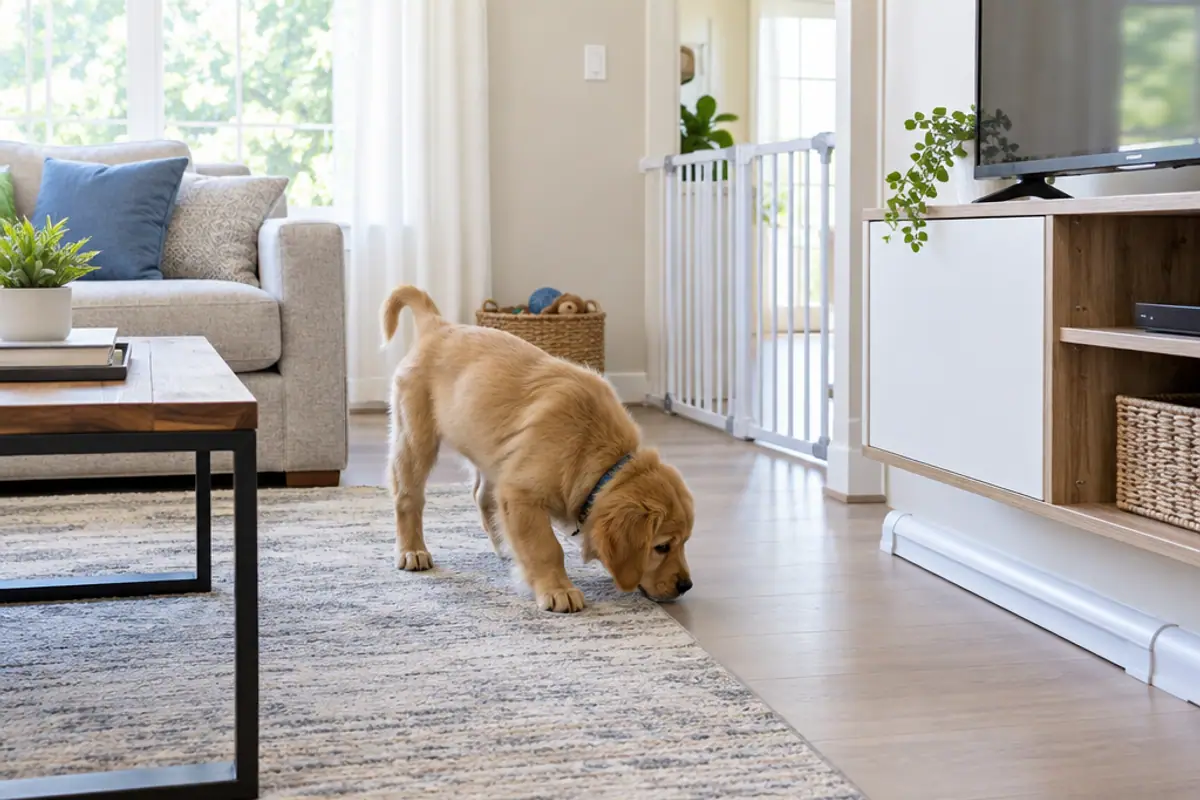
- Have your supplies ready and your home dog-proofed.
- Agree on house rules with everyone: is the dog allowed on the sofa? Which words will you use for commands?
- Plan to pick up your dog at the start of a few days off if possible.
The ride home
- Secure your dog in a crate, carrier or crash-tested harness.
- Bring towels in case of car sickness.
- Go straight home — no errands or visits.
Day 1: Arrival
- Potty first. Before going inside, take your dog on-leash to the spot you want it to use. Wait calmly and praise quietly (or offer a treat) when it goes.
- Short tour on leash. Let your dog sniff its home base and a room or two. Don't overwhelm with the whole house.
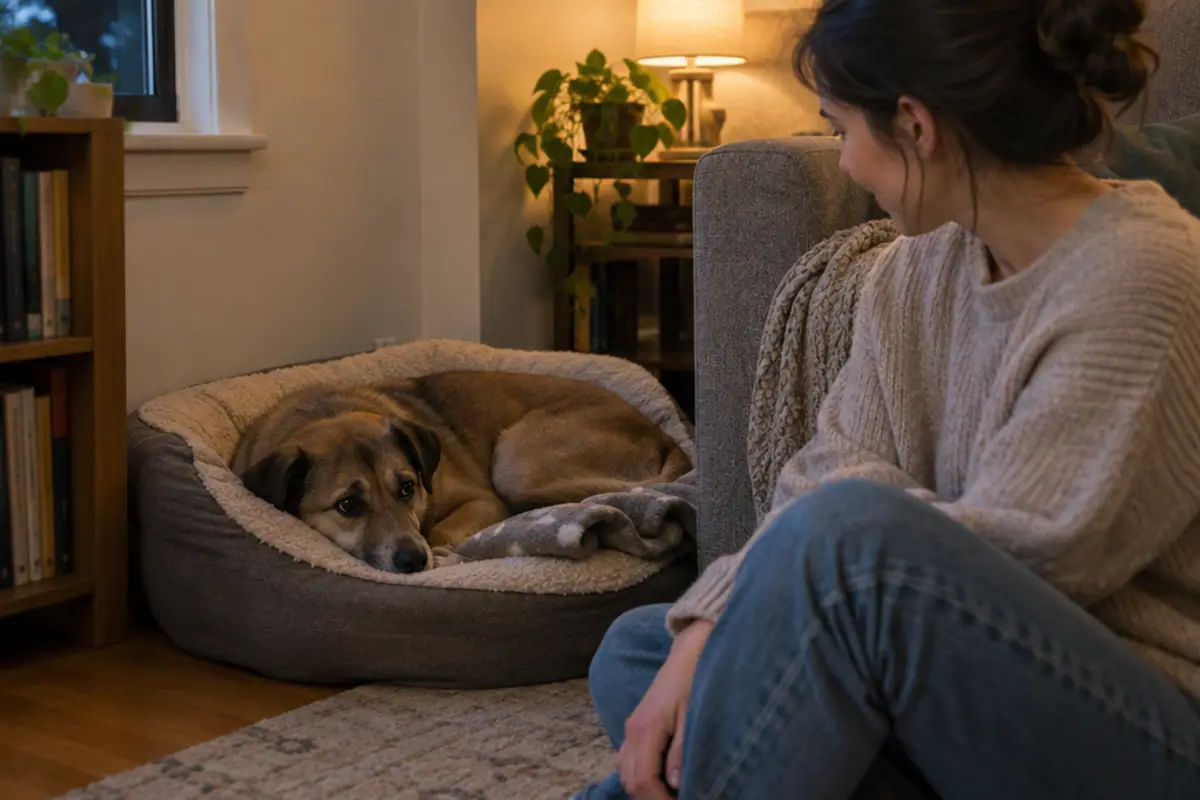
- Let your dog decompress. Allow it to explore or rest. Don't force cuddles.
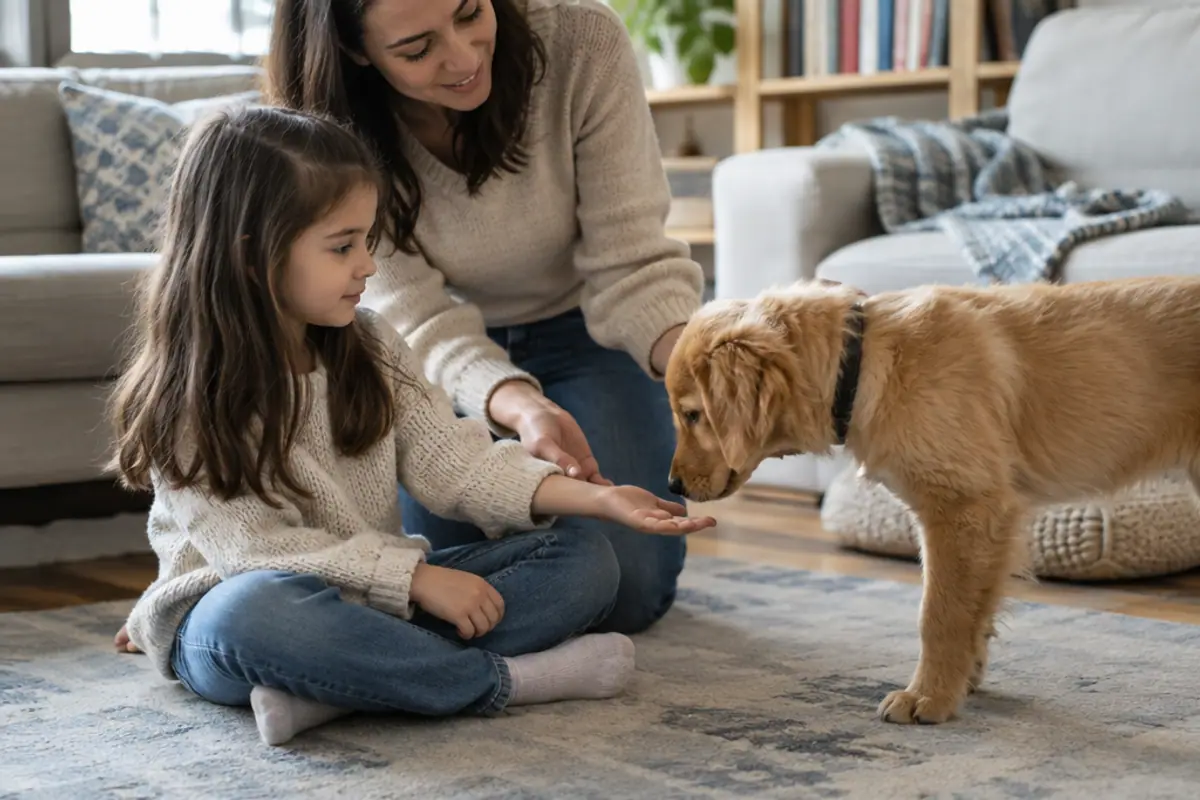
- Keep visitors away. Friends and family can meet the dog in a week or two.
- Offer a small meal at the usual time. Many dogs eat little on the first day — that's normal if they're otherwise well.
- Frequent potty breaks: for puppies, every 1–2 hours while awake, after meals, naps and play.
The first night
- Put the crate or bed in or near your bedroom. Dogs feel safer close to their people, and you'll hear if a puppy needs to go out.
- Take your dog out just before bed.
- Young puppies usually need 1–2 nighttime potty breaks. Keep them boring: out, potty, praise, back to bed.
- Some crying is normal. See puppy crying at night.
Days 2–7: Build a routine
Dogs thrive on predictability. A sample weekday routine:
| Time | Activity |
|---|---|
| 7:00 | Potty break, short walk |
| 7:30 | Breakfast (use part of it for training) |
| 8:00 | Quiet time / nap in crate or pen |
| 12:00 | Potty break, play, short training |
| 17:30 | Walk, sniffing, play |
| 18:30 | Dinner |
| 19:00–21:00 | Calm time with the family, chew toy |
| 22:30 | Last potty break, bed |
Puppies need additional potty breaks and lots of naps — often 18–20 hours of sleep a day.
What to focus on in week one
- Potty training from the first hour. See potty training a puppy — the same principles apply to adult dogs.
- Name recognition: say the name, reward when your dog looks at you.
- Alone-time practice: leave for a few minutes at a time from day one so your dog learns you come back. See separation anxiety.
- Gentle handling: touch paws, ears and mouth briefly, paired with treats.
- Vet visit in the first few days.
What to avoid in week one
- Dog parks, crowded places and long outings
- Lots of new people at once
- Giving full run of the house
- Punishment — it damages trust at the time it matters most
- Leaving your new dog alone for long periods
Signs your dog is settling in
Eating normally, sleeping soundly, exploring more, seeking you out, playing and showing a more relaxed body. For rescue dogs, remember the 3-3-3 guideline: about 3 days to decompress, 3 weeks to learn the routine and 3 months to feel at home.
Contact your vet if your new dog doesn't eat for more than 24–48 hours (sooner for young puppies or small breeds), has repeated vomiting or diarrhea, is very lethargic, or shows coughing or nasal discharge.