Key takeaways
- Adoption fees are low and usually include vaccines, microchip and spay/neuter.
- Tell staff about your lifestyle and let them help you match — don't choose on looks alone.
- Ask about the dog's history, behavior with kids, cats and other dogs, and being left alone.
- Expect a settling-in period: many use the "3-3-3 rule" — 3 days, 3 weeks, 3 months.
Adopting a dog gives a homeless animal a second chance — and can be a fantastic way to find a dog that suits you. Shelters and rescues have dogs of every age, size and breed, including many purebreds.
Shelters vs. rescues
- Shelters are usually physical facilities run by cities, counties or nonprofits. You visit, meet dogs and often adopt the same day or within a few days.
- Rescues are often networks of foster homes. Dogs live in real homes, so fosters can tell you detailed information about behavior with kids, cats, being alone and house-training. The process can be longer.
- Breed-specific rescues focus on one breed or type (e.g., Greyhounds, Labradors, small dogs).
Step 1: Know what you're looking for
Before visiting, decide on your non-negotiables:
- Energy level that fits your routine
- Size limits (lease rules, your strength, space)
- Must be good with kids / cats / other dogs?
- How long will the dog be alone each day?
- Grooming you're willing to do
Read how to choose a dog breed — the same questions apply to mixed breeds.
Step 2: Search and shortlist
Browse local shelter and rescue websites and national adoption listing sites. Read descriptions carefully: phrases like "needs an experienced home," "only pet" or "no kids" are important.
Step 3: Apply
Most rescues ask you to fill out an application. Common questions: your home type, landlord permission, work schedule, previous pets, vet reference and how you'll care for the dog. Some do a home visit (sometimes virtual). This isn't meant to judge you — it helps them make a lasting match.
Step 4: Meet the dog
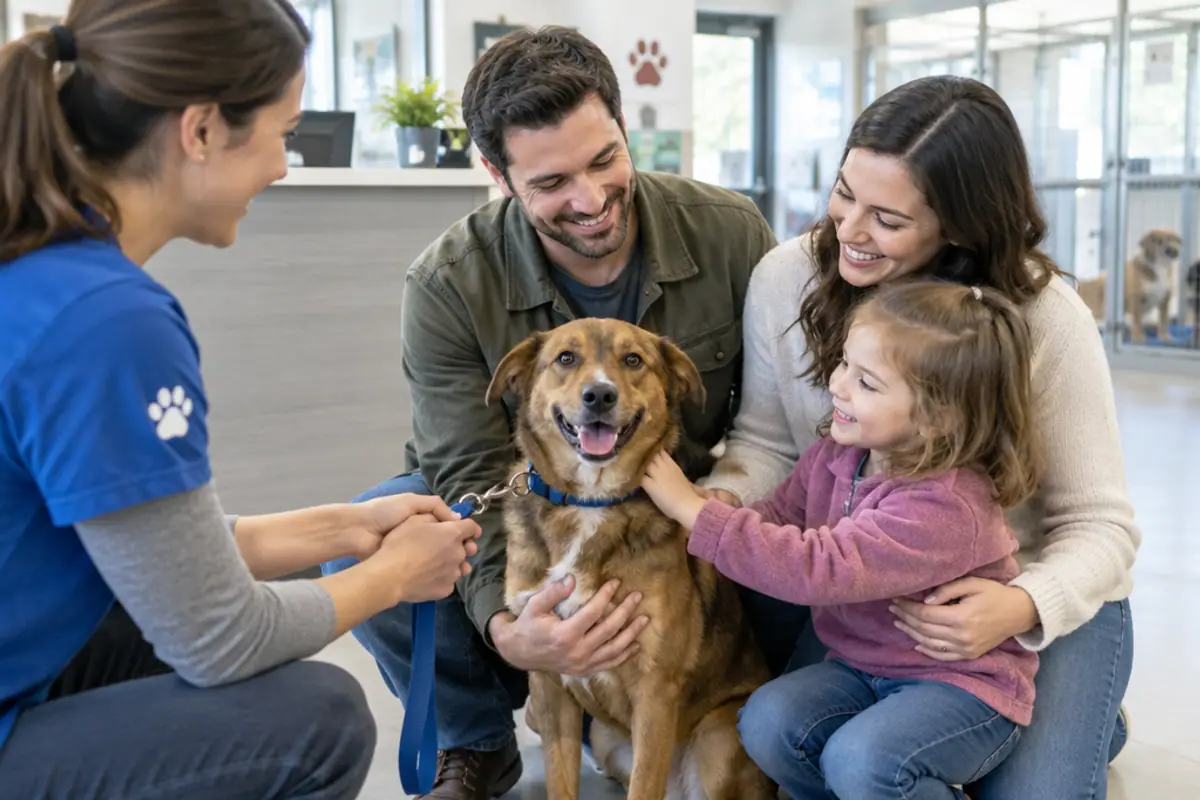
Shelters are stressful places. A dog may seem shy, overexcited or quiet there and completely different at home. Ask to meet the dog in a quiet area, take it for a walk, and — if you have a dog — arrange a meeting between the two dogs on neutral ground.
Questions to ask staff or the foster
- Why was the dog surrendered or found? What is known about its history?
- How is it with children, cats and other dogs? Has that been tested?
- Is it house-trained? Crate-trained?
- How does it react to being handled, groomed, or having food or toys taken away?
- How does it do when left alone?
- Any medical issues or ongoing medications?
- What's its energy level on a typical day?
- What support do you offer after adoption? Can I return the dog if it doesn't work out?
Step 5: Adoption day
You'll typically sign a contract, pay the adoption fee and receive medical records. Bring a collar or harness, leash, and a crate or car restraint. Make sure your home is ready — see the new dog checklist and dog-proofing your home.
Update the microchip registration to your name and contact details right away. It's easy to forget — and a microchip with old information won't bring your dog home.
The first weeks: the 3-3-3 guideline
Many rescues use this rough guide for how dogs adjust:
- First 3 days: your dog may be overwhelmed, not eat much, hide or seem shut down. Keep things quiet and don't invite everyone over.
- First 3 weeks: your dog starts learning the routine and showing more personality — including some behaviors you'll need to work on.
- First 3 months: your dog feels at home and bonded to you.
Every dog is different, but the message is: be patient and don't judge a dog by its first week. Read the first 24 hours and first week.
Common worries about adoption
"Shelter dogs have problems." Most are there because of human reasons — moving, cost, a new baby, allergies, or an owner's death.
"I want to know what I'm getting." Adult rescue dogs are actually more predictable than puppies. Fosters can tell you a lot.
"I want a purebred." Many shelters have purebreds, and breed rescues exist for almost every breed.
Frequently asked questions
How much does it cost to adopt a dog?
Typically $50–$250 at municipal shelters and $150–$600 at private rescues. Fees usually include vaccinations, a microchip, deworming and spay/neuter surgery.
Why was my adoption application rejected?
Rescues may decline applications if the dog's needs don't match the home — for example, a high-energy dog with a household that is away all day, or a dog not suited to kids. Ask for feedback and consider other dogs.