Key takeaways
- Follow local leash laws — most cities require leashes outside designated off-leash areas.
- Always pick up poop and carry extra bags.
- Keep your dog close on busy sidewalks, near kids and at crossings.
- Watch for city hazards: chicken bones, broken glass, hot pavement, de-icing salt.
City dogs can live wonderful lives, but urban walking comes with extra rules and hazards. A well-mannered dog makes life easier for you and your neighbors — and helps keep cities dog-friendly.
Know the local rules
Rules vary by city and country, but commonly include:
- Leash laws: dogs must be leashed in public except in designated off-leash areas. Some cities set a maximum leash length (often 6 ft / 1.8 m).
- Poop laws: failing to pick up can result in fines.
- Licensing: many cities require a dog license and rabies tag. See microchipping and documents.
- Restricted areas: some playgrounds, beaches, sports fields and parks don't allow dogs, or only at certain times.
- Breed or muzzle rules in some places and on some transport.
Check your city's website for local regulations.
Sidewalk etiquette
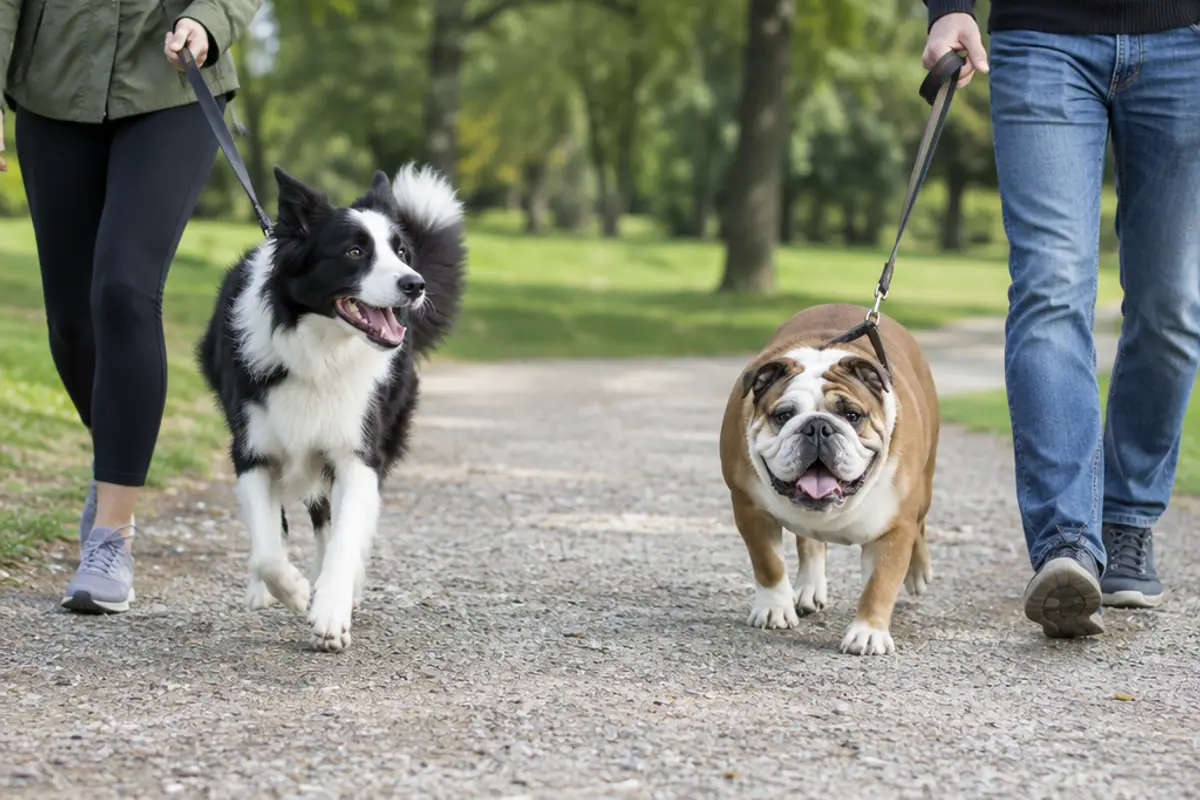
- Short leash in busy areas. Keep your dog on your side, away from other pedestrians.
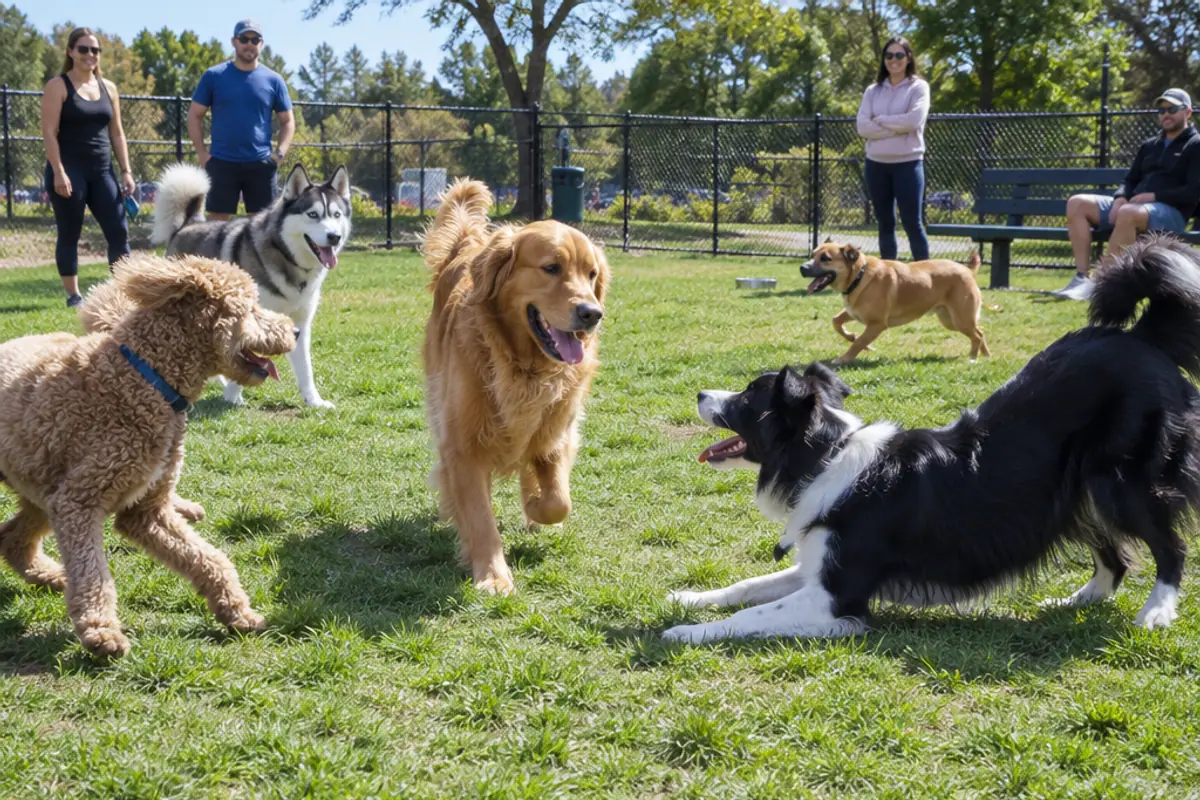
- Don't let your dog greet other dogs or people without asking first. Many dogs are nervous, reactive, injured or in training.
- Give space to people who seem uncomfortable around dogs, children, cyclists and people with mobility aids.
- Keep your dog off private lawns and flower beds.
- Avoid letting your dog pee on doorsteps, shop fronts, bikes, cars and planters. Aim for the curb or a tree pit where allowed.
- Pick up every time. Carry more bags than you think you'll need. Dispose of them in trash bins, not in someone's private can unless it's allowed.
Traffic safety
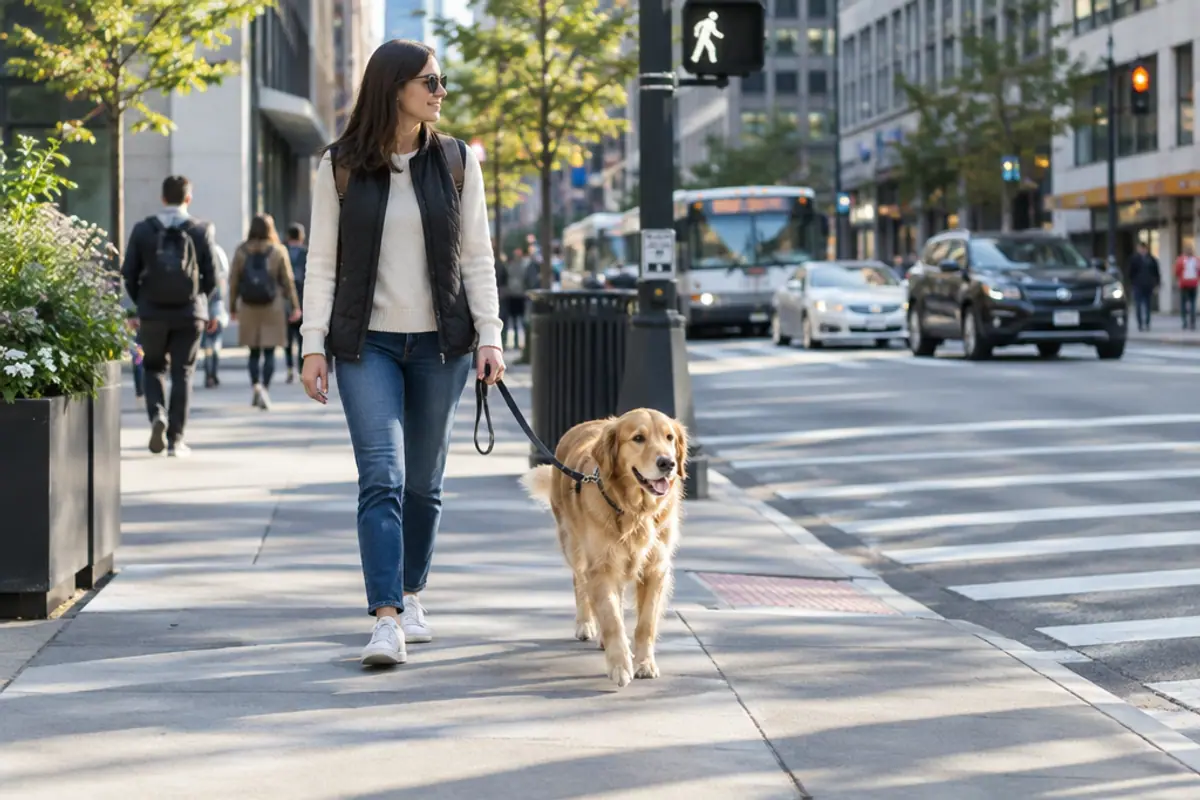
- Teach an automatic sit at curbs.
- Keep your dog on the side away from traffic.
- Use a securely fitted harness — frightened dogs can back out of collars.
- Use reflective gear or an LED collar at night.
- Never let your dog off-leash near roads, even with a good recall.
Urban hazards
- Discarded food — chicken bones, spoiled food, gum (xylitol!). See eating things off the ground.
- Broken glass and sharp debris.
- Hot pavement in summer and de-icing salt in winter. See seasonal dog care.
- Rat poison and pest-control bait.
- Electrified surfaces — metal grates and manhole covers can occasionally be electrified by damaged wiring, especially after snow and rain; walk around them.
- Loud noises — sirens, construction and scooters. Build positive associations early (see socialization).
Elevators and stairs
- Wait for an empty elevator, or ask if others mind before getting in.
- Keep your dog close in a corner and seated if possible.
- Keep the leash short so it can't get caught in the doors.
Public transport
Rules vary. Small dogs in carriers are often allowed; larger dogs may be allowed at certain times, with a muzzle or a ticket. Practice with short trips first, and carry water.
Being a good dog neighbor
- Train polite greetings and a reliable "leave it."
- Keep barking in check at home. See excessive barking.
- Be friendly and understanding with neighbors who are nervous around dogs.