Temperament
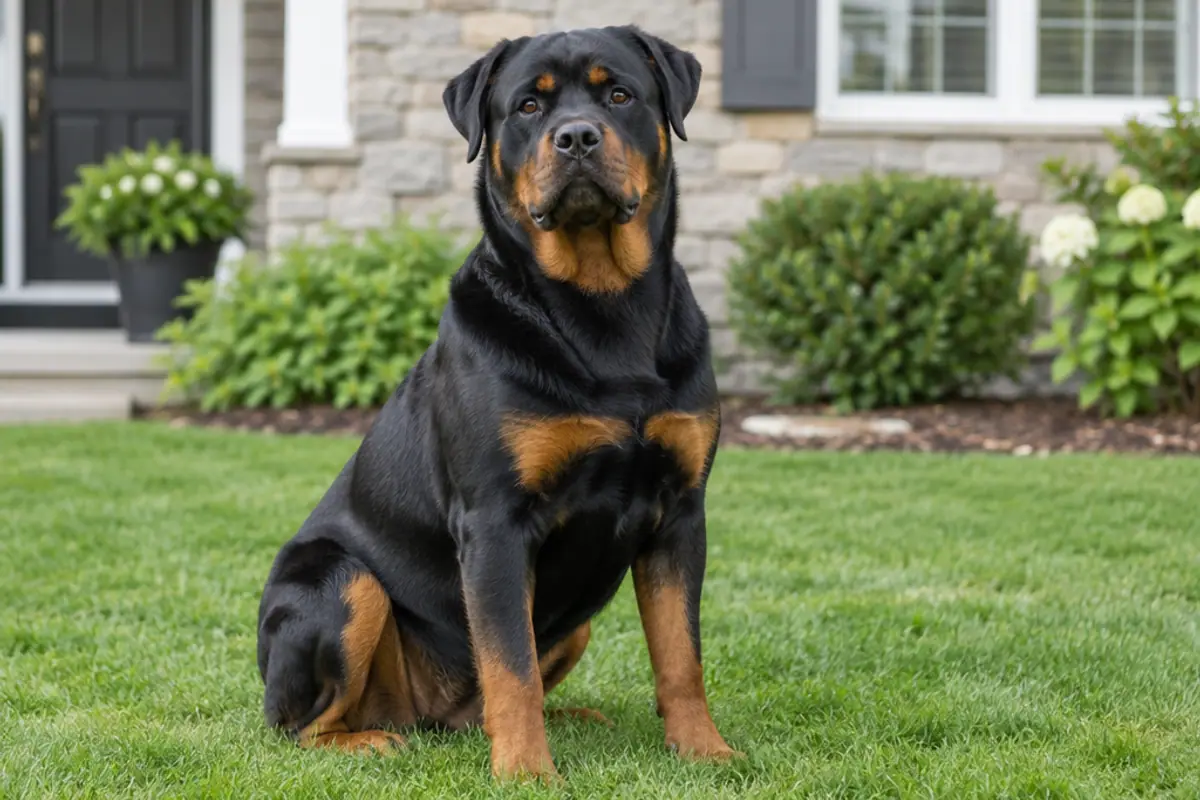
Well-bred Rottweilers are calm, confident and devoted to their families — often goofy and affectionate at home. They're naturally protective and wary of strangers. Early, extensive socialization is essential.
Exercise and energy
About 1–2 hours of exercise a day: walks, play, training and sports like obedience or tracking. Rottweilers are strong and need good leash manners from puppyhood.
Grooming
Minimal: weekly brushing and nail trims. They shed moderately year-round and more in spring and fall.
Training
Smart and trainable, but they need a confident, consistent owner. Reward-based training and a good trainer are strongly recommended. Many landlords and insurers restrict Rottweilers — check before you commit (see renting with a dog).
Health
Rottweilers are prone to hip and elbow dysplasia, bone cancer (osteosarcoma), heart disease (subaortic stenosis), bloat and cruciate ligament injuries. Keep them lean to protect their joints.
Is the Rottweiler right for you?
✅ A great match if you…
- Have dog experience and want a loyal guardian
- Commit to lifelong training and socialization
- Have space and a secure yard
- Can handle a very strong dog
⛔ Think twice if you…
- Are a first-time owner without training support
- Rent where breed restrictions apply
- Have frequent unfamiliar visitors and can't manage introductions
- Want a dog that loves all other dogs
Breed traits are general tendencies, not guarantees. Health information is a summary of issues commonly reported in the breed — ask breeders for health-testing results and discuss screening with your veterinarian. Weights and heights are typical adult ranges and vary by line and sex.