Temperament
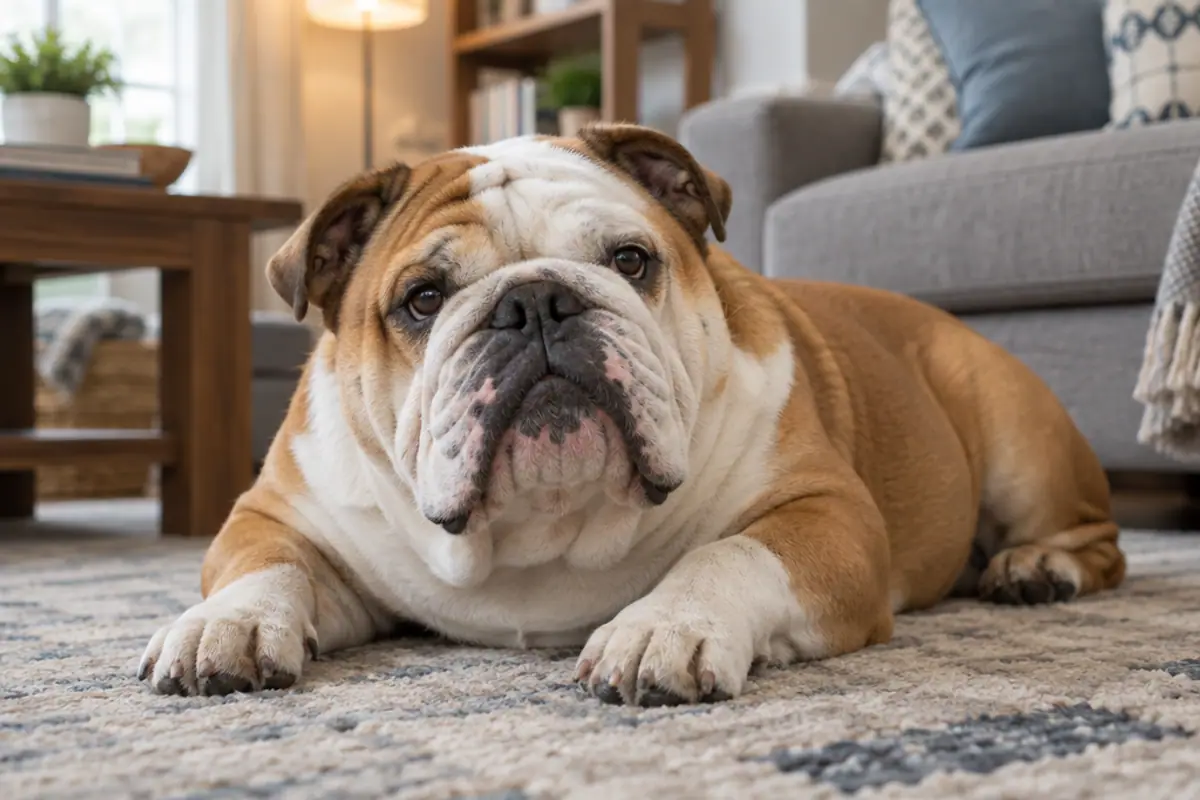
Bulldogs are docile, dignified and affectionate. They're typically patient with children and friendly with people, though some can be territorial with unfamiliar dogs. They are happy to spend most of the day napping near their people.
Exercise and energy
Short, gentle walks — 20–40 minutes a day split into sessions — are usually enough. Bulldogs overheat extremely easily. Exercise only in cool parts of the day and never push a Bulldog to run.
Grooming
The short coat is simple, but the facial wrinkles, tail pocket and skin folds need cleaning and drying several times a week to prevent infection. Expect drool and snoring.
Training
Bulldogs can be stubborn and aren't motivated by pleasing you for its own sake. Use tasty treats, short sessions and lots of patience.
Health
Bulldogs have some of the most serious breed-related health issues: breathing problems (BOAS), heat stroke, hip dysplasia, skin fold dermatitis, cherry eye, entropion and other eye issues, and difficulty giving birth. Many need surgery at some point. Choose a breeder carefully, budget for vet care, and look into pet insurance early.
Is the Bulldog right for you?
✅ A great match if you…
- Want a calm, low-energy companion
- Live in an apartment or a quieter home
- Have time for daily wrinkle and skin care
- Can afford significant vet costs
⛔ Think twice if you…
- Want an active outdoor partner
- Live in a hot climate without A/C
- Have a tight budget for vet care
- Mind snoring, drool and gas
Breed traits are general tendencies, not guarantees. Health information is a summary of issues commonly reported in the breed — ask breeders for health-testing results and discuss screening with your veterinarian. Weights and heights are typical adult ranges and vary by line and sex.