Temperament
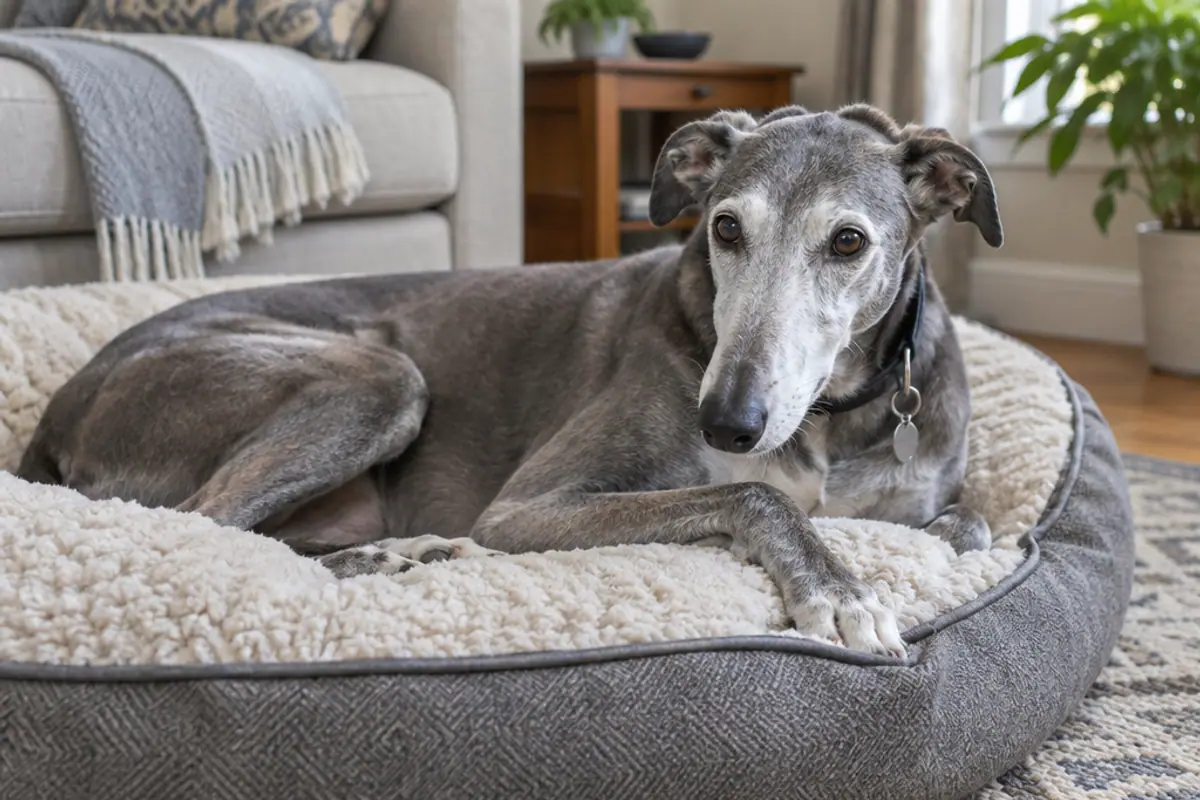
Greyhounds are gentle, sweet and quiet. Indoors, they spend most of the day sleeping. They can be a little shy at first. Many are adopted as retired racers through Greyhound adoption groups.
Exercise and energy
Despite being the fastest breed, they need only moderate exercise: daily walks and the chance for an occasional sprint in a securely fenced area. They have a strong prey drive and can't be trusted off-leash in open spaces.
Grooming
Very easy — they shed lightly and have little odor. Their thin coat and low body fat mean they need coats in cold weather.
Training
Gentle and sensitive; reward-based training works well. Retired racers may need to learn about house life — stairs, glass doors and being alone.
Health
Generally healthy. Watch for dental disease, bone cancer (osteosarcoma) and corns on the paws. Greyhounds are sensitive to some anesthetics — choose a vet familiar with sighthounds.
Is the Greyhound right for you?
✅ A great match if you…
- Are a first-time owner wanting a calm, quiet dog
- Live in an apartment
- Want to adopt a retired racer
- Want low grooming
⛔ Think twice if you…
- Have small pets or cats that haven't been tested
- Want off-leash walks in open areas
- Live somewhere very cold without dog coats
- Want a guard dog
Breed traits are general tendencies, not guarantees. Health information is a summary of issues commonly reported in the breed — ask breeders for health-testing results and discuss screening with your veterinarian. Weights and heights are typical adult ranges and vary by line and sex.