Temperament
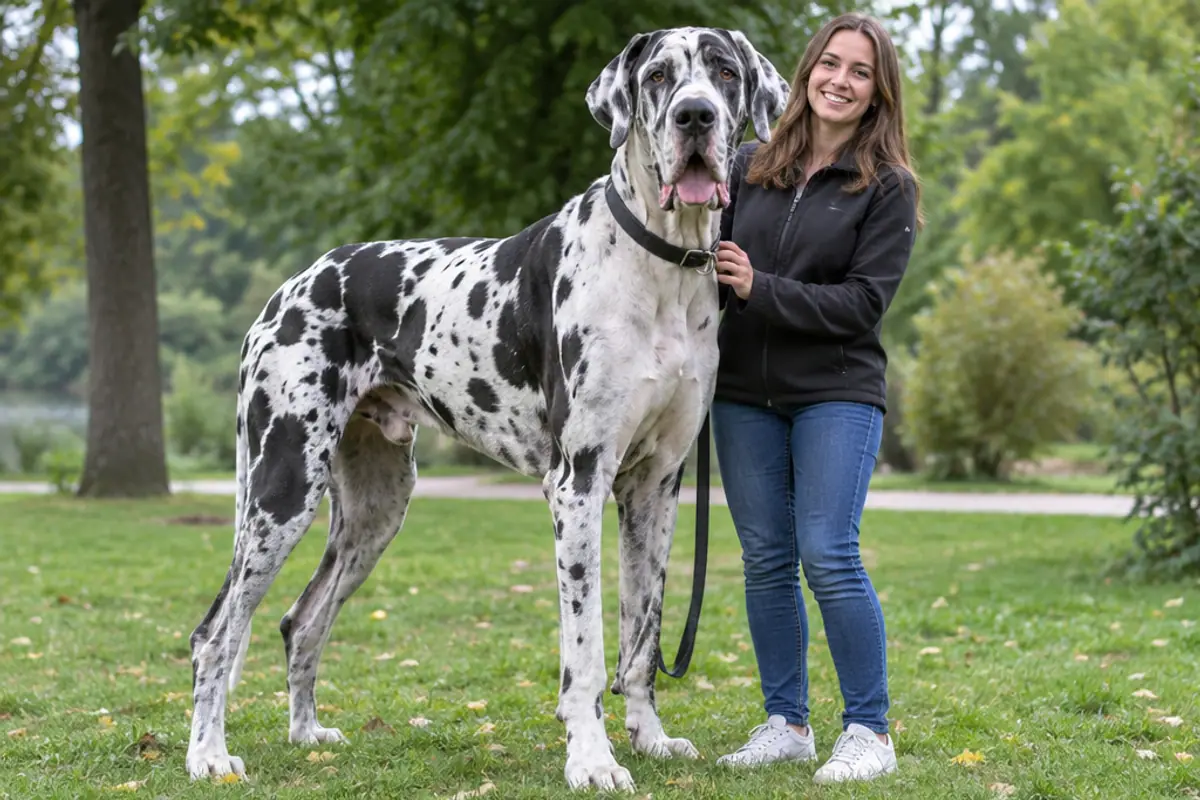
Great Danes are friendly, patient and affectionate — true gentle giants. They're usually good with children (though their size alone can knock toddlers over) and with other dogs.
Exercise and energy
Moderate: daily walks totaling 45–90 minutes. Puppies should avoid intense running and jumping while their bones grow.
Grooming
Minimal, but everything is bigger — nail trims, baths and vet bills!
Training
Essential from puppyhood: a 150-pound dog that pulls or jumps is dangerous. Use positive reinforcement and start early.
Health
Great Danes have the highest risk of bloat (GDV) of any breed — a life-threatening emergency. Talk to your vet about preventive gastropexy surgery, feed several smaller meals and learn the warning signs. They're also prone to dilated cardiomyopathy (heart disease), hip dysplasia, bone cancer and wobbler syndrome.
Is the Great Dane right for you?
✅ A great match if you…
- Want a gentle, calm giant
- Have space (and a big car)
- Can afford giant-dog food and vet costs
- Are committed to early leash training
⛔ Think twice if you…
- Have a tight budget
- Want a long-lived dog
- Live in a building with no elevator
- Can't handle a very large, strong dog
Breed traits are general tendencies, not guarantees. Health information is a summary of issues commonly reported in the breed — ask breeders for health-testing results and discuss screening with your veterinarian. Weights and heights are typical adult ranges and vary by line and sex.