Key takeaways
- Most dog bites to children involve a familiar dog at home — supervision is essential.
- Give your dog a kid-free retreat it can always go to.
- Prepare your dog for a new baby months in advance.
- Dogs and cats can live happily together with slow introductions and cat escape routes.
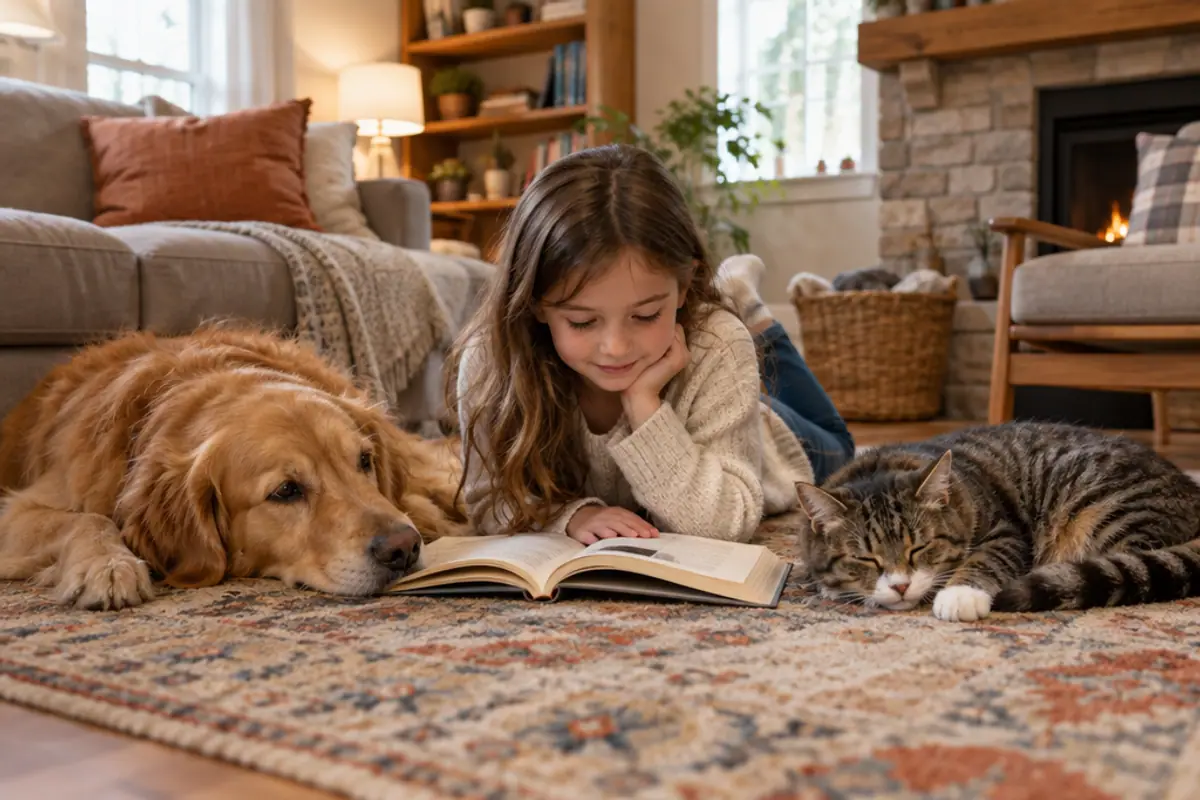
Dogs, kids and cats can share a home happily. It takes some planning, clear household rules and adult supervision.
Everyday rules for families with dogs
For adults
- Active supervision: watching and ready to step in — not just being in the same house. When you can't supervise, separate with gates, crates or closed doors.
- A safe retreat: a crate or bed in a quiet spot where kids are never allowed to follow.
- Learn stress signals: yawning, lip licking, turning away, whale eye, freezing, growling. See dog body language.
- Keep kids and dogs apart at meal times and when the dog has chews or toys.
For children
Teach kids to be a "tree" (stand still, arms folded, look at their feet) if a dog jumps on them or chases them, and to:
- Ask before petting any dog — including their own if it's resting
- Pet the chest or side gently, not the head
- Never hug, kiss, ride, pull ears or tails, or disturb a sleeping or eating dog
- Leave the dog alone in its bed or crate
Age-appropriate jobs
- Toddlers: none, other than supervised gentle petting.
- 5–8 years: help fill the water bowl, toss treats for "find it," help with simple tricks with an adult.
- 9–12 years: help with feeding, brushing and training sessions.
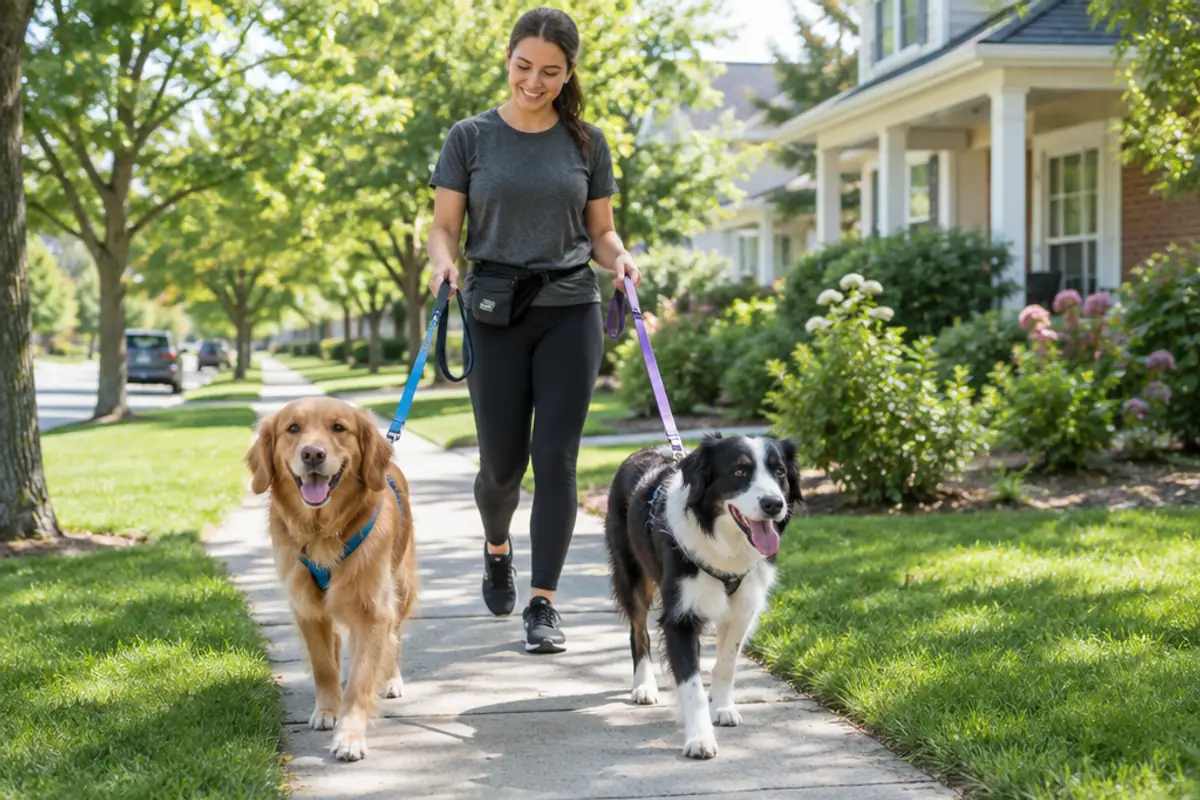
- Teens: walking (if they can control the dog), training classes, more responsibility.
Preparing your dog for a new baby
Start months before the baby arrives:
- Practice new routines early — changes in walk times, where the dog sleeps, rooms that will be off-limits.
- Teach useful cues: go to your mat, leave it, gentle take, loose-leash walking next to a stroller.
- Get your dog used to baby sounds with recordings at low volume, paired with treats.
- Set up baby furniture early and teach your dog to stay calm around it.
- Bring home a blanket with the baby's scent from the hospital.
- The introduction: greet your dog calmly first without the baby, then let your dog sniff at a distance while leashed and rewarded.
- Keep giving your dog attention, especially when the baby is present, so it associates the baby with good things.
Never leave a baby or toddler alone with any dog, even for a second, and never let a baby sleep in a room where a dog can reach them unsupervised.
Dogs and cats
Many dogs and cats become best friends. Success depends on the individual animals and a slow introduction. See our step-by-step guide in introducing your dog to kids and pets.
Long-term harmony tips
- Give cats vertical escape routes: cat trees, shelves.
- Keep cat food and litter where the dog can't reach (dogs love both — eating cat food leads to weight gain and upset stomachs).
- Use baby gates with a cat door or raised gates cats can jump over.
- Reward your dog for calm behavior around the cat.
- Watch for prey drive: fixating, stalking, lunging. Get professional help if you see it.
Other small pets
Rabbits, guinea pigs, birds and rodents can trigger strong prey instincts. Keep them in secure enclosures in rooms your dog can't access unsupervised.