Key takeaways
- In the car, use a crash-tested harness, crate or carrier — never let your dog ride loose.
- Never leave your dog alone in a parked car, even for a few minutes.
- Airline rules differ a lot: small dogs may fly in the cabin in a carrier; many airlines restrict cargo travel.
- Practice with short trips and get your dog comfortable in its carrier well before you go.
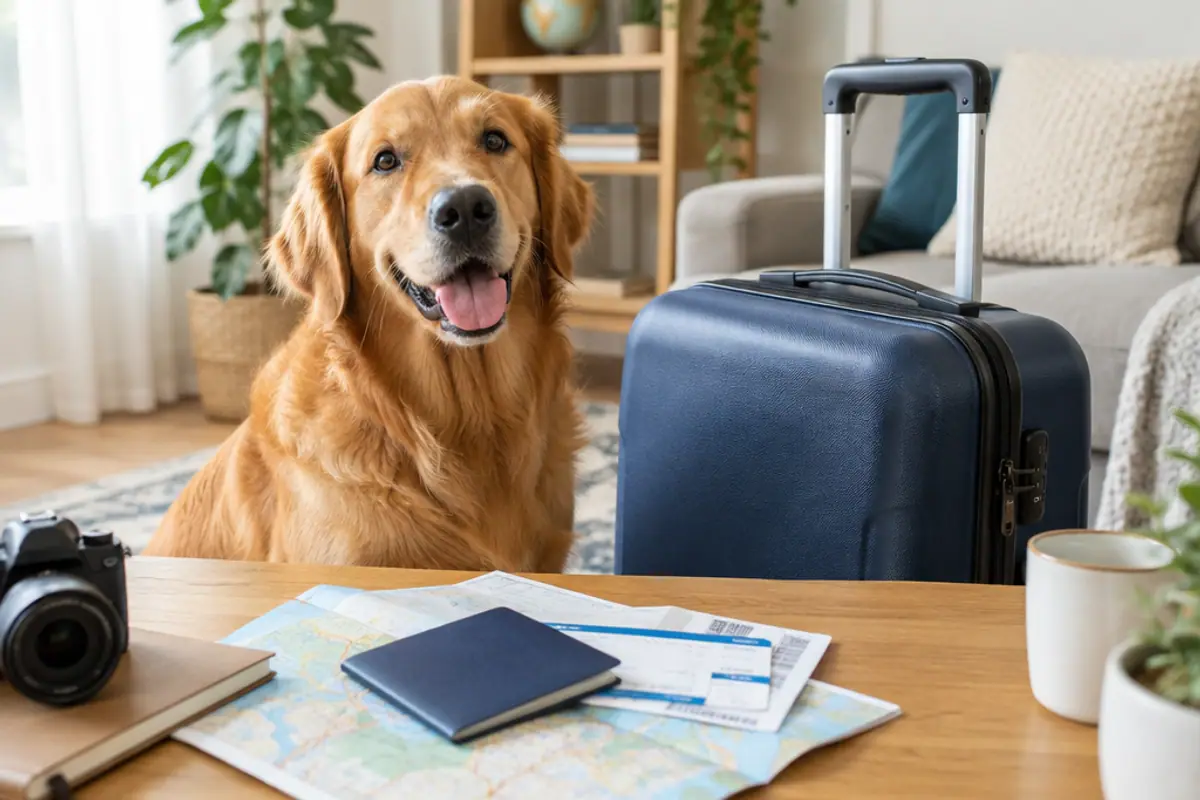
Many dogs are great travel companions. The key is planning, the right equipment and getting your dog used to traveling step by step.
Car travel
Safety restraints
An unrestrained dog can be seriously injured in a sudden stop — and can distract the driver. Options include:
- Crash-tested car harness attached to the seat belt
- Crash-tested crate secured in the cargo area
- Carrier secured with the seat belt for small dogs
Keep dogs out of the front seat (airbags can be dangerous) and don't let them ride with their heads out of the window — debris can injure eyes and ears.
Getting your dog used to the car
- Sit in the parked car with treats and toys.
- Start the engine; reward calm behavior.
- Short trips to fun places — not just the vet!
- Gradually build up length.
Motion sickness
Common in puppies; many grow out of it. Signs: drooling, yawning, whining, vomiting.
- Don't feed for a few hours before travel (water is fine).
- Keep the car cool and well-ventilated.
- Face your dog forward if possible and use a crate cover.
- Talk to your vet — safe anti-nausea medication exists. Don't use human motion sickness pills without veterinary advice.
Road trip tips
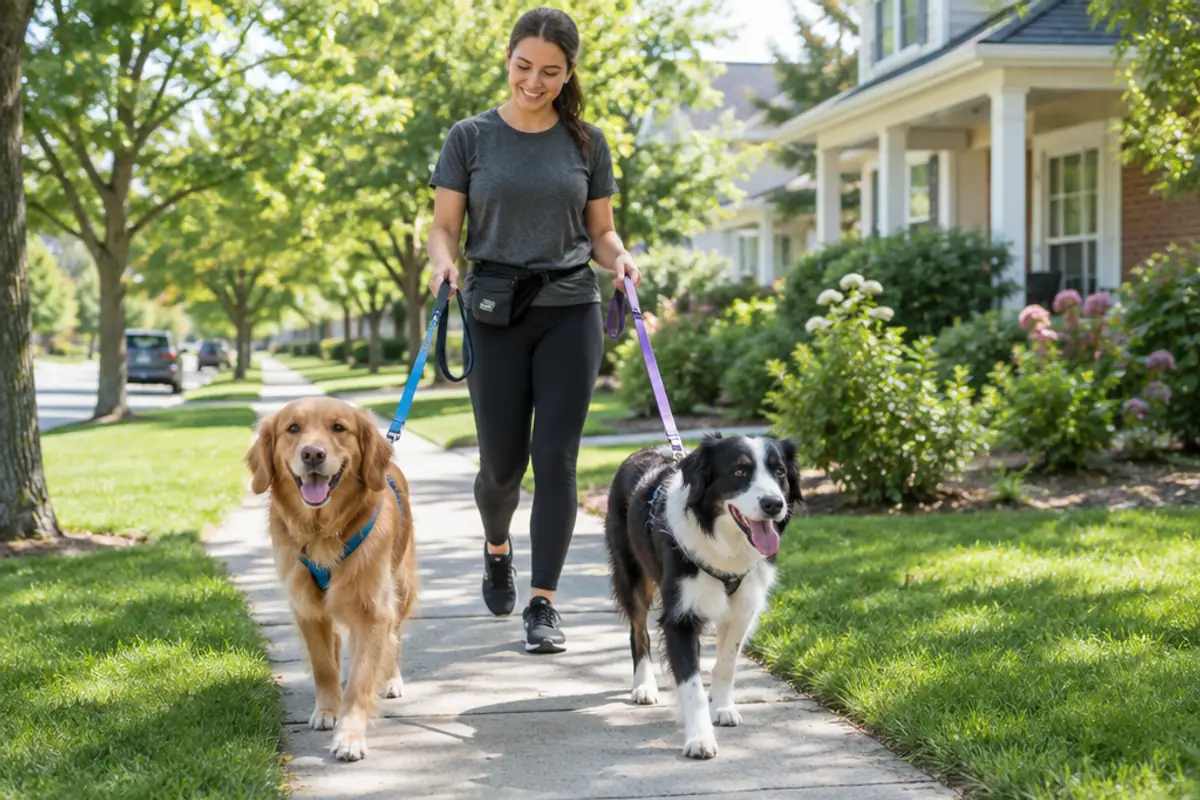
- Stop every 2–3 hours for potty breaks, water and a short walk (always leashed).
- Bring water from home and a collapsible bowl.
- Book pet-friendly accommodation in advance and check fees and size limits.
Never leave your dog alone in a parked car. On a 70 °F (21 °C) day, the inside of a car can exceed 100 °F (38 °C) within about 20 minutes. Cracking a window doesn't help enough. In cold weather, cars can become dangerously cold.
Air travel
Cabin vs cargo
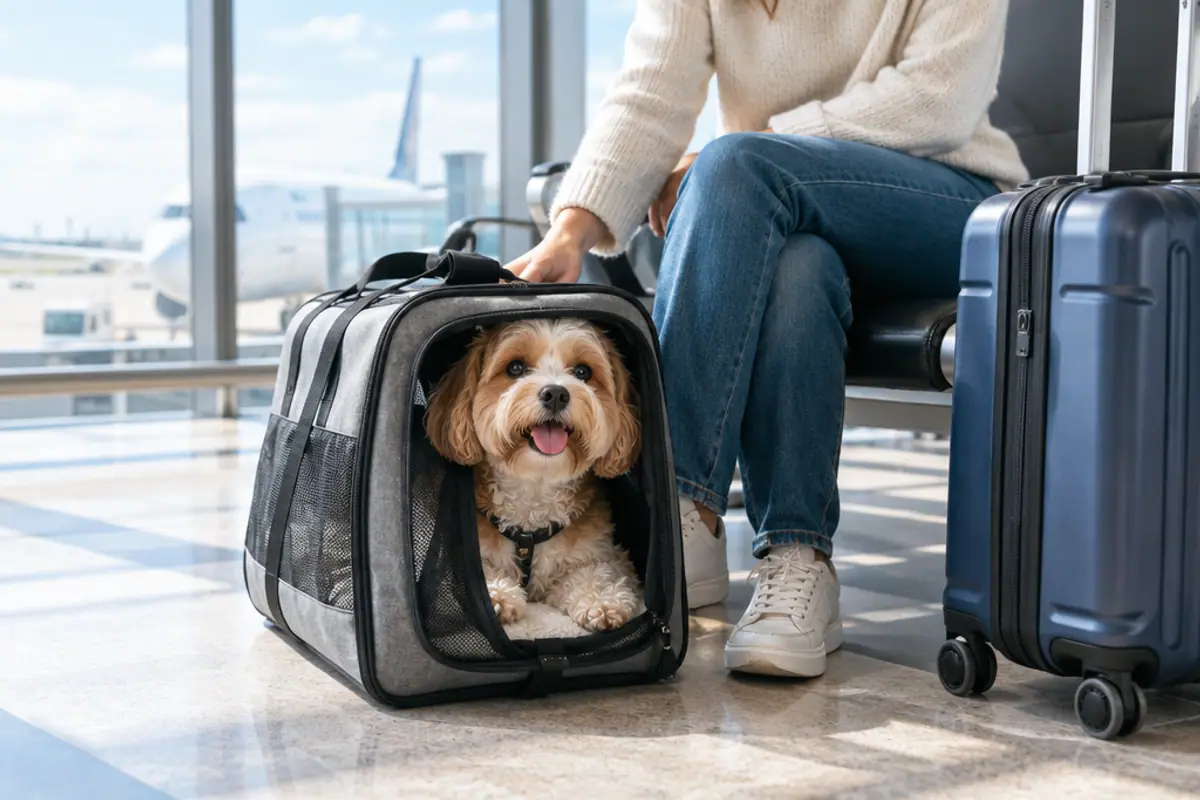
- In the cabin: many airlines allow small dogs in a soft-sided carrier that fits under the seat in front of you. Weight limits (dog + carrier) are often around 15–22 lb (7–10 kg), and the dog must stay in the carrier for the whole flight.
- Checked baggage / cargo: larger dogs travel in an approved crate in a pressurized, temperature-controlled hold. Many airlines have restrictions, seasonal embargoes (heat or cold) and bans on flat-faced breeds in cargo because of breathing risks.
- Service animals have separate rules that vary by country.
Before you book
- Check the airline's pet policy — fees, carrier size, breed restrictions, number of pets per flight.
- Book early — airlines limit pets per cabin.
- Choose direct flights and avoid extreme temperatures.
- Get a health certificate if required (often within 10 days of travel).
- For international flights, see international travel with a dog.
Preparing your dog
- Carrier training weeks in advance: make it a cozy den. See crate and carrier training.
- Practice short outings in the carrier.
- Exercise your dog well before the flight.
- Put an absorbent pad in the carrier.
- Ask your vet before giving any sedatives — sedation can be risky for flying, especially in cargo.
Train travel
Rules vary widely by country and railway. Small dogs in carriers are often allowed; some railways allow larger leashed or muzzled dogs, sometimes with a ticket. Check before traveling and practice with short trips.
Travel packing list
- Food (enough for the trip plus extra), treats, bowls
- Water and a collapsible bowl
- Leash, harness, collar with ID tag (add your destination phone number)
- Poop bags
- Bed or blanket that smells like home
- Favorite toys and chews
- Medications and preventives
- Copy of vaccination records and health certificate
- First aid kit (see dog first aid kit)
- Towels and cleaning wipes
- Recent photo of your dog
- Contact details for an emergency vet at your destination