Temperament
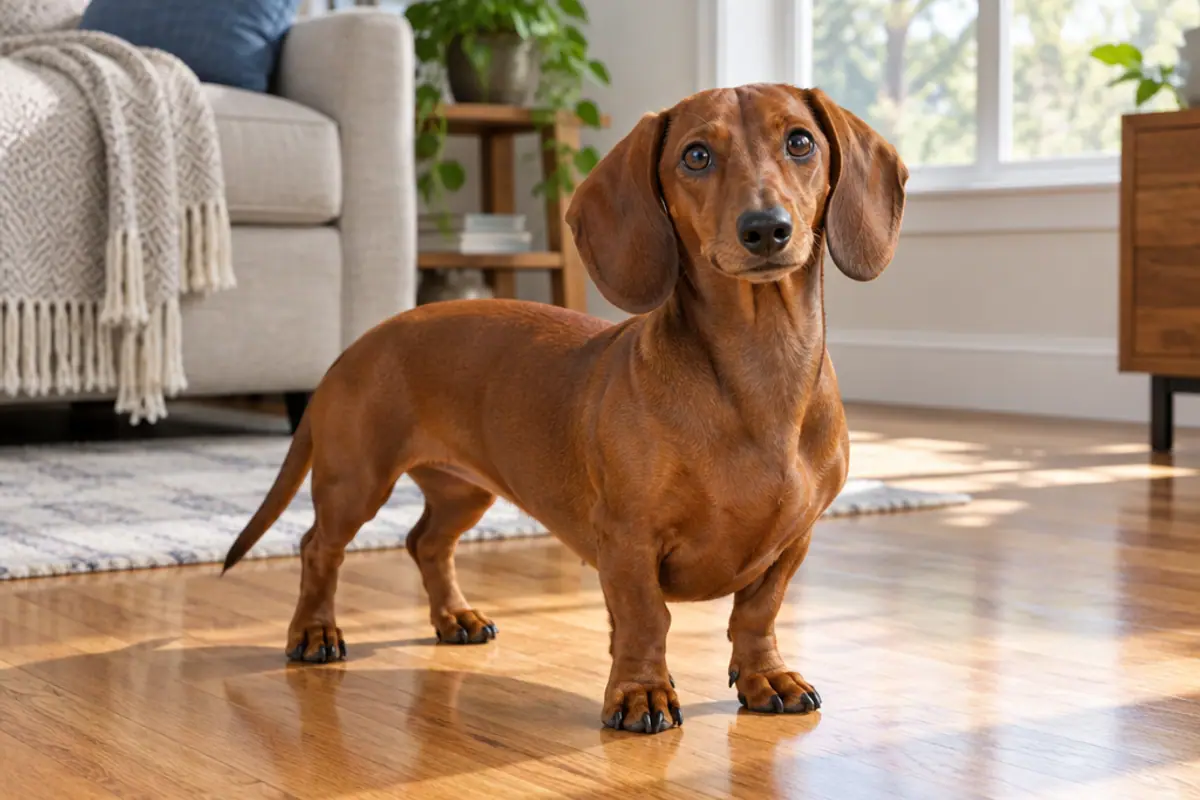
Dachshunds were bred to hunt badgers — so they're brave, stubborn and curious. They're devoted to their families and can be wary of strangers. They often bond strongly with one person.
Exercise and energy
Moderate: 30–60 minutes of walking daily plus play and sniffing games. Avoid lots of jumping on and off furniture and running up and down stairs.
Grooming
Depends on coat type: smooth coats need little care; long-haired need brushing a few times a week; wire-haired need occasional stripping.
Training
Independent and sometimes stubborn. Use food rewards and patience. House-training can take longer than average, especially in bad weather. They can be vocal — see excessive barking.
Health
The biggest concern is intervertebral disc disease (IVDD) — roughly 1 in 4 Dachshunds develop back problems. Keep them lean, use ramps, support their back when lifting, and learn the signs (reluctance to move, hunched back, wobbly legs). Sudden back pain or weakness is an emergency. Also watch for obesity and dental disease.
Is the Dachshund right for you?
✅ A great match if you…
- Want a small dog with a big personality
- Live in an apartment (with some barking tolerance)
- Can prevent jumping and keep the dog lean
- Have patience with house-training
⛔ Think twice if you…
- Have lots of stairs or high furniture and can't add ramps
- Want a quiet dog
- Have very young children who might pick the dog up wrongly
- Want an easy-to-train breed
Breed traits are general tendencies, not guarantees. Health information is a summary of issues commonly reported in the breed — ask breeders for health-testing results and discuss screening with your veterinarian. Weights and heights are typical adult ranges and vary by line and sex.